Japan Mortgage for Foreigners (2026): Banks, Rates, and the Flat 35 PR Rule
Japanese mortgage market splits cleanly: with PR you have most banks; without PR your menu narrows to about 5 lenders. The Bank of Japan raised the policy rate to 0.75% in December 2025 — variable rates climbed at most majors from April 2026, making fixed rates important. And the rumor that Flat 35 is open to non-PR is no longer true as of the JHF FAQ #308 update.
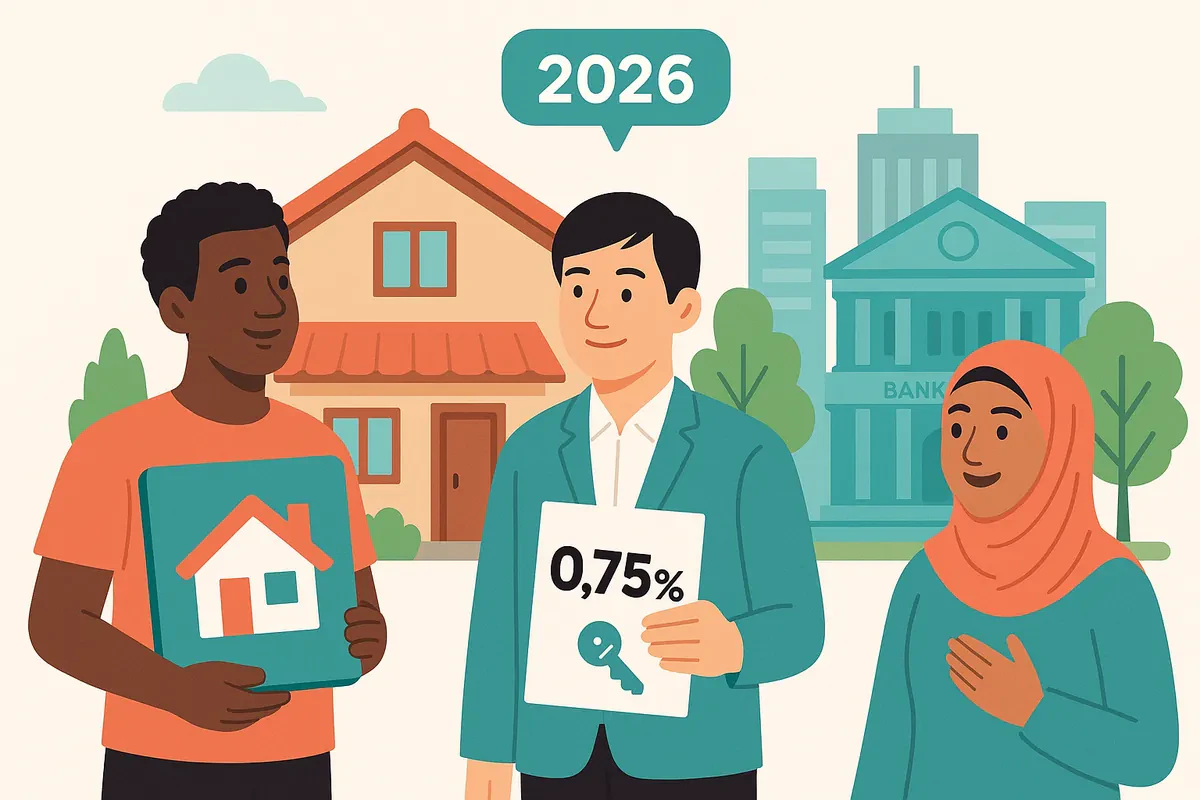
The Japanese mortgage market splits cleanly into two paths for foreigners: with permanent residency, you have access to most banks (Mizuho, Sumitomo Mitsui, MUFG, Sony Bank, Flat 35); without it, your menu narrows to about 5 lenders with published non-PR policies. The Bank of Japan raised its policy rate to 0.75% in December 2025 — variable rates climbed at most majors from April 2026 — making fixed-rate products more important than they've been in 30 years.
- Flat 35 (JHF) now requires PR. The "non-PR option" rumor is outdated as of the JHF FAQ #308.
- Top non-PR option: SMBC Trust PRESTIA — but requires ¥10M+ annual income
- Most accessible non-PR product: Tokyo Star Bank's スター住宅ローン (income ≥¥3M for ≤40 正社員)
- With Japanese spouse: SBI Shinsei Bank accepts non-PR if spouse co-signs as 連帯保証人
- Down payment expectation: 0–10% with PR, 20–30% without (practitioner consensus, not bank-published)
Information current as of May 2026 based on each bank's public eligibility text and FAQs, the Flat 35 utilization conditions, the Japan Housing Finance Agency (JHF) FAQ #308, and the Bank of Japan policy rate decision (December 19, 2025).
Buying a home in Japan as a foreigner is realistic — the legal framework does not bar foreign ownership of real estate. The hard part is financing: Japanese banks underwrite mortgages with much less flexibility than U.S. or European lenders, and the rules are scattered across each bank's individual product pages. This guide consolidates them.
The big change: Flat 35 is no longer a non-PR option
This is the single most important update in the 2026 foreign-resident mortgage landscape. Multiple older blog posts and even some practitioner pages still claim "Flat 35 is the easiest path for foreigners without PR." That is no longer accurate.
The JHF FAQ #308 — the official rule from the Japan Housing Finance Agency that backs Flat 35 — requires applicants to be:
- Japanese nationals, or
- 永住者 (permanent residents), or
- 特別永住者 (special permanent residents)
Foreign applicants must submit their 在留カード or 特別永住者証明書 plus 住民票. The legal authority cited is 出入国管理及び難民認定法 §22(2) / §22-2(4). And critically: if PR status is later found to be absent, the entire loan must be repaid in a lump sum (一括返済). This is a serious clause — if you applied with PR pending and were granted Flat 35 by error, the bank can call the entire loan.
The same rule applies to SBI Aruhi (the largest Flat 35 originator), per their FAQ #1013.
Bank-by-bank policy (2026)
The lenders below have public policies regarding foreign-resident eligibility. Verify on the live page before any application — these change without industry-wide notice.
| Lender | PR required? | Notes | Source |
|---|---|---|---|
| SMBC Trust Bank PRESTIA | No | Mid/long-term 在留資格 OK; income ≥¥10M; English communication accepted | FAQ #144 |
| Tokyo Star Bank (スター住宅ローン) | No | 正社員 ≤40 / income ≥¥3M, OR ≥40 / income ≥¥4M; rate 1.40–3.00% | Product page |
| SBI Shinsei Bank | No, with Japanese-spouse co-signer | Spouse must be Japanese or PR-holder + join as 連帯保証人 | FAQ #563 |
| Suruga Bank Dream-J | No | Eligibility centers on Japanese-language docs comprehension | Dream-J |
| Asuka Shinkumi | No | Tokyo-area shinkumi; dedicated 永住権のない外国籍 product | Asuka product |
| Sony Bank | Yes | "Foreigner-friendly UX" reputation refers to English support and multi-currency, not PR-waiver | Sony Bank |
| Mizuho | Yes | Standard housing loan: Japanese or PR only | Mizuho FAQ |
| MUFG | Generally yes | Practitioner-reported exceptions (Japanese spouse, 5+ years in Japan, 3+ years at same employer) — verify at branch | Practitioner-reported, not on MUFG product page |
| SMBC (三井住友銀行) | Generally yes | Standard product targets PR holders; case-by-case for non-PR with strong profile | Practitioner-reported |
| Flat 35 (JHF) | Yes | Japanese, 永住者, or 特別永住者 only | JHF FAQ #308 |
The 2026 rate environment
For most of the last three decades, Japanese mortgage rates were stunningly low — variable rates around 0.4%–0.6%, fixed rates around 1%. That era is over. The Bank of Japan raised its policy rate three times in 2024–2025, ending at 0.75% on December 19, 2025 — a 30-year high (per the BOJ policy decision document).
What this means for buyers in 2026:
- Variable rates at major banks rose from ~0.4% (2024) to ~1.0% (early 2026)
- 10-year fixed rates are now around 1.5–2.0%
- Flat 35 35-year fixed is around 2.0–2.5% depending on down payment
- The forecast consensus (e.g., ESPフォーキャスト) projects the policy rate around 1.0% by end of 2026
The 30-year-historical "always pick variable" advice no longer applies cleanly. For 35-year mortgages in particular, the calculus has shifted toward fixed-rate or hybrid products. SBI Shinsei's 2026 rate outlook column covers this in detail.
Down payment expectations
No bank publishes a "minimum down payment for non-PR" rule on its product page. The 20–30% figure that appears across multiple practitioner sources is consensus, not policy. A summary by profile:
| Buyer profile | Practitioner-consensus down payment |
|---|---|
| Japanese national + stable employment | 0–10% |
| PR holder + stable employment | 0–10% |
| Non-PR + Japanese spouse + ≥3 years tenure | 10–20% |
| Non-PR + ≥5 years in Japan + stable employer | 20–30% |
| Non-PR + self-employed | 30–50% |
| Non-PR + recent arrival | Often declined regardless of down payment |
Above the down payment, you also need cash for: registration tax (登録免許税), stamp tax (印紙税), 不動産取得税, broker fees, and 司法書士 fees — typically another 5–8% of property price.
Documents needed at application
- 在留カード (both sides) + passport
- 住民票 (with all family members listed)
- 源泉徴収票 (last 2 years) for employees, or 確定申告書 (last 2–3 years) for self-employed
- 住民税課税証明書 from your municipality
- Bank statements (3–6 months)
- Employment contract or 在職証明書
- Property purchase contract (重要事項説明書 + 売買契約書)
- For non-PR: 永住申請の状況 if applicable (some banks treat 申請中 favorably, though it does not bypass the formal PR requirement at PR-only lenders)
住宅ローン控除 (housing loan deduction)
Foreign residents who file Japanese income tax can claim 住宅ローン控除. Eligibility hinges on 居住者 status, not nationality. Key NTA references:
- NTA Tax Answer 1211-1 — 住宅借入金等特別控除
- NTA Tax Answer 1213 — 住宅借入金等特別控除の対象となる住宅ローン等
- NTA Tax Answer 1234 — 非居住者期間がある場合の取扱い
You must move into the property within 6 months of acquisition and continue residing through December 31 each year. If you become 非居住者 mid-year (e.g., extended overseas assignment), the deduction stops for that period. A narrow exception exists if a 生計を一にする親族 continues to reside in the home (for acquisitions on or after April 1, 2016).
The mortgage application timeline
| Step | Typical timing |
|---|---|
| Pre-screening (事前審査) at chosen bank | 3–7 days |
| Sign 売買契約 with seller (after pre-approval) | 1 week from pre-approval |
| Formal application (本審査) | 2–4 weeks |
| Loan agreement signing | ~1 week after approval |
| Disbursement and property handover (引き渡し) | Same day as loan agreement |
| Total from pre-screening to keys in hand | ~2–3 months |
The mortgage paperwork is dense, all in Japanese, and signed at the bank in person. If your Japanese isn't strong enough to follow a 重要事項説明書 walkthrough, that's a real friction point. Posting on LO-PAL connects you with a local Japanese person who can review the documents in advance, sit in on the bank meeting, and translate as needed. Free to ask; you only pay if you accept task help.
If your visa status changes mid-loan
What happens if your job changes, your visa expires, or you leave Japan during a 35-year mortgage? The answer is bank-specific:
- Visa renewal: Banks generally do not re-screen during the loan, but most agreements require you to notify them of major changes (employer, address). Sony Bank specifically restricts transactions if 在留カード is not updated.
- Job loss: Continue payments. The bank does not call the loan unless you actually default.
- Departure from Japan: Some banks require full repayment if you become 非居住者. Others allow continuation with a Japanese spouse or family member as point of contact. Confirm before signing.
- If non-PR found at audit: Flat 35 specifically calls the loan in this case. Make sure your underwriting status is correctly stated.
Refinancing as PR is granted
One useful pathway: take a non-PR product (Tokyo Star, PRESTIA, Suruga) early, then refinance to a lower-rate PR-only bank (Mizuho, Sumitomo Mitsui, Sony Bank) once PR is granted. Tokyo Star explicitly mentions a possible rate reduction after re-screening when PR is obtained, per the スター住宅ローン product page.
Refinancing typically costs 1–2% of the remaining balance in fees (registration tax, broker, 司法書士). It's worth the friction if the rate differential is 0.5%+ over a 20+ year term.
Related articles
- Credit, Loans, and Mortgages in Japan for Foreigners (2026)
- Buying a Home in Japan Without Permanent Residency
- Japan Permanent Residency in 2026
- Credit Bureau Disclosure Guide
Disclaimer: This article is general information, not financial, legal, or tax advice. Mortgage product terms, eligibility rules, and rates change without industry-wide notice. Verify current terms on each bank's official product page and consult a 行政書士 (immigration), 税理士 (tax), or ファイナンシャル・プランナー before signing. The down-payment expectations cited are practitioner consensus, not bank-published rules. Approval is at each lender's discretion based on your individual file.
Get Help with the Mortgage Paperwork
A Japanese mortgage signing is dense paperwork in technical Japanese — 抵当権設定 (mortgage registration), 連帯保証 (joint guarantee), 期限の利益喪失 (acceleration clause). Post your question on LO-PAL for free: a local Japanese person can review your 重要事項説明書 in advance, explain any term you're unsure about, and accompany you to the bank signing. You only pay if you accept hands-on task help.
Written by

Founder, LO-PAL
Former Medical Coordinator for Foreign Patients (Ministry of Health programme) and legal affairs professional. Built LO-PAL from firsthand experience navigating life abroad.
Written with partial AI assistance
Read full bio →