Where to Stay in Tokyo for Tax-Free Shopping (2026 Update)

The all-in-one Japanese learning app
From travel phrases to real fluency — all in one app.
All 2,136 standard kanji included. Every feature is free to use.
Tokyo neighborhood picks and hotel features that streamline tax-free shopping, packing, and airport steps—before Japan’s Nov 1, 2026 change.
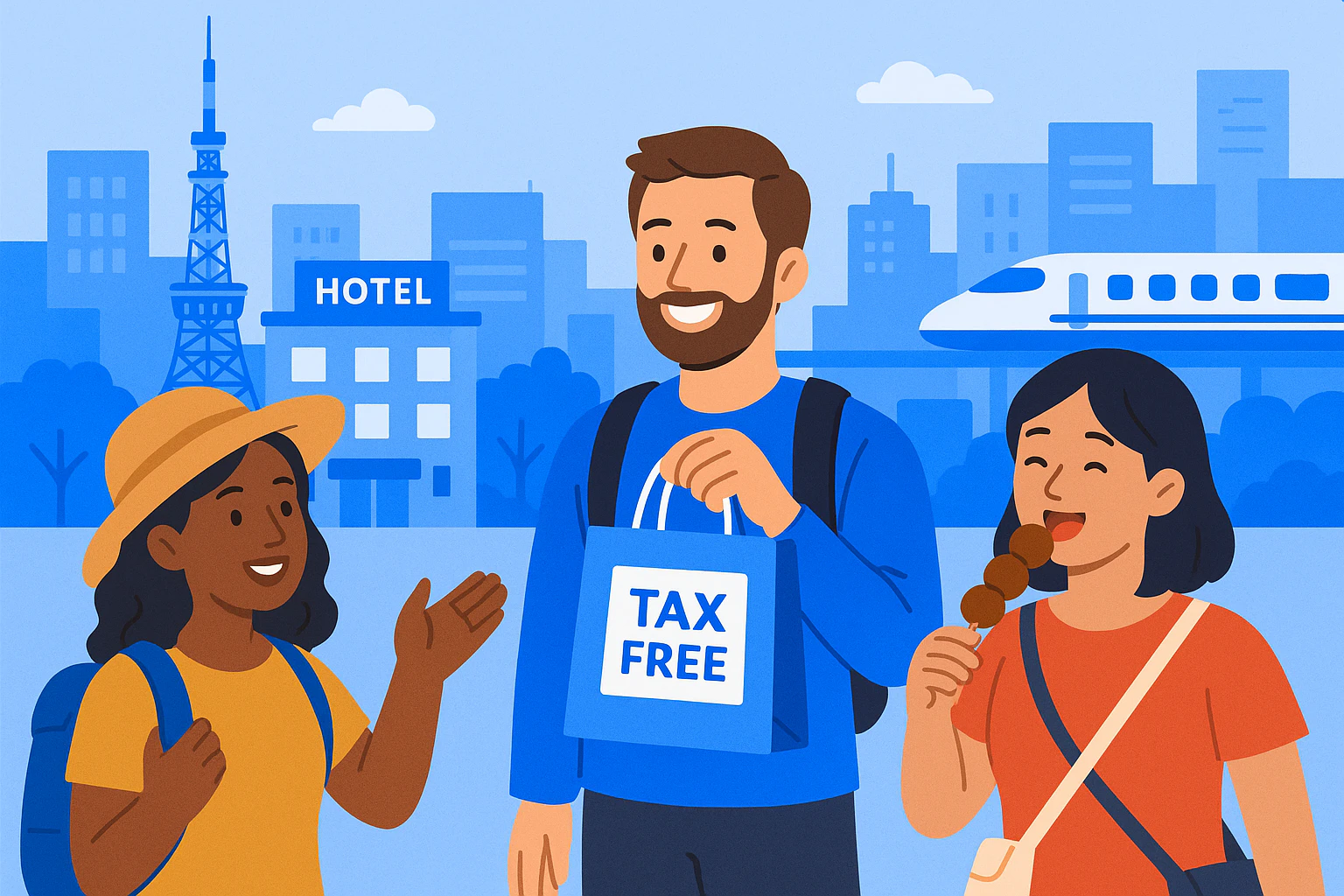
If you’re searching where to stay in Tokyo for tax-free shopping, most guides will point you to Ginza or Shinjuku and stop there. The problem is that tax-free shopping in Japan isn’t just “find the right store”—it’s also a logistics game: carrying bags on trains, keeping sealed items unopened, finding space to sort purchases, and leaving enough time for airport customs steps.
This 2026 update focuses on the hotel base that makes tax-free shopping smooth. It also prepares you for the nationwide change coming on November 1, 2026, when Japan shifts from “tax removed at checkout” to a refund-based system at departure, as announced by JNTO.
Below you’ll find the practical rules you must follow, the best Tokyo neighborhoods by travel style, a hotel checklist designed for shoppers, and a tight 2-day plan that includes packing and airport procedures.
Tax-Free Shopping in Japan: 2026 Rule Changes Tourists Must Know
Before choosing your neighborhood, lock in the rules. In Japan, losing tax-free eligibility usually happens because travelers don’t meet the minimum spend, open sealed items, or can’t present items to customs if requested.
Current system (now through October 31, 2026): tax removed in-store (or refunded at a counter)
Under the current system, you typically get the tax removed at the register (common at drugstores/electronics) or you pay tax-included first and then go to a centralized counter (common at department stores and large malls). The official Tokyo travel guide summarizes eligibility, minimums, and the passport requirement on its Tax-Free Shopping page.
The most important baseline rule is the same-store, same-day minimum: generally ¥5,000 (excluding tax). Japan Customs also states that tax-free thresholds differ by category (general vs consumables) and that your purchase record is transmitted to the National Tax Agency system, with customs confirmation at departure as needed (see Japan Customs FAQ 5004).
- General goods (clothing, electronics, souvenirs): usually ¥5,000+ (excluding tax) at one store on one day.
- Consumables (cosmetics, food, medicine): usually ¥5,000 to ¥500,000 (excluding tax) at one store on one day, and they’re sealed for export control (see Japan Customs).
Consumables are typically sealed and must remain unopened in Japan. Many guides also note a practical export deadline difference: consumables must be exported within 30 days of purchase, while general items must be exported within 6 months of entry (see the detailed explanation from KIX Duty Free’s guide to current rules).
Critical change already in effect: no “ship it separately and prove it with delivery slips” (since April 1, 2025)
As of April 1, 2025, you are not eligible for tax-free if you ship items overseas yourself via international parcels and try to prove export later with delivery slips. Japan’s official tax-free guidance explains that “delivery slips can no longer be used,” and travelers may need to present items at customs during departure checks (see the Japan Tourism Agency/MLIT page: Tax-free shop site notice).
Japan Customs also notes that the handling for so-called unaccompanied baggage export confirmation was abolished as of March 31, 2025 (impacting departures from April 1, 2025 onward), on Customs FAQ 5004.
What this means for hotels: your room should support “carry-out planning.” You want space to sort receipts, keep sealed consumables intact, and pack in a way that lets you quickly show items if customs asks.
Visit Japan Web (VJW): helpful, but acceptance varies—carry your physical passport
Visit Japan Web is an official Digital Agency service that supports immigration/customs procedures and also offers a “tax-free shopping service” (see Visit Japan Web). Japan’s tax-free guidance also recommends generating a tax-free QR code for faster in-store processing, but clearly warns that not all shops accept VJW (see MLIT guidance on utilizing VJW).
Department store counters and “service fees”: why staying near instant tax-free retailers saves time
Central tax-free counters can be efficient, but they can also add time (queues) and reduce your net savings due to processing fees. Some department stores publish a 1.55% handling fee—for example, Takashimaya notes a 1.55% system handling fee on its tax refund procedure guidance (Takashimaya tax refund procedure). Daimaru also shows how this fee affects the net refund (e.g., “refund will be 8.45%” for 10% tax items) on its service page (Daimaru tax refund service info).
This is why travelers doing a lot of Tokyo drugstore tax-free souvenirs (snacks, masks, OTC medicine, cosmetics) often prefer neighborhoods where drugstores/discount chains are abundant and process tax-free right at checkout.
Japan tax-free shopping rules 2026: the big change on November 1, 2026 (refund-based system)
Japan has announced a nationwide shift starting November 1, 2026: instead of tax being removed in-store, visitors will generally pay tax-inclusive prices and then claim a refund during departure procedures. JNTO summarizes the change and date on its update page (Changes are coming to tax-free shopping).
There is no overlap period: if you want the current “in-store exemption/refund counter” style, you must complete purchases by October 31, 2026, as explained in KIX Duty Free’s overview of the new system (Japan’s new tax refund system (Nov 2026)).
The good news is the rules are expected to get simpler. Professional summaries of the 2025 tax reform changes note that the distinction between general and consumable categories, the consumable purchase cap, and special packaging requirements are being abolished under the new framework (Grant Thornton Japan summary).
2026 strategy tip: If your trip is after November 1, 2026, choose a hotel base that makes airport departure frictionless (direct airport access, early breakfast, quick checkout, luggage support). The “refund step” moves to departure, so your hotel location matters more than ever.
Best Tokyo Areas to Stay for Tax-Free Shopping (By Travel Style)
Tokyo is huge, and “best” depends on what you’re buying and which airport you’ll use. These neighborhoods are picked for shopping density plus the unglamorous parts: hauling bags, returning to your room to sort/pack, and getting to customs with minimal stress.
1) Shinjuku: the all-in-one base for department stores + electronics + late-night shopping
Best for: first-time visitors who want one hub that can cover cosmetics, fashion, luggage, and electronics without complex transfers. Shinjuku’s advantage is that you can do a full shopping day, drop bags at your hotel, then go back out for dinner or a second run.
Why it’s tax-free friendly: big department stores and electronics chains mean plenty of tax-free processing, but be prepared for centralized counters and possible handling fees at department stores (see examples of fee structures in Takashimaya guidance).
Airport logic: If you fly out of Narita, Shinjuku is a common destination for JR’s Narita Express. JR EAST’s N’EX Tokyo round-trip ticket page shows a Tokyo-area round-trip baseline fare of ¥6,140 (implying about ¥3,070 one-way to Tokyo-area stations) and a discounted round-trip ticket option (JR EAST N’EX TOKYO Round Trip Ticket).
Hotel selection tip: prioritize a property with a large lobby luggage scale or in-room scale, and ask about long luggage storage (you may shop heavily on day 2 but still want to sightsee on day 3).
2) Ginza / Yurakucho: luxury shopping, centralized counters, and city duty-free convenience
Best for: luxury brands, department stores, and travelers who prefer walking between major shops. Ginza is also one of the easiest places to keep purchases “clean”—fewer crowded commuter transfers with bags if you choose your hotel within a 5–10 minute walk of the main shopping streets.
Tax-free reality: many department stores use centralized tax-free counters, which can mean queue time and fees. If you’re optimizing savings, run your math: a 1.55% processing fee reduces a 10% tax benefit to a net 8.45% (examples shown by Daimaru’s fee explanation and Takashimaya’s published handling fee at Takashimaya).
Bonus: city duty-free pick-up logistics. Ginza has “airport-type duty-free shops in the city” where you buy in town and pick up airside. Narita Airport lists pick-up counter locations/hours and notes you should collect items at least one hour before departure (Narita Duty Free Pick Up). Haneda also has a DUTY FREE PICK UP counter in Terminal 3 (after security) for eligible city duty-free purchases (Haneda DUTY FREE PICK UP).
Hotel selection tip: choose a hotel that can accept deliveries (department-store same-day delivery services vary), and look for rooms with a desk or table—Ginza hotels can be compact even at higher prices, and you’ll want space to sort receipts and packing.
3) Ueno / Okachimachi: the Narita-friendly base for drugstores, snacks, and budget souvenirs
Best for: travelers who want efficient shopping and the easiest airport exit to Narita. Ueno/Okachimachi is excellent for “buy a lot, go back, pack, repeat,” because the area is dense, walkable, and generally cheaper for hotels than Ginza.
Why it’s tax-free friendly: lots of drugstores and discount shopping in one zone means fewer long detours to meet the same-store minimum. Under current rules, remember the typical minimum is ¥5,000 (excluding tax) per store per day, with consumables capped up to ¥500,000 under the existing framework (see Japan Customs FAQ 5004 and Tokyo’s official summary at GO TOKYO).
Narita access: if you want a predictable, reserved-seat ride, Keisei lists the Skyliner fare from Ueno/Nippori to Narita Airport as ¥2,470 (with slight fare differences depending on IC card use) on its official fares page (Keisei Skyliner fares).
Hotel selection tip: prioritize a hotel with coin laundry or at least strong ventilation—drugstore shopping often includes liquids and scented items, and you’ll want to keep clothing and packaging fresh while you pack.
4) Asakusa / Oshiage (Tokyo Skytree area): family-friendly, big malls, and straightforward packing routines
Best for: families and travelers who like larger, mall-style shopping (less store-hopping) and calmer evenings. Oshiage’s mall environment is also easier for strollers and multiple suitcases than Shinjuku’s busiest corridors.
Tax-free advantage: large commercial facilities often centralize tax-free processing, so plan your shopping around the tax-free counter hours and potential fees (the Tokyo travel guide notes procedures are electronic and require your passport; see GO TOKYO tax-free procedure).
Airport logic: if you’re using Haneda, Keikyu’s official Haneda access site lists through-service fares (IC card) and times to major stations; for example, Haneda Terminal 3 to Asakusa is shown with time and fare details on the fare list (Haneda Airport Access Guide (Keikyu) fares).
Hotel selection tip: families should prioritize elevator reliability and wide corridors (Tokyo boutique hotels can have tight turns that make multiple suitcases frustrating).
5) Akihabara: electronics, cameras, and hobby shopping with minimal “back-and-forth”
Best for: electronics, camera gear, gaming, and hobby/anime collectors who want to shop intensively and then return to the room to catalog and protect purchases. For high-value items, you also reduce stress by having a short walk back to your hotel rather than multiple transfers.
Tax-free advantage: electronics chains often process tax-free right at checkout (faster than a centralized mall counter). Under current rules, bring your passport and keep receipts accessible for departure customs checks if requested (see Japan Customs guidance).
Narita access: Keisei’s Skyliner fare list even shows a combined-fare example via JR Yamanote transfer at Nippori for Akihabara/Tokyo-area access (Keisei Skyliner fares from major stations).
Hotel selection tip: look for a hotel with a safe or strong front-desk valuables policy if you’re buying watches/cameras. Also ask whether they can receive deliveries (some shoppers consolidate by shipping domestic boxes to the hotel).
6) Shinagawa / Hamamatsucho: the “departure-first” base (perfect for your last night in Tokyo)
Best for: anyone doing serious shopping who wants an easy final day and a low-stress airport exit. This is especially smart for trips after November 1, 2026, when the new refund-based system adds departure steps (see JNTO’s November 2026 update).
Haneda access (Shinagawa): the Haneda Airport Access Guide lists Haneda Terminal 3 to Shinagawa as 11 minutes and ¥327 (IC card), and also lists a dedicated phone line for inquiries via interpreters (Keikyu fares and contact).
Haneda access (Hamamatsucho): Tokyo Monorail provides fare tables (printed tickets vs IC). For travelers, it’s enough to plan roughly “about ¥500–¥520” to reach Hamamatsucho from Haneda terminals, then transfer to JR lines (see Tokyo Monorail fare table).
Hotel selection tip: choose a property known for efficient checkout and luggage storage. Your goal is to finish “packing + final tax-free checks” early, then head to the airport with receipts and items easy to access.
Quick pick: If you fly out of Narita, Ueno/Okachimachi is often the best value for shoppers. If you fly out of Haneda (especially Terminal 3), Shinagawa is the most convenient “last-night” base.
Hotel Checklist for Shoppers: Room Size, Storage, Delivery, Late Checkout
A great shopping neighborhood can still fail you if your hotel can’t handle luggage and packing. Use this checklist before you book.
- Room space and a flat surface: You need a desk/table to sort receipts, group items by store/day, and keep sealed consumables protected.
- Storage that actually works: under-bed clearance for suitcases, shelves for boxed items, and enough hangers so clothing stays wearable after you unpack/repack.
- Luggage-friendly elevator and corridors: avoid “stylish but narrow” properties if you’re traveling with 2+ suitcases or family.
- Long luggage storage (before check-in / after check-out): critical if you want a final shopping run on departure day.
- Coin laundry or nearby laundry: useful after heavy shopping days and for compressing clothing into vacuum bags.
- Late checkout (paid is fine): buying yourself 2 extra hours can be cheaper than a taxi when you’re repacking and labeling bags.
- Delivery support (luggage forwarding): ask if the front desk supports Yamato (Kuroneko) shipping, and confirm the cutoff time.
For luggage forwarding, Yamato’s Airport TA-Q-BIN is the most common option tourists encounter. Yamato also explains that you can send luggage from a partnered hotel front desk, and you generally should ship so it arrives at the airport one day before departure (Yamato FAQ on hotel-to-airport shipping).
Be aware of airport counter usage fees: Yamato’s FAQ notes a ¥660 fee at Narita from June 1, 2025 and at Haneda from July 1, 2025 in addition to shipping fees (Yamato Airport TA-Q-BIN handling fees).
Important: shipping your suitcase to the airport can be great for comfort, but remember the April 1, 2025 rule change: tax-free eligibility is tied to you taking items out of Japan properly, and customs may ask to see items at departure (see MLIT guidance). Pack so you can access items if asked before you check baggage.
2-Day Tax-Free Shopping Plan + Airport Refund/Customs Checklist (Plus LO-PAL)
This plan is designed for short-term visitors (1–3 weeks) who want to shop hard without losing time to transit or paperwork. It also includes a “future-proof” note for trips after November 1, 2026.
Day 1 (East Tokyo): drugstores + snacks + “100 yen shop tax-free Japan” scouting
Goal: stock up on the small, high-quantity items that explode your suitcase—then go back to your hotel early to start organizing.
- 10:00–12:30: Drugstore run (souvenirs + daily necessities). Focus on items that are clearly “consumables” so you can keep them sealed. Under the current system, consumables typically need sealed packaging and are subject to the ¥5,000–¥500,000 band per store/day (see Japan Customs FAQ 5004).
- 12:30–13:30: Lunch close to your shopping area (avoid crossing the city with bags).
- 13:30–15:00: 100-yen shop sweep for lightweight souvenirs (stationery, kitchen tools, travel containers). Tax-free availability is location-dependent, so treat this as a scouting mission: look for the “Japan. Tax-free shop” logo and “TAX FREE” signage, and confirm at the register (the general advice to check store signage is echoed in many 100-yen shopping guides such as Tokyo Iroha’s 100-yen shop guide).
- 15:00–17:00: Back to hotel: sort by category (general vs consumables), keep sealed bags intact, and photograph receipts for your own backup (do not rely on photos for official procedures).
- Evening: Optional second run if you missed a minimum threshold at a store (remember: it’s same-store, same-day for the minimum under the current system; see GO TOKYO).
Day 2 (West/Central Tokyo): department store counter + electronics chain + final suitcase build
Goal: buy big-ticket items (fashion/electronics), then finalize packing and airport strategy.
- 10:30–13:00: Department store shopping (fashion, gifts, premium cosmetics). If the store uses a centralized counter, build one big receipt bundle to hit minimums efficiently, and budget for a handling fee (examples: Takashimaya handling fee info).
- 13:00–14:00: Early lunch and a quick “what’s left?” checklist in your phone notes.
- 14:00–16:00: Electronics chain purchase and immediate tax-free processing (usually faster than department store counters).
- 16:00–18:30: Hotel packing block: place liquids/consumables safely; keep receipts together; ensure your most expensive items are easy to access if asked by customs.
Packing rule of thumb: Treat your hotel like a mini fulfillment center. Two focused packing blocks (Day 1 and Day 2) prevent the “midnight suitcase chaos” that causes lost receipts and opened sealed bags.
Airport refund/customs checklist (current system: now through October 31, 2026)
Japan’s official guidance emphasizes that customs officers may ask to see tax-free items and recommends getting customs approval before checking in luggage (see MLIT guidance).
- Before leaving the hotel: passport, boarding pass (or e-ticket access), receipts, and sealed consumables together in an easy-to-open pouch.
- At the airport (arrive early): if you want to check a suitcase that contains tax-free items, be prepared to show them if asked before the bag disappears onto the belt.
- Do not open sealed consumables: consumables are sealed to prevent use in Japan (see KIX Duty Free’s current-rule explanation).
- Do not rely on separate overseas shipping: the delivery-slip export proof method was abolished for departures from April 1, 2025 onward (see Japan Customs FAQ 5004 and MLIT notice).
If you need official help for a customs question, Japan Customs provides a list of “Customs Counselors” including contacts for Tokyo, Haneda, and Narita (see Customs Counselor contact list (FAQ 9301)).
Airport checklist (from November 1, 2026): plan for the refund-based system
Starting November 1, 2026, Japan shifts to the refund method, meaning you will generally pay tax-inclusive prices and then complete refund procedures during departure steps (see JNTO’s announcement). Because the refund step moves to departure, your hotel choice should prioritize direct airport access and easy checkout.
Also plan for cash-flow changes: if you were used to “instant tax-off,” you’ll now temporarily float the consumption tax until the refund is processed. Build extra buffer time at the airport—KIX Duty Free’s explanation notes the system changes are a full transition starting November 1, 2026, with purchases by October 31, 2026 following the old approach (KIX Duty Free: new system overview).
Need more help? Ask on LO-PAL
If you want to know more about where to stay in Tokyo for tax-free shopping for your exact dates (and your airport, shopping list, and suitcase situation), ask a local Japanese person on LO-PAL. You can post a question like “Which Ueno hotels have large rooms and easy luggage storage?” or request a task like “Help me plan a 2-hour tax-free drugstore route near my hotel,” and local helpers can respond in your language.
LO-PAL supports English, Chinese, Vietnamese, Portuguese, Korean, Nepali, Tagalog, Indonesian, and Spanish—so you can get neighborhood-specific, up-to-date tips right when you need them.
Written by

Founder, LO-PAL
Former Medical Coordinator for Foreign Patients (Ministry of Health programme) and legal affairs professional. Built LO-PAL from firsthand experience navigating life abroad.
Written with partial AI assistance
Read full bio →