Car-Free Hokkaido Winter Itinerary 2027: Sapporo, Otaru & Niseko

The all-in-one Japanese learning app
From travel phrases to real fluency — all in one app.
All 2,136 standard kanji included. Every feature is free to use.
A simple car-free Hokkaido winter itinerary for Feb 2027: Sapporo Snow Festival, Otaru Snow Light Path night, and Niseko skiing.
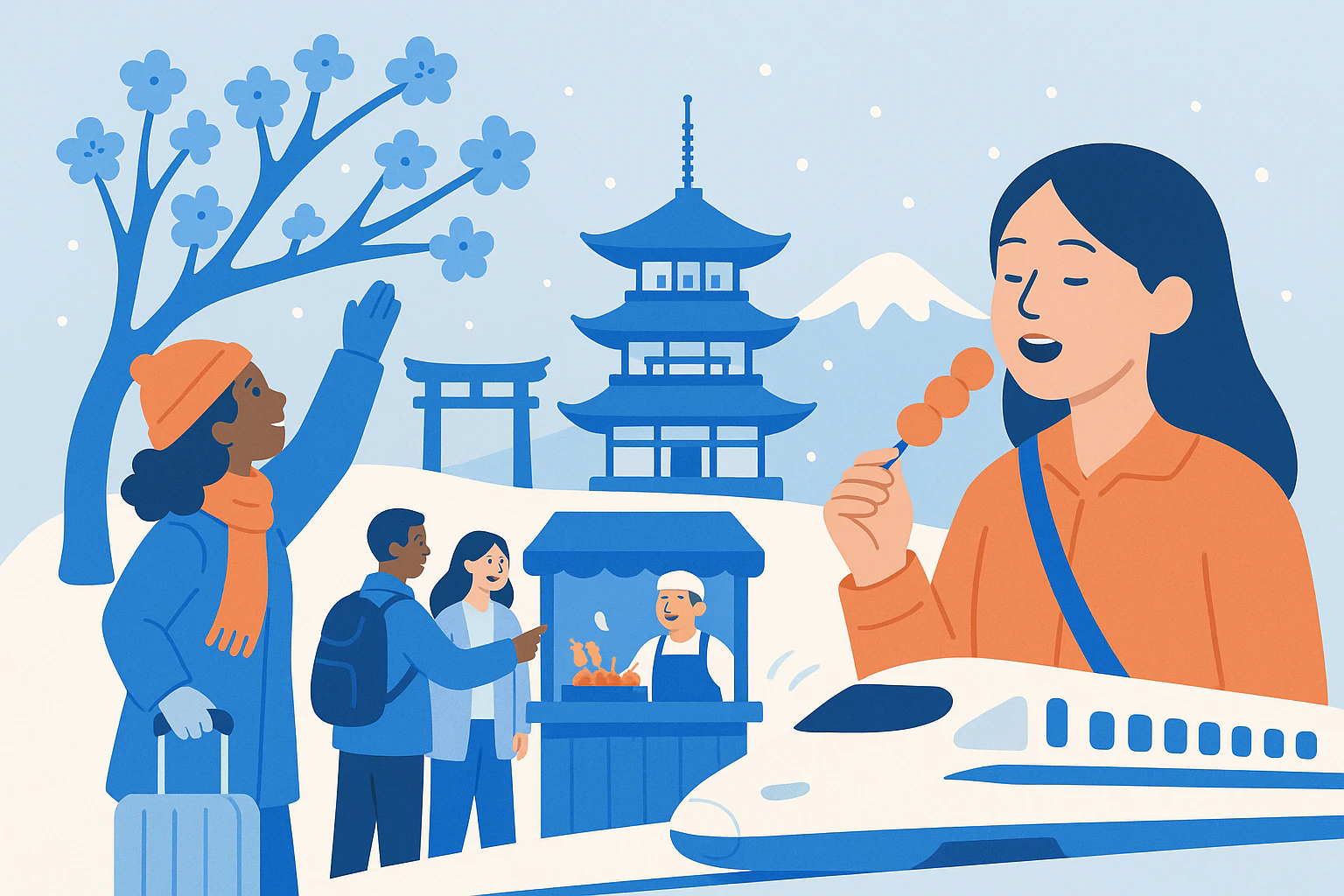
If most “Hokkaido winter” articles make you feel like you need to rent a car, this car-free Hokkaido winter itinerary is for you. It’s designed for first-time visitors who want one simple route that connects Sapporo’s Snow Festival, Otaru’s candlelit winter nights, and a Niseko ski trip without a car—with the winter safety and queue/booking hacks locals quietly rely on.
Quick plan (6 days): Base in Sapporo for the festival + easy day-trip to Otaru at night, then finish with a Niseko ski day (day trip or 1-night stay). Sapporo Snow Festival 2027 dates: Feb 4–11, 2027.
When to go for a car-free Hokkaido winter itinerary (and what’s actually happening in early February)
Early February is peak “winter postcard” season in Central Hokkaido: deep snow, crisp nights for illuminations, and the biggest winter events clustered close enough that you can do them without a car. The key trip-planning pain point is dates—because hotels sell out fast once the official dates drop.
For 2027, the official Snow Festival announcement says the next Sapporo Snow Festival is planned for February 4 (Thu) to February 11 (Thu, national holiday), 2027. Those dates cover the three main areas (Odori, Tsudome, Susukino), so you can plan one Sapporo base and move around by subway/JR. Check the official 2027 dates announcement here and book accommodation as soon as your flights look firm.
About Otaru Snow Light Path Festival: it typically runs in February and overlaps the Snow Festival season, making it the easiest “add-on” night trip from Sapporo. The official dates for 2027 may be announced later, so use the Otaru Snow Light Path official site for final confirmation, then lock your hotel.
About Niseko in early February: it’s prime snow season, but also peak crowds. The main “local” move is to pre-book what causes lines: transport (if using ski buses) and lift tickets (buy online), then start your day early and finish before the last rush back to Sapporo.
“Next festival is planned for Feb 4–11, 2027.”
Car-free Hokkaido winter itinerary transport game plan (airport → Sapporo → Otaru → Niseko)
This section is the backbone of the car-free Hokkaido winter itinerary. The goal is to keep transfers minimal, avoid long outdoor waits, and use systems that reduce ticket-machine lines.
1) New Chitose Airport → Sapporo (JR Rapid “Airport” Train)
The simplest arrival is the JR Rapid “Airport” train from New Chitose Airport to Sapporo. JR Hokkaido lists travel time as roughly 33–41 minutes, and the fare as ¥1,230 (one-way). Trains run frequently, and you can use IC cards like Kitaca/Suica/PASMO to skip ticket machine lines. JR Hokkaido’s airport access page is here.
2) Sapporo ↔ Otaru (fastest, easiest winter day trip)
Otaru is the easiest winter side trip from Sapporo because it’s a straight JR ride with no car needed. JR Hokkaido states Sapporo ↔ Otaru can be as fast as 33 minutes, with a listed fare of ¥800. See the official Sapporo–Otaru info here.
For the Snow Light Path night, the easiest flow is: arrive at JR Otaru Station before sunset, walk to the canal area, then return to Sapporo after the illumination. Japan’s national tourism site notes you can take a rapid train from Sapporo to Otaru in about 30–35 minutes, then walk about 8–10 minutes to the main area. JNTO’s Otaru access overview is here.
3) Sapporo ↔ Niseko (choose your “no-car” difficulty level)
For a Niseko ski trip without a car, you have two realistic options for short-term visitors: (A) a winter ski bus direct to the resort area, or (B) a rail/bus combination (more flexible, but more moving pieces). For first-timers in winter, buses are usually simpler—especially if you’re carrying ski gear.
Option A (simplest): winter bus to Niseko resort areas. Niseko United publishes winter-season bus schedules (these change each season). For example, their 2025–26 page shows Sapporo ⇔ Niseko buses operating during the winter season with a listed one-way adult fare of ¥6,000 (and round-trip adult ¥10,000), and sample departures from JR Sapporo Station North Gate in the morning. Use this page as your starting point, then re-check the updated 2026–27/2027 schedule as your trip approaches: Niseko United access info.
Reservation / questions for buses: Niseko United’s access page also lists other ski-season bus companies and phone contacts (useful when schedules sell out): White Liner (+81-11-624-8822) and Hokkaido Resort Liner (+81-11-200-0506). Always confirm the 2027 operating period and luggage rules before paying.
Local queue hack: use IC cards where you can (and bring coins where you can’t)
In winter festival season, the “line you didn’t plan for” is often the ticket machine line at big stations. On JR between New Chitose Airport–Sapporo–Otaru, IC card tapping is explicitly supported on those corridors, so it’s the fastest entry/exit method when it’s crowded.
But not everything takes IC cards: for example, Snow Festival shuttle operations have sometimes been cash-only. In one official Snow Festival shuttle notice (for Tsudome), the fare is listed as ¥100 one-way, cash payment only. Treat this as a “bring coins just in case” reminder and confirm the 2027 rule close to your dates. Example shuttle notice.
6-day car-free Hokkaido winter itinerary (festival highlights + Otaru canal night walk + ski day)
This car-free Hokkaido winter itinerary is built around one main base (Sapporo), because moving hotels in snow is the #1 time-waster for first-time visitors. You’ll do Otaru as a night trip, then Niseko as either a long day trip or a “sleep there once” upgrade.
Hotel strategy: Stay near Odori or Susukino so you can walk to festival illuminations at night and avoid extra transfers on icy sidewalks.
Day 1 (Feb 4, 2027): Arrive → check-in → Odori night illumination
Land at New Chitose Airport, take the JR Rapid “Airport” train to Sapporo, and drop bags at your hotel (or use station lockers if you arrive early). After dark, go straight to Odori Park for your first look at the big sculptures, when they’re lit up and the photos look the most dramatic.
Local photo hack: do a quick “night loop” today and save your slow, detail-focused walk for early morning tomorrow. Your first night is about atmosphere, not perfection.
Day 2 (Feb 5): Odori in daylight + Susukino after dinner
Visit Odori again in daylight to actually see the sculpture detail (and read signage without freezing). At night, shift to the Susukino Site for ice sculptures and the neon-night vibe—this is also the easiest night to pair with a dinner reservation in Susukino.
If you want a simple “no-stress” plan: have dinner around 17:00–18:00, then go to Susukino afterwards. The Sapporo Night View Guide lists typical illumination cutoffs as 22:00 at Odori and 23:00 at Susukino (confirm exact 2027 hours on the official site). Sapporo Night View Guide summary.
Day 3 (Feb 6): Tsudome for snow-play + warm indoor breaks
The Tsudome Site is your “play in the snow” day: tubing slides, snow activities, and indoor rest areas that make winter much easier for first-time visitors. The official Tsudome page lists access as a 15-minute walk from Sakae-machi Station (Toho Line) and notes that a shuttle bus runs from the station. Tsudome site details.
Queue hack (Tsudome): go earlier rather than later because attractions may stop early depending on line length. Also, the Tsudome page lists a lost-property contact number at the site (helpful if gloves/phones go missing): 011-787-5000.
Day 4 (Feb 7): Otaru Snow Light Path night trip (canal + Temiya line)
Sleep in a bit, then head to Otaru in the afternoon so you arrive before the lights turn on. The Snow Light Path is an evening event: Japan-guide describes the main venues lighting up from about 17:00 to 21:00, and highlights the canal area and the former Temiya railway line walkway as key routes. Otaru Snow Light Path overview.
Walking route (easy, scenic, no car): JR Otaru Station → Temiyasen (former railway path) → Otaru Canal → warm drink break → slow walk back. JNTO describes the main event areas as the Otaru Canal, Former Temiya Railway, and also the Asarigawa onsen area as an additional spot. JNTO’s venue summary.
Local crowd hack: avoid the most crowded photo spots by doing your “must-have canal photo” first, then exploring side streets where local residents set up smaller candle displays. Also, keep your return train time in mind—don’t gamble on last-train stress in a snowstorm.
Day 5 (Feb 8): Niseko ski day without a car (day trip or 1-night upgrade)
This is your Niseko ski trip without a car day. The two easiest plans are: (A) an early bus to the slopes and a late return to Sapporo, or (B) bus to Niseko, ski, then sleep one night in Niseko so you’re not racing the clock.
- Start early: aim for a morning departure so you can arrive, rent gear, and still ski a full day.
- Beat lift ticket lines: buy your lift pass online in advance.
- Choose a simple base: Grand Hirafu is the easiest “first Niseko” village for rentals/food; other areas connect by shuttles.
Queue hack (real, measurable): buy lift tickets online. Niseko United’s official online lift pass page explains that purchasing online lets you skip ticket counter queues and notes an average online discount (they state around 5% on average, excluding some products). It also explains the QR-code pickup flow at a ticket machine (Skiosk) and the permanent card fee (¥500) for first-time online purchasers. Niseko United online lift pass details.
If something goes wrong: Niseko United lists online lift pass customer service contact info on the same page, including phone +81 136 55 6068 (9:00–17:00 Japan time) and email [email protected]. Save it before you travel so you’re not searching in the cold.
Day 6 (Feb 9): Buffer morning → seafood brunch → fly out (or keep skiing)
Build a buffer into your last day, especially in winter when weather can delay transport. If you stayed in Sapporo, do a final seafood breakfast/brunch and souvenir run, then head to New Chitose Airport with plenty of time for winter disruption.
If you stayed overnight in Niseko, this is your “bonus ski morning” before you transfer onward. Keep an eye on bus operating periods and reservations for the season you travel, since schedules differ year to year. Re-check Niseko United access updates here.
Car-free Hokkaido winter itinerary winter survival checklist (what to wear, how to avoid slips, seafood + reservations)
Hokkaido winter is incredible—but it’s not forgiving. This checklist focuses on the problems that actually break trips: slips on ice, wet feet, and wasting time in lines because you didn’t prepare the “small stuff.”
What to wear (so you can stay outside longer)
- Layers, not one giant coat: buildings are heated, so you want something you can take off easily.
- Hat + gloves: also helps if you fall, because your hands won’t be bare on ice.
- Waterproof outer + warm inner: snow melts on you the moment you go indoors.
The Snow Festival’s official winter info emphasizes that Sapporo’s winter runs roughly November to March and that clothing needs change through the season; it also recommends layering because indoor spaces are well heated. Official winter clothing guidance (Snow Festival).
How to avoid slips (the #1 tourist injury in Sapporo)
- Walk where sand/grit is spread: the Snow Festival’s own guidance says to walk on areas where anti-slip sand has been scattered.
- Use a stick/stock if you’re unsure: it’s normal in winter, and it genuinely stabilizes you.
- Crosswalks are extra slippery: slow down and shorten your steps.
The Snow Festival publishes specific “how to walk on icy roads” tips, including warnings about slippery crosswalks and edges where road heating changes (those little step gaps are where ankles go). Official icy-road walking tips.
Local hack you can actually copy: borrow free anti-slip stocks. The festival states that anti-slip walking sticks (stocks) are lent for free at Odori official shops (multiple chome) and welfare volunteer houses, and that official shops also sell attachable anti-slip grips for shoes. Official rental items / anti-slip info.
Seafood + reservations: do seafood early, reserve dinner earlier than you think
For a no-car trip, you want food that’s easy to access on foot/subway, and seafood is the winter “must.” Nijo Market is central and easy for short-term visitors because you can eat and shop in one place.
Sapporo’s official tourism site lists Nijo Market hours as shops 7:00–18:00 and restaurants 6:00–21:00 (with variation by store), which is why locals and experienced travelers push you to go in the morning for the freshest donburi and the least crowding. Nijo Market practical info (Welcome to Sapporo).
- Breakfast move: arrive 7:00–9:00, eat a kaisendon, then go back to your hotel before festival crowds peak.
- Cash move: carry cash as a backup—some small markets and stalls may be cash-only or faster with cash.
- Dinner move: if you want crab (kani), jingisukan, or a specific sushi counter, book several days ahead during Snow Festival week.
Extra “no-car” winter essentials (small items that save hours)
- Coin locker plan: station lockers help you day-trip without dragging bags over icy sidewalks.
- Battery plan: keep a small power bank inside your inner pocket (cold drains phones faster).
- Underground walkways in Sapporo: when possible, use underground shopping passages to reduce time on ice.
Festival contact / lost & found: the Snow Festival site lists official inquiry options (including web inquiry forms) and phone numbers such as the Executive Committee via Sapporo Tourist Association at 011-281-6400. If you need the correct number by site (Odori/Susukino/Tsudome), use the official list: Snow Festival contact list.
Need More Help? Ask on LO-PAL
If you want to double-check Otaru Snow Light Path Festival timing for your exact travel week, find the least-slippery walking route between Odori and Susukino, or confirm the best Niseko ski trip without a car bus for your hotel location, ask a local Japanese person directly on LO-PAL. We built LO-PAL so foreign tourists can post a question or request a task in the app, and local Japanese helpers respond with practical, on-the-ground answers.
It’s also perfect when you need “small but stressful” help—like calling a restaurant that only takes phone reservations, figuring out which anti-slip grips to buy near your hotel, or translating a bus reservation page. LO-PAL supports multiple languages (including English, Chinese, Korean, Spanish, Vietnamese, and more), so you can plan your winter trip with confidence.
Written by

Founder, LO-PAL
Former Medical Coordinator for Foreign Patients (Ministry of Health programme) and legal affairs professional. Built LO-PAL from firsthand experience navigating life abroad.
Written with partial AI assistance
Read full bio →