Best Temples in Kyoto (2026): 10 Picks + Crowd-Smart Routes

The all-in-one Japanese learning app
From travel phrases to real fluency — all in one app.
All 2,136 standard kanji included. Every feature is free to use.
First-timer Kyoto temple picks with train-first routes, 2026 Tourist Express bus updates, and key reservation tips.
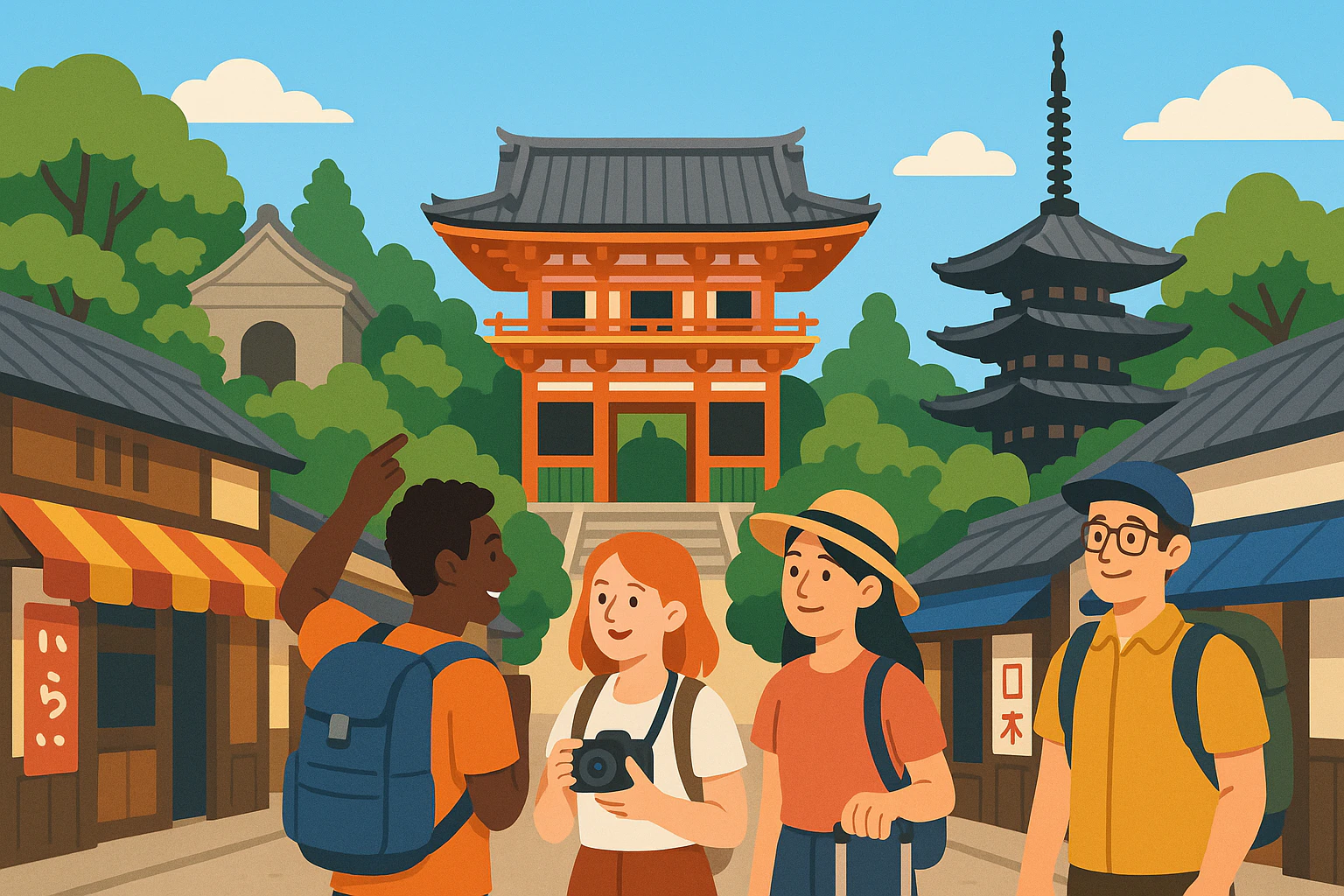
Best Temples in Kyoto (2026): 10 Picks + Crowd-Smart Routes
If it’s your first trip, searching for the best temples in Kyoto can feel overwhelming—especially once you realize that the “obvious” plan often means standing in long lines and getting stuck in slow, packed city buses.
This guide keeps things first-timer friendly, but organizes Kyoto’s must-sees into train/subway-first mini routes so you can temple-hop efficiently. You’ll also get the key 2026 transit updates (Tourist Express buses + the planned city-bus boarding change) and a short list of what to reserve ahead.
Quick planning rule: In Kyoto, use rail to move between areas, then walk (or take one short bus hop) inside each area. Save buses for early mornings, late afternoons, or Tourist Express runs.
Kyoto Temple-Hopping Basics (2026): crowds, hours, costs, transit
Kyoto is compact on a map, but movement can be slow in peak seasons. A crowd-smart plan is less about “which places” and more about when and how you move between neighborhoods.
1) Crowds: the easiest wins (no advanced skills required)
Go early (right at opening) or late afternoon (last 60–90 minutes) whenever possible. Many major sites have ticket counters that stop admitting visitors before closing, so aim to arrive at least 45 minutes before the stated closing time.
Also, don’t try to “do Kyoto” via the busiest bus corridors at 10:00–15:00 on weekends. Instead, ride rail to the nearest station and walk the last 10–25 minutes—your legs will work harder, but your schedule will be more reliable.
2) Typical opening hours & what closes earlier than you think
Many temples open around 8:30–9:00 and close around 16:00–17:00 (with seasonal variation). Some standout exceptions open very early—Kiyomizu-dera’s published hours start at 6:00—which is a major advantage for beating crowds.
One practical detail: even if the grounds open early, stamp (goshuin) and amulet (omamori) counters often start later. For example, Kiyomizu-dera notes that charms (omamori) and stamps (goshuin) start from around 8:00. Check the site’s official notice before you build a “6:00 a.m. stamp (goshuin) plan.”
3) Costs you should budget (per person)
For a temple-heavy day, a realistic budget is:
- Admissions: ¥2,000–¥5,000 (depending on how many paid areas you enter)
- Transit: ¥500–¥1,500 (often less if you do mostly rail + walking)
- Food/coffee: ¥1,500–¥3,500
For passes, Kyoto City’s official guide notes the Subway & Bus 1-Day Pass at ¥1,100 adult / ¥550 child, and it can also cover the Sightseeing Limited Express buses on operating days. Confirm details on the Kyoto City Bus & Subway Information Guide before you buy.
4) 2026 transit update #1: weekend/holiday Tourist Express buses (EX100/EX101)
Kyoto introduced Tourist Express routes to reduce crowding and confusion on regular buses. The Kyoto Tourist Information Center’s model-course sheet highlights key points: they run on weekends/holidays, can go non-stop from Kyoto Station (D1) to Gojozaka for Kiyomizu-dera, and use front boarding with pre-pay at an adult fare of ¥500. See the 2026-02-17 Kyo-Navi model course PDF.
Kyoto City’s official English page for the Sightseeing Limited Express Bus EX100/EX101 also clearly explains the ride flow: board at the front, pay, and exit from the rear. It lists payment options including cash and IC cards (Suica/ICOCA, etc.) and confirms the ¥500 adult fare. Use the official route map and “How to Ride” steps here.
5) 2026 transit update #2: the city bus boarding flow may change (starting work FY2026)
Kyoto City Transportation Bureau announced it will start work from FY2026 (Reiwa 8) toward introducing a “front boarding, rear exit” system on 60 flat-fare routes (excluding the Tourist Express routes, which already use this style). The stated goal is to introduce it by the end of FY2028 (Reiwa 10). Read the official 2026-01-29 announcement.
This matters for short-term visitors because you might arrive when some routes still use the old pattern and others have started switching. The safest approach: follow the door arrows/signs, watch what locals do, and don’t assume Kyoto works the same as Tokyo buses.
Not sure about your specific case? Ask a local Japanese person on LO-PAL for personalised advice.
6) What to reserve in advance (yes, it’s increasing)
Even though this article focuses on temples, one nearby “high friction” sight is Nijo Castle’s Honmaru Palace. The official ticket page states that Honmaru Palace viewing is advance-reservation based, and that the ticket is not handled at the castle ticket office (you’re instructed to buy via WEB tickets). It also notes sales start 30 days before the visit date and that changes/cancellations are not accepted. Check the official ticket rules here.
If you’re building a tight schedule, treat reservations like fixed “appointments,” and plan temples around them (not the other way around).
7) A 2026 seasonal trick: “morning & night” limited experiences
Kyoto’s Jan–Mar 2026 campaign materials push “morning and night tourism,” including limited-date experiences like Toji’s early-morning special viewing (listed at 7:30–8:30, ¥5,000, reservation required) and a late-afternoon special visit at Honnoji. The same pamphlet lists Kyoto Tourist Information Center (Kyo-Navi) contact info and hours. See the official Jan–Mar 2026 campaign pamphlet (PDF).
The 10 Best Temples in Kyoto (plus 1 iconic shrine you shouldn’t skip)
Below are 10 standout temples that cover Kyoto’s “greatest hits” across different areas, plus one iconic shrine that is consistently top-ranked among international visitors.
1) Kiyomizu-dera (Higashiyama)
Why go: Kyoto’s most famous wooden stage view and a classic first-timer landmark. It’s also unusually early-opening, which gives you a real crowd advantage if you commit to a dawn start.
Hours: Officially published as 6:00–18:00 (and until 18:30 in July/August), with extended hours during night special viewing periods. See the temple’s official open-hours notice.
Admission: Commonly listed at ¥500 adult / ¥200 elementary–junior high (confirm near your travel date). Leaf KYOTO lists these amounts.
Rail-first access tip: Take Keihan to Kiyomizu-Gojo and walk up (expect hills), or use the EX101 Tourist Express from Kyoto Station D1 to Gojozaka when it’s operating. EX101 route details are on Kyoto City’s official page.
2) Kennin-ji (Gion area)
Why go: A calm Zen temple right next to Gion—perfect when you want something meaningful without traveling far. It pairs naturally with an early/late walk around Hanamikoji or the Shirakawa area.
Hours/fees: Timings and admission can vary by season and special viewing, but tourism-facing listings typically show late-afternoon closing with last admission shortly before. Check the Kennin-ji listing on Discover Kyoto for current visit details.
Access: Train/subway-first is easy here: Keihan Gion-Shijo or Hankyu Kyoto-Kawaramachi, then walk.
3) Sanjusangen-do (Rengeo-in)
Why go: One of the most distinctive interiors in Kyoto—this long hall houses 1,001 Kannon statues (photography rules apply inside). It’s also a smart “between areas” stop because it sits close to central Kyoto.
Hours: The temple posts seasonal visiting hours: 8:30–17:00 (Apr 1–Nov 15) and 9:00–16:00 (Nov 16–Mar 31), with reception ending 30 minutes before closing. See the official visiting page.
Access: From Kyoto Station, it’s a short rail-and-walk or bus-and-walk trip. If you’re building a rail-heavy day, slot it before you transfer to Keihan or the subway for Higashiyama.
4) Tofuku-ji (South Higashiyama)
Why go: A top pick for gardens and seasonal color (especially autumn), but still enjoyable outside peak foliage. It’s also positioned perfectly for a rail-first plan because it’s near JR/Keihan stations.
Hours & fees (official): Tofuku-ji publishes detailed seasons, including 9:00–16:00 (Apr–Oct) and shorter winter hours, plus different autumn fees (Nov 15–Dec 7). Use the official “Guide” page for exact dates, last reception, and prices.
Access: Use JR Nara Line or Keihan to Tofukuji Station, then walk.
5) Nanzen-ji (Northern Higashiyama)
Why go: A “temple complex day” in one place: massive gate, gardens, sub-temples, and the photogenic aqueduct area. It also connects naturally to the Philosopher’s Path zone.
Hours & fees (official): Nanzen-ji lists 8:40–17:00 (Mar–Nov) and 8:40–16:30 (Dec–Feb), with reception ending 20 minutes before closing. It also lists paid-area fees (e.g., Hojo garden and Sanmon). See the official visiting page.
Access: Subway-first is effective: use the Tozai Line to Keage, then walk.
6) Ginkaku-ji (Jisho-ji / “Silver Pavilion”)
Why go: A classic eastern anchor with strong garden design and an easy pairing with the Philosopher’s Path. It’s also served by Tourist Express EX100 on operating days, which can reduce bus confusion.
Hours & fee (official): The Shokoku-ji group’s official page lists seasonal hours (8:30–17:00 in summer season, 9:00–16:30 in winter season) and admission (¥500 general / ¥300 primary & middle school). See the official visit section here.
Access: Subway-first option: Tozai Line to Sanjo Keihan, then bus or EX100 (operating days). If you’re already in Higashiyama, walking segments can work well.
7) Kinkaku-ji (Rokuon-ji / “Golden Pavilion”)
Why go: The famous gold reflection scene is iconic for a reason. This is the kind of place that is almost always crowded—so go early and move on.
Hours & fee (official): The Shokoku-ji group’s official page lists 9:00–17:00 and admission ¥500 general / ¥300 primary & middle school. See the official visit section here.
Access: This is one of the cases where a short bus hop is hard to avoid, but you can still do rail-first by getting to a convenient hub (e.g., subway + one bus).
8) Ryoan-ji
Why go: The rock garden is one of Japan’s most famous minimal landscapes. It’s best appreciated when you can sit for a while—so prioritize arriving before the biggest tour groups.
Hours/fees: These can change seasonally, so confirm close to your date. A practical reference for first-time planning is Japan-Guide’s Kyoto listings, then cross-check with the temple’s latest notices when you arrive.
Access: Combine rail to a northwest hub with a short bus ride, or take a taxi for the last segment if you’re traveling in a small group and buses are overloaded.
9) Tenryu-ji (Arashiyama)
Why go: The “temple + nature” pairing is perfect here: Tenryu-ji’s garden, then an easy continuation into Arashiyama’s bamboo area. This is one of the simplest areas to reach by train, which is why it’s ideal for a crowd-smart day.
Admission & closures: Tenryu-ji notes that some areas have separate admission and that schedules can include closures on specific dates (especially around events/holidays). Use the official “Admission and Access” page, and verify same-week details before you go.
Access: JR Sagano (San-in) Line to Saga-Arashiyama, then walk.
10) Toji
Why go: A World Heritage temple very close to Kyoto Station, famous for its five-story pagoda. It’s a high-value stop when you’re short on time or want a temple visit on arrival/departure day.
Hours & tickets (official): Toji publishes a clear structure: precinct gates open at 5:00–17:00, and major paid areas like Kondo/Kodo have posted visiting hours (typically until 17:00 with last reception at 16:30). It also publishes a detailed 2026 admission schedule showing special-period pricing (including winter campaign periods). Start with the official admission page and use the 2026 schedule PDF for exact dates and fees.
2026 “morning tourism” note: Kyoto’s winter campaign pamphlet lists a Toji early-morning special viewing (7:30–8:30, reservation required). See the Jan–Mar 2026 pamphlet (PDF).
+ 1 iconic shrine you shouldn’t skip: Fushimi Inari Taisha
Why go: If you only add one shrine, make it this one. A foreign-language review analysis ranked Fushimi Inari as the most popular shrine in Japan among international visitors. See the Nippon.com summary of the study.
Fushimi Inari access from Kyoto Station: The shrine’s official access page notes it is right next to JR Inari Station (JR Nara Line), and about a 5-minute walk from Keihan Fushimi-Inari Station. Use the shrine’s official access page.
Crowd-smart trick: Walk up beyond the first gates and the crowd thins significantly. If you’re jet-lagged, this is an excellent “day 1 sunrise” plan because it’s easy rail access and open-air.
3 Ready-to-Use Model Routes: Higashiyama, Arashiyama, Northwest Kyoto
Use these as plug-and-play templates for your Kyoto temple itinerary. Each one is designed to be rail-first so you don’t spend your best sightseeing hours stuck in bus congestion.
Route A (Higashiyama classic, rail-first + Tourist Express option)
Best for: First-timers who want the “Kyoto postcard” streets plus 2–4 major stops in one day.
- Early morning: Kiyomizu-dera (arrive at opening). Use the official hours to time your start. Kiyomizu-dera open-hours notice.
- Walk down Ninenzaka/Sannenzaka toward Gion (this is your “free sightseeing” time; keep it flexible).
- Kennin-ji for a calmer Zen stop near Gion. Use this listing to confirm hours/fees.
- Afternoon: Nanzen-ji via subway (Tozai Line to Keage, then walk). Nanzen-ji official visiting hours/fees.
Where Tourist Express helps: On operating days, consider EX101 from Kyoto Station (D1) to Gojozaka to simplify the Kiyomizu approach (front boarding, pre-pay, ¥500). Kyoto City EX100/EX101 official guide.
Route B (Arashiyama by train: Arashiyama sightseeing (Tenryu-ji))
Best for: Visitors who want bamboo/nature + a top temple, without relying on buses.
- Kyoto Station → Saga-Arashiyama (JR Sagano Line), then walk into Arashiyama.
- Tenryu-ji first (before the bamboo paths fully clog). Tenryu-ji official visit info.
- Optional add-ons: Bamboo grove area + riverside walking. Save cafes/souvenirs for later to avoid peak congestion.
- Return to central Kyoto by JR before 16:00 if you want to add a paid-area stop that closes earlier.
Budget tip: If you’re choosing between “one paid garden” vs “three rushed temples,” Arashiyama often rewards going slower with fewer stops.
Route C (Northwest icons: Golden Pavilion + rock garden, with minimal bus exposure)
Best for: Travelers who want Kinkaku-ji and Ryoan-ji on the same outing, while limiting time on crowded buses.
- Go early: Start with Kinkaku-ji right at opening. Kinkaku-ji official hours/fees.
- Continue to Ryoan-ji (short transfer). If buses are jammed, consider a short taxi hop between the two—often faster and less stressful for 2–3 people.
- Leave the area before mid-afternoon to avoid the biggest return congestion back toward the center.
Why this is “crowd-smart” even with a bus segment: you’re doing one concentrated northwest loop, not repeatedly crossing the city by bus.
If you only have 1 day: Pick either Higashiyama or Arashiyama as your main area, then add one “near Kyoto Station” stop (like Toji) to finish efficiently.
Related Articles
If you want to go deeper on Kyoto planning and etiquette, these guides help you avoid common first-timer mistakes:
- Kyoto 2-day itinerary by public transport (2026): routes & passes
- Kyoto itinerary (2 days): train-first route + kimono day plan
- Temple vs shrine difference in Japan: a 1-minute etiquette guide
Want local tips in real time? Ask a Kyoto local on LO-PAL
Kyoto planning gets tricky in the details: which entrance is less crowded, whether EX100/EX101 is running today, or how a bus boarding change is being rolled out in practice.
That’s why we built LO-PAL. Post your question (or a small request like “help me choose the least-stress route from my hotel”), and local Japanese helpers can reply with practical, up-to-date advice—supported in multiple languages for travelers.
Written by

Founder, LO-PAL
Former Medical Coordinator for Foreign Patients (Ministry of Health programme) and legal affairs professional. Built LO-PAL from firsthand experience navigating life abroad.
Written with partial AI assistance
Read full bio →