Best Ramen Souvenirs in Japan + How to Order Like a Local

The all-in-one Japanese learning app
From travel phrases to real fluency — all in one app.
All 2,136 standard kanji included. Every feature is free to use.
Order ramen confidently, master tsukemen, and buy the easiest ramen souvenirs in Japan at Donki, stations, and museums.
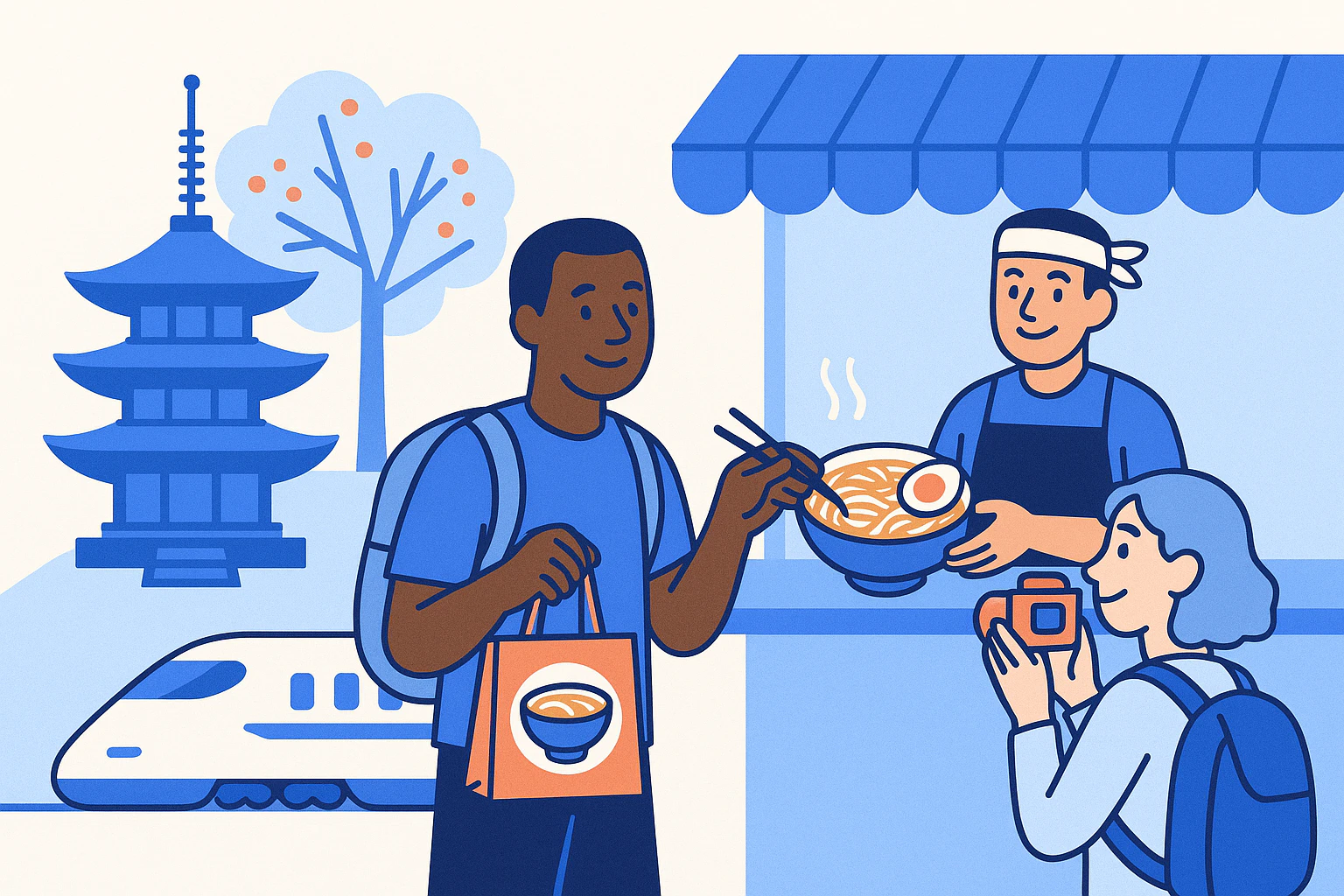
If your Japan trip plan includes ramen (it should), the most stressful part often isn’t finding a famous shop—it’s ordering fast when there’s a line and a ticket machine (食券機) in front of you.
This guide flips the usual ramen advice: we’ll start with ordering confidence (ticket machines, cash, and key phrases), cover how to eat tsukemen correctly, and end with a practical shopping plan for ramen souvenirs in Japan—what to buy, where tourists actually find it (Don Quijote, ramen museums, station gift shops), and what’s easiest to pack home.
60-second ramen game plan (tourist-friendly):
1) Decide your ramen type before entering (tonkotsu, shoyu, miso, shio, or tsukemen).
2) Carry cash as a fallback (especially ¥1,000 bills + coins).
3) At the ramen ticket machine, pick the main bowl first, then toppings.
4) For tsukemen: dip noodles lightly, don’t pour the soup over the noodles, and ask for soup-wari at the end.
5) For souvenirs: prioritize boxed kits, dry noodles, and cup noodles—they pack best.
Ramen Types in Japan: How to Pick the Right Bowl Fast
When you’re standing at a ramen ticket machine with people behind you, you don’t have time to decode a full menu. Use this quick “flavor map” to choose confidently in seconds.
Pick by broth (fastest decision)
- Tonkotsu (豚骨): rich, creamy pork-bone broth (famous in Fukuoka/Hakata). If you love bold, fatty flavors, start here.
- Shoyu (醤油): soy-sauce based, often lighter and aromatic (common in Tokyo-style ramen). Great “safe choice” if you’re unsure.
- Miso (味噌): savory, slightly sweet, deeper flavor (iconic in Hokkaido/Sapporo-style). Great in cold weather.
- Shio (塩): salt-based, typically clean and light. Good if you want something less heavy.
- Tori paitan (鶏白湯): creamy chicken broth. A popular alternative if you want rich but not pork-heavy.
Pick by style (when you want something different)
- Tsukemen (つけ麺): noodles and dipping broth served separately—amazing for beginners once you know the “rules” (we’ll cover it below).
- Abura soba (油そば): brothless noodles mixed with sauce and oil; usually comes with vinegar/chili oil on the table.
- Tantanmen (担々麺): sesame + chili influence; often spicy and nutty.
- Jiro-kei (二郎系): very heavy portions and strong flavors; often involves “call-outs” for toppings (more advanced, but fun if you’re prepared).
Two ticket-machine words that matter
- “Osusume” (おすすめ) = recommended. If you can’t decide, it’s often the easiest win.
- “Tokusei” (特製) = “special” version (typically extra chashu/egg/toppings). Great when you want one “main event” bowl.
If you freeze at the machine: look for photos, pick “おすすめ,” or choose the upper-left option—many shops place their main item there. (livejapan.com)
How to Order Ramen in Japan: Ticket Machines, Cash, Key Phrases
Japan ramen shops usually use one of two systems: traditional table ordering, or the prepaid ramen ticket machine (食券機). Tourist pain points happen with ticket machines because you must decide quickly and some machines still don’t take cards.
Step-by-step: the ramen ticket machine flow
Many ramen shops place the machine near the entrance, and there’s often only one—so it’s smart to decide before you step inside if there’s a queue forming. (livejapan.com)
- Check the menu outside first (photos, top items, price range).
- Insert money / choose payment method (varies by machine).
- Select your main bowl (ramen/tsukemen) and then toppings/sides.
- Take your ticket + change (some machines require an extra “change” button).
- Hand the ticket to staff and say “Onegaishimasu” (お願いします). (livejapan.com)
Cash vs. IC cards vs. credit: what to expect
Payment confusion is real: many ramen ticket machines still only accept cash, especially in smaller or older shops. Newer machines increasingly support IC cards (like Suica/PASMO) or other cashless options, but you should still carry ¥1,000 bills and coins as a reliable fallback. (makimono-manners.com)
- Minimum cash to carry for ramen days: ¥2,000–¥3,000 per person (covers a bowl + toppings + possible extra noodles).
- Typical ramen budget: often around ¥900–¥1,500 per bowl in cities, plus toppings (varies by shop and area).
Key phrases to order like a calm human
- This one, please: “Kore onegaishimasu” (これお願いします)
- Recommended? “Osusume o oshiete kudasai” (おすすめを教えてください) (livejapan.com)
- Do you have English? “Eigo no menyuu arimasu ka?” (英語のメニューありますか)
- Thank you (when handing ticket): “Onegaishimasu” (お願いします) (livejapan.com)
Common ticket-machine buttons you’ll see (and what they mean)
- 大盛 (oomori): large noodles / extra portion
- 替玉 (kaedama): extra noodles (common in tonkotsu/Hakata style)
- 味玉 (ajitama): seasoned soft-boiled egg
- チャーシュー (chashu): braised pork slices
- 海苔 (nori): seaweed
- ネギ (negi): green onion
Customization questions (don’t panic—“futsu” is fine)
Some shops ask your preferences, especially for noodle firmness, soup strength, or oil level. If you’re not sure, you can answer “futsu” (普通) for “regular.” (livejapan.com)
- Noodle firmness: katame (firm) / futsu (regular) / yawarakame (soft)
- Soup strength: usume (lighter) / futsu (regular) / koime (richer)
- Oil: sukuname (less) / futsu (regular) / oome (more)
Mini etiquette that makes everything smoother
- No tipping in Japan (ramen shops included).
- Eat relatively quickly—ramen shops are built for fast turnover.
- Slurping is normal; it’s not considered rude.
Tsukemen for Beginners: The Correct Way to Eat It
Tsukemen can feel “rule-heavy,” but it’s actually simple—and once you get it, it becomes one of the best ramen meals to seek out. It also helps you shop smarter because many premium souvenir sets are made specifically for tsukemen (thicker noodles + concentrated dipping broth).
What tsukemen is (in one sentence)
Tsukemen is ramen’s “dip style”: noodles are served separately (often chilled or room-temp), and you dip them into a rich, concentrated broth.
How to eat tsukemen (the right way)
- Pick up a small bundle of noodles (don’t grab a whole mountain on your first dip).
- Dip only the lower half into the broth—tsukemen broth is usually saltier/stronger than regular ramen soup.
- Slurp and repeat. Between dips, you can add toppings like scallion, nori, or pepper if provided.
- Try citrus/vinegar/chili if available on the table—but start with tiny amounts so you don’t overwhelm the broth.
Two tsukemen terms that help you order
- Atsumori (あつもり): noodles served warm instead of chilled.
- Soup-wari (スープ割り): hot soup added to your leftover dipping broth so you can drink it at the end.
If you want to finish like a local, ask: “Soup-wari onegaishimasu” (スープ割りお願いします). Not every shop offers it, but many do—especially tsukemen-focused shops.
Beginner-friendly tsukemen order: “Tsukemen, futsu, ajitama.” (Tsukemen + regular + egg). If you’re hungry: add “oomori.”
Ramen Souvenir Shopping: Best Take-Home Ramen Souvenirs in Japan + Where to Buy
Now that you can order with confidence, let’s shop. The best ramen souvenirs in Japan are the ones that (1) taste close to what you ate, (2) survive luggage, and (3) fit your home-country food rules.
What ramen souvenirs to buy (ranked by “easy to pack”)
- 1) Boxed “shop-style” ramen kits (dry or semi-dry): Usually include noodles + soup base. Great balance of taste and packability.
- 2) Premium instant ramen (bags or cups): Light, sturdy, and easy to hand out as gifts.
- 3) Regional limited flavors: These are perfect “Japan-only” souvenirs—look for local miso, seafood, yuzu, or spicy varieties at stations.
- 4) Ramen snacks: Ramen-themed sweets and crunchy snacks are low-risk for leakage and great for coworkers.
- 5) Bowls/spoons/chopsticks: Awesome, but fragile and bulky—only buy if you have luggage space and padding.
Where to buy ramen souvenirs in Japan (the realistic tourist map)
You’ll see ramen souvenirs everywhere, but these four places are where tourists most reliably succeed—especially if your trip is only 1–3 weeks.
1) Don Quijote (Donki): the “souvenir hub” strategy
Don Quijote is popular with inbound travelers because it’s a one-stop shop for snacks, cosmetics, and food souvenirs. A Don Quijote PR team interview aimed at visitors highlights ICHIRAN’s instant ramen (5 servings) as a bulk-buy favorite, noting it ranked 4th in the “Overseas Customers’ Bulk Buying Category” of the “Donki Hit Product Awards 2025.” (fun-japan.jp)
- What to do in Donki: head straight to the instant noodle aisle, then look for giftable multi-packs and “Japan-only” flavors.
- What to look for on shelves: bag ramen (light), cup ramen (sturdy), and boxed sets (gift-ready).
- Late-trip tip: shop Donki on your final 1–2 days so you don’t carry food around Japan the whole time.
A Donki example that’s very ramen-focused (near Mt. Fuji)
If you’re doing a Mt. Fuji / Kawaguchiko area trip, one store that’s gotten attention for ramen selection is Don Quijote Kawaguchiko Interchange Store. A local feature describes a “Men Quijote” section with a huge dried-noodle selection plus an instant-ramen machine and eat-in space, and lists store hours as 8:00–1:00 and a phone number (0570-030-061). (porta-y.jp)
2) Ramen museums (best for exclusive souvenirs)
If you want souvenirs you’re unlikely to find elsewhere, ramen museums are the easiest win: they’re designed for visitors, and the shop selection is curated around ramen-specific gifts.
Shin-Yokohama Ramen Museum (Yokohama): shop-supervised souvenir ramen
The museum’s official shop page notes that its 1F Museum Shop stocks souvenir ramen supervised by participating shop owners, plus original snacks and goods you can only buy there. (raumen.co.jp)
- Hours: Weekdays 11:00–21:00; holidays/weekends 10:30–21:00 (last orders 30 minutes before close). (raumen.co.jp)
- Admission: Adults (19+) ¥450; ages 6–18 and seniors (65+) ¥100; under 6 free. (raumen.co.jp)
- Access: about 5 minutes on foot from JR Shin-Yokohama Station; about 1 minute from Exit 10 of the subway lines listed on the museum site. (raumen.co.jp)
- Address / phone: 2-14-21 Shinyokohama, Kohoku-ku, Yokohama 222-0033; TEL 045-471-0503. (raumen.co.jp)
- Advance tickets: the museum’s English page lists advance purchase options via Klook and Trip.com. (raumen.co.jp)
If you want one small, easy gift from the museum shop, it also lists fun low-price goods (like stationery) and snack items—so you can buy something ramen-themed even if you don’t want more noodles. (raumen.co.jp)
CUPNOODLES MUSEUM Yokohama: a customizable “make it yourself” souvenir
If you want a souvenir that’s also an activity, CUPNOODLES MUSEUM Yokohama is ideal. The official guide lists museum hours as 10:00–18:00 (last admission 17:00), closed Tuesdays (or the next day if Tuesday is a national holiday), and adult admission as ¥500. (cupnoodles-museum.jp)
- Address / phone: 2-3-4 Shinko, Naka-ku, Yokohama 231-0001; TEL 045-345-0918. (cupnoodles-museum.jp)
- My CUPNOODLES Factory fee: ¥500 per cup (plus museum admission). (cupnoodles-museum.jp)
- Reservation tip: the museum’s official FAQ says admission itself does not require a reservation, but reservations are required for activities like Chicken Ramen Factory and My CUPNOODLES Factory. (cupnoodles-museum.jp)
- My CUPNOODLES Factory booking: the FAQ describes an “Admission Ticket with My CUPNOODLES Factory Voucher” with a reserved time slot, purchasable online until 12:00 a.m. the day before (until sold out). (cupnoodles-museum.jp)
- Access (walk): about 8 minutes from Minatomirai Station or Bashamichi Station, or about 12 minutes from Sakuragicho Station. (gltjp.com)
3) Station gift shops (best for last-minute, regional buys)
Major stations (Tokyo, Shin-Osaka, Hakata, Sapporo, Nagoya, etc.) usually have “omiyage” areas with boxed foods. Your best targets are boxed multi-serve ramen and regional limited flavors—they’re designed to be carried and gifted.
- Timing tip: shop stations on your travel day between cities or on the way to the airport—so you’re not hauling boxes during sightseeing.
- What to prioritize: sealed boxes with clear cooking steps, and flavors that match where you traveled (e.g., miso styles in the north, tonkotsu in Kyushu).
4) Ramen festivals in 2026 (eat a lot in one place, then buy souvenirs nearby)
If your trip overlaps a festival, it’s one of the easiest ways to sample multiple regions quickly. Here are three events frequently used by travelers planning 2026 ramen trips:
- Nagoya Ramen Festival 2026: scheduled Feb 3–Feb 23, 2026 at Hisaya Odori Park. (en.japantravel.com) As of today (February 21, 2026), it’s in progress and ends on February 23, 2026.
- Fukushima Ramen World 2026: listed for early May 2026 at Fukushima Toyota Crown Arena, with ramen priced at ¥900 on the day and advance tickets sold from April 1, 2026. (en.japantravel.com)
- Tokyo Ramen Festa 2026: listed for late Oct–early Nov 2026 at Komazawa Olympic Park (sessions Oct 23–26, Oct 27–30, Oct 31–Nov 3) with ramen tickets at ¥1,100 per bowl per the event listing. (en.japantravel.com)
Festival logistics tip: bring cash and plan for lines. After you eat, do your souvenir shopping at a nearby station or Donki so you’re not carrying food items around the festival grounds.
Tax-free shopping rules (important for ramen souvenirs)
If you’re buying ramen souvenirs in Japan as a short-term visitor, tax-free can matter—especially at big retailers. Japan Customs explains that when purchasing tax-free goods, you show your passport, the shop transmits a record of purchase, and you present your passport to customs when leaving Japan; customs may inspect your tax-free goods as necessary. (customs.go.jp)
- Minimum purchase: Japan Customs lists the total purchase amount eligible for tax exemption as (a) consumables between ¥5,000 and ¥500,000 at a single tax-free shop, and (b) general goods ¥5,000 and more. (customs.go.jp)
- Don’t open sealed consumables: if your ramen/sweets are processed as consumables, they may be sealed and intended to be taken out of Japan before use (opening can trigger tax payment at departure). (customs.go.jp)
- Shipping changed: JNTO notes that items shipped via international parcels are no longer eligible for tax exemption starting April 1, 2025. (japan.travel)
- Big upcoming change: JNTO also announces Japan will shift to a refund-based tax-free system starting November 1, 2026 (pay tax at purchase, then get a refund through departure procedures). (japan.travel)
Packing ramen souvenirs for the flight (so nothing explodes in your suitcase)
- Use zip bags for anything with concentrated soup packets (double-bag to protect clothes).
- Carry-on vs. checked: if you’re flying via the U.S., remember TSA’s 3-1-1 rule for liquids/gels in carry-ons (3.4 oz / 100 ml containers in one quart-size bag). (tsa.gov) Soup concentrates and oils are safer in checked luggage.
- Fragile items: if you buy bowls/spoons, wrap with clothing in the center of your suitcase or use a hard case.
If you’re returning to the United States: food rules to know (ramen can be tricky)
U.S. rules can be stricter than travelers expect. U.S. Customs and Border Protection notes that many prepared foods are admissible, but almost anything containing meat products, such as bouillon or soup mixes, is not admissible. (cbp.gov) That can overlap with ramen soup base packets depending on ingredients.
To reduce risk: choose seafood/vegetable flavors when possible, keep everything in original sealed packaging, and declare all food items. USDA APHIS emphasizes you must declare agricultural products, and inspectors make the final determination—declaring helps you avoid penalties even if an item can’t enter. (aphis.usda.gov)
Need More Help with Ramen Souvenirs in Japan? Ask on LO-PAL
If you want hyper-specific help (for example: “Which Donki near my hotel has the biggest instant noodle aisle?” or “Can someone help me use this ramen ticket machine?”), ask a local Japanese person directly on LO-PAL.
LO-PAL is our matching service where foreign tourists in Japan connect with local Japanese helpers for Q&A and task help. Post your question or request in the app, and local helpers in your area will respond—supported in multiple languages (English, Chinese, Vietnamese, Portuguese, Korean, Nepali, Tagalog, Indonesian, and Spanish).
For ramen trips, LO-PAL is especially useful for last-minute realities like “cash-only shop near Asakusa,” “best station gift shop for boxed ramen,” or “help me buy tax-free souvenirs correctly without opening sealed bags.”
Written by

Founder, LO-PAL
Former Medical Coordinator for Foreign Patients (Ministry of Health programme) and legal affairs professional. Built LO-PAL from firsthand experience navigating life abroad.
Written with partial AI assistance
Read full bio →