Hanami Etiquette in Japan (2026): Park Rules + Pollen Safety
Tokyo’s official hanami rules + 2026 pollen prep: spot-saving, tents, trash, noise, alcohol limits, and hay fever tips.
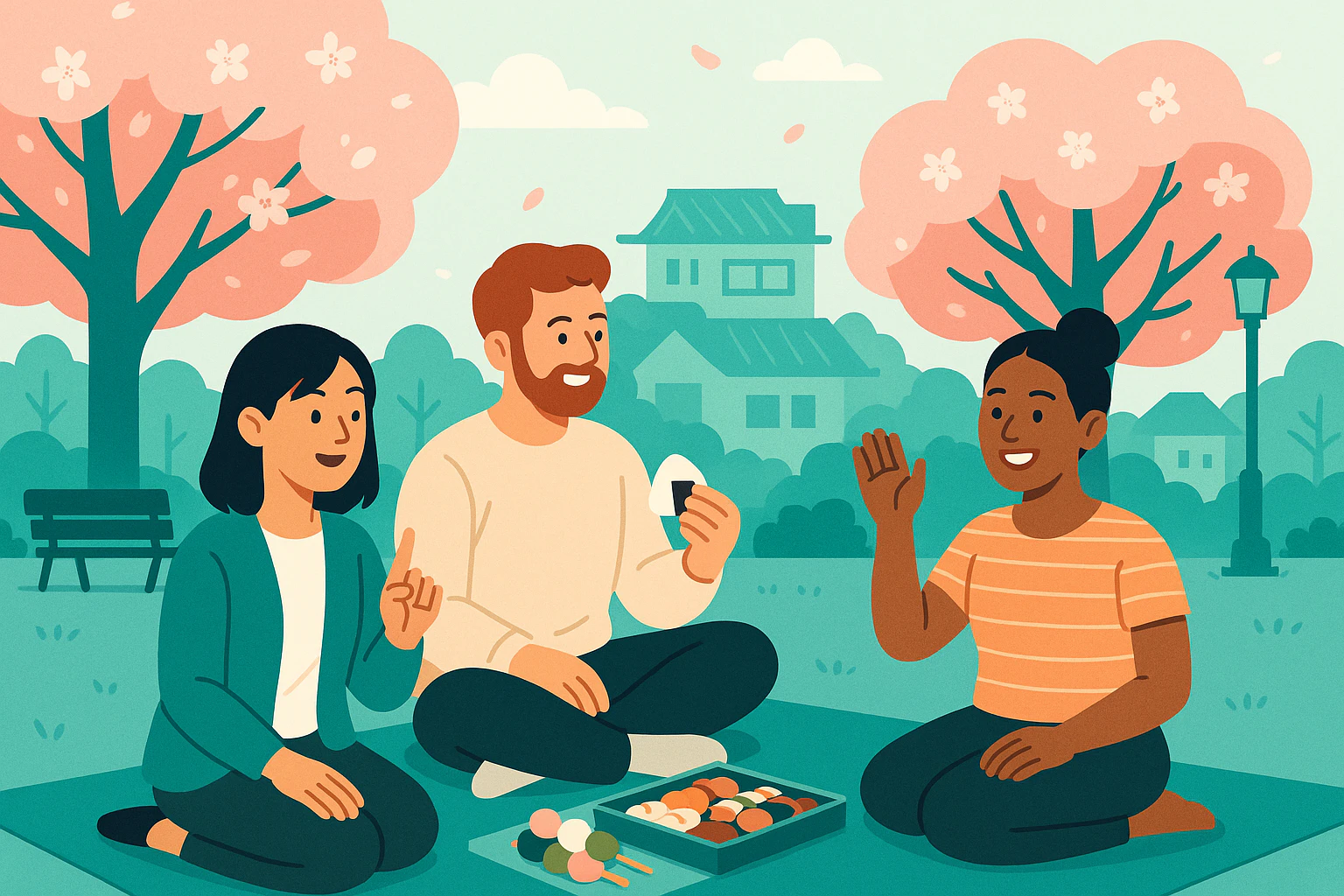
Hanami is one of Japan’s best seasons—but if you live in (or visit) Tokyo, hanami etiquette Japan is not just “be polite.” Real park rules change by park, and every spring we see the same problems: people trying to reserve a spot the “wrong” way, leaving trash behind, getting warned for noise/equipment, or spending the whole picnic sneezing because they didn’t plan for pollen.
This 2026 guide is written for foreign residents and repeat visitors who want specifics. We translate official notices from Tokyo Metropolitan parks (Tokyo Park Association) plus Shinjuku Gyoen’s official rules into a practical checklist—then add a medical prep plan for Japan’s hay fever season.
Fast checklist (save this): 1) Place-holding rules differ by park/time; unattended or proxy place-holding can be banned. 2) Many parks ban ropes/pegs/signs for reserving. 3) Some parks ban all tents (even pop-up). 4) Expect trash rules to be strict (often “take it home”). 5) Noise + amplified music can get you stopped. 6) Alcohol may be restricted by park (and is prohibited at Shinjuku Gyoen). 7) 2026 pollen is forecast to be higher than usual in parts of Japan—prep masks/meds early. 8) Nights under the trees get cold; dress like it’s winter after sunset.
Hanami etiquette Japan: What foreign residents get wrong about hanami (common searches)
Most English guides stay generic (“be quiet, clean up”). The real problems come from assumptions—because in Tokyo, “hanami rules Tokyo parks” vary by park and by year, and spring signage is often only partly translated.
Here are the most common search intents we see (and the mismatch that causes warnings):
- “Can I reserve a spot for hanami?” People drop a blue sheet at 8 a.m. and leave for hours. Some parks will remove unattended sheets, and Tokyo’s own Q&A warns that “unattended” place-holding is not allowed and that proxy place-holding is not permitted. See the Tokyo Metropolitan Government (Construction Bureau) ToRitsu Park Q&A.
- “Can I use ropes, pegs, or signs to mark my area?” Several parks explicitly prohibit this. For example, Yoyogi Park bans place-holding using ropes/pegs/postings and warns unattended sheets may be removed. See the Tokyo Park Association’s Yoyogi Park hanami notice (Apr 10, 2025).
- “Is alcohol allowed?” Some parks allow moderate drinking; others do not. Shinjuku Gyoen’s official rules prohibit bringing in alcoholic beverages. See Shinjuku Gyoen’s official Garden Rules (Ministry of the Environment).
- “Can I bring a pop-up tent?” Many people assume a small shelter is fine. But some parks ban all tents during peak season, including pop-up tents (example: Kiba Park). See Kiba Park’s hanami-period prohibited items notice (Mar 15, 2025).
- “What do I do with trash?” People expect lots of bins. In reality, bins can be reduced or closed early; Yoyogi notes fewer bins and that bins close after 20:00. See Yoyogi Park’s notice.
- “How do I handle pollen/hay fever during sakura?” In Tokyo, cedar/cypress season runs roughly February to early May and peaks overlap hanami. The Tokyo Allergy Information Website (TMG) lists high-pollen weather patterns and practical protection steps.
Bottom line: hanami etiquette Japan in big cities is “enjoy it without creating work for park staff or discomfort for other visitors.” The easiest way to do that is to follow the park’s posted rules—even if your friend’s favorite park allows something yours doesn’t.
Hanami etiquette Japan: Official park-by-park rules: place-holding, tents, trash, noise, alcohol
Before we go park-by-park, here’s the rule that explains most of the confusion: Tokyo Metropolitan Government states that place-holding is only allowed within each park’s specified places/times—and also warns against unattended or proxy place-holding. See the ToRitsu Park Q&A.
Tokyo “place-holding” basics (the part many people miss)
- It varies by park: even within Tokyo, the acceptable method/time/area can be different. Confirm via the park’s notices and onsite signage. The official Q&A explicitly says it depends on each park’s designated places/times. See Tokyo Construction Bureau Q&A.
- Unattended is a red line: the Q&A states unattended place-holding is prohibited, and multiple parks warn that unattended sheets may be removed. See Tokyo Construction Bureau Q&A and the park notices linked below.
- Proxy “spot saving” is not allowed: the Tokyo Q&A warns that place-holding by a substitute (代行) is not permitted. See Tokyo Construction Bureau Q&A.
If you’re planning something bigger than a casual picnic (club event, organized gathering, filming), Tokyo’s Q&A also notes that events may require an occupancy permit and provides contacts such as the East Park & Green Space Office (23 wards) at 03-3821-6145 and the West Park & Green Space Office (Tama area) at 0422-47-1210. See the event Q&A section on Tokyo Construction Bureau’s page.
Park-specific rules (Tokyo examples you can actually use)
Yoyogi Park (Tokyo Metropolitan Park): strict on “marking” a spot + early trash closure
Yoyogi is famous for picnic-style hanami, but it’s also where people get warned most often—because crowds are massive and park staff are enforcing rules fast.
- Place-holding: Yoyogi explicitly prohibits place-holding using ropes, pegs, or posted signs, and warns that unattended sheets may be removed/disposed. See Yoyogi Park notice (Apr 10, 2025).
- Large equipment + noise: the same notice lists bans on generators, DJ equipment/amps/loud performances, and bringing in tents, tables, and chairs. See Yoyogi Park notice.
- Trash: Yoyogi notes fewer trash bins due to construction and says all trash bins close after 20:00. Plan to take trash home if you’re out late. See Yoyogi Park notice.
- Safety: the notice warns visitors to keep valuables close and be careful of theft. See Yoyogi Park notice.
Practical etiquette tip: If you want a “held” spot at Yoyogi, do it the Tokyo way: have someone physically present, keep your footprint small, and don’t try to rope off territory.
Kiba Park (Tokyo Metropolitan Park): no tents (including pop-up) + no place-holding
Kiba is a great option for a calmer hanami, but during the designated hanami period it can be surprisingly strict.
- All tents banned: the park notice bans all tents, including simple/pop-up tents, during the stated period (Mar 15–Apr 13, 2025 in the notice). See Kiba Park notice (Mar 15, 2025).
- Place-holding banned: the notice states place-holding is prohibited and that unattended sheets/belongings may be removed. See Kiba Park notice.
- Trash: “please take home the trash generated by hanami” is stated directly. See Kiba Park notice.
Practical etiquette tip: Kiba is better for “arrive together, sit together.” If your group arrives separately over hours, expect friction—because you can’t reserve a big area in advance.
Shiba Park (Tokyo Metropolitan Park): limited picnic zones + bans on big gear
Shiba Park’s cherry blossoms with Tokyo Tower views are iconic, but the park is physically tight—so the official notice focuses heavily on congestion control.
- Place-holding: the notice says “place-holding is strictly prohibited” in a specific area (23-gochi meeting plaza) and asks people not to reserve a spot when nobody is present. See Shiba Park cherry blossom season rules (Mar 19, 2025).
- Large items banned: the notice bans tents and large equipment including generators, beer servers, and speakers. See Shiba Park rules notice.
- Trash + fire: “no fire” and “take trash home” are clearly stated. See Shiba Park rules notice.
- Alcohol: the notice says to drink in moderation and notes that you may be asked to stop if there are complaints. See Shiba Park rules notice.
Practical etiquette tip: At Shiba Park, plan for “walking hanami” plus a short seated break in permitted zones—rather than a long, sprawling party setup.
Shinjuku Gyoen (National Garden): alcohol is prohibited to bring in
Shinjuku Gyoen isn’t a typical “party hanami” park—it’s a managed national garden with very clear rules, including bans on many disruptive items.
- Alcohol: Shinjuku Gyoen’s official English rules list alcoholic beverages as prohibited items to bring in. See Shinjuku Gyoen Garden Rules (MOE).
- Sports/play equipment: the rules prohibit various play and exercise equipment (examples include ball games and badminton). See Shinjuku Gyoen Garden Rules.
If you’re wondering why enforcement feels strict: Tokyo’s official tourism site also reminds visitors that some public spaces (Shinjuku Gyoen is named as an example) forbid alcohol and notes that baggage checks are in place. See GO TOKYO’s “Local Laws” page (updated Sep 2, 2025).
Alcohol + public spaces (Tokyo 2026 context): Shibuya’s nighttime street/park drinking prohibition
Even if your hanami itself is in a park that allows moderate drinking, your route home can still create problems—especially if you pass through Shibuya at night with an open container.
Shibuya Ward’s official ordinance page states that from October 1, 2024, drinking in public places (streets/parks, etc.) in the designated Shibuya Station area is prohibited daily from 18:00 to 5:00 year-round, and the page shows it was updated on August 22, 2025. See Shibuya City Portal: Ordinance amendment page.
For residents, it’s useful to know the ward also publishes maps/PDFs (including English) and notes that restrictions can be lifted for certain sponsored events if organizers contact the ward in advance. The ordinance page says to contact the ward (Safety Measures Division) in principle one month before if you want a temporary exemption for an event. See Shibuya ordinance page.
Contact info: Shibuya Ward lists its main phone number as 03-3463-1211 on the ordinance page. See Shibuya ordinance page. A ward news page about the same rule also lists a Safety Measures contact number: 03-3463-1598. See Shibuya City “STOP! nuisance street drinking” notice (Sep 1, 2024 issue).
Mini “read the sign” glossary (parks + hanami season)
If you can learn just a few words, you can avoid 90% of trouble. These are extremely common on Tokyo park signboards:
- 飲酒禁止 (inshi kinshi) = no alcohol
- 火気厳禁 (kaki genkin) = no fire/flames (strictly prohibited)
- 場所取り禁止 (bashotori kinshi) = no place-holding / no reserving spots
- 無人シート撤去 (mujin shiito tekkyo) = unattended sheets will be removed
- ゴミ持ち帰り (gomi mochikaeri) = take trash home
- テント禁止 (tento kinshi) = no tents
- 音響機器禁止 (onkyou kiki kinshi) = no audio equipment/speakers
If a guard warns you: In Japan, the best “etiquette move” is immediate compliance plus a quick apology. Don’t debate in English at volume. Pack up the item (speaker, tent, grill), ask “Koko wa dame desu ka?” (Is it not allowed here?), and move calmly.
Hanami etiquette Japan: Medical checklist for hanami season: hay fever, alcohol, cold nights
In 2026, pollen is not an afterthought—it’s a planning factor. The Japan Weather Association’s 2026 spring pollen forecast (Jan 19, 2026) says concentrations are expected to be higher than usual in eastern and northern Japan, and it lays out typical peak timing (late February through mid-March for cedar in many areas).
Media reports citing Weathernews also warned that nationwide pollen totals in 2026 are expected to be above historical averages. See The Japan Times coverage (Jan 15, 2026). Your best move is to prepare before your first “big hanami weekend,” not after symptoms explode.
1) Hay fever (kafunshō) checklist for a 2–4 hour hanami outing
Know your timing (Tokyo): Tokyo Metropolitan Government’s allergy site states that in Tokyo, cedar and cypress pollen season runs from February to early May, with cedar peaking in March and cypress in April. See Tokyo Allergy Information Website (TMG).
Know your “high pollen day” triggers: The same Tokyo site notes pollen increases when the daily max temperature is high, on the first sunny day after rain, and on sunny/windy/dry days. See TMG allergy guidance.
- Before you leave: If you already use allergy meds, don’t wait until you’re at the park. Japan’s Ministry of the Environment / Ministry of Health leaflet recommends preparing medication and starting use by about one week before full-scale dispersal for people who get symptoms every year. See the PDF “Countermeasures against hay fever: daily life tips for cedar pollen allergy” (MOE/MHLW).
- Gear up: Wear a mask and glasses; a hat helps reduce pollen sticking to hair. The Tokyo allergy site recommends mask + glasses + hat during pollen season. See TMG allergy guidance.
- Don’t bring pollen indoors: Brush pollen off clothes and hair before entering home, then wash face/hands (and consider gargling). See TMG allergy guidance.
Japan hay fever season pollen tips (resident reality check): Convenience stores sell masks, eye drops, and tissues, but on peak weekends the “good” items sell out fast near major stations. If you know you react badly, stock your basics at home before peak bloom.
2) Alcohol + allergy meds: a safety-first rule of thumb
Hanami often involves alcohol, but many allergy medications (especially some antihistamines) can cause drowsiness in some people. If you drink while using them, your impairment can be worse than expected.
Practical rule: If you’re taking any medicine and you’re not sure about interactions, ask a pharmacist at a drugstore (or your clinic) before your hanami day. If you want a “low-risk” plan, consider a low-alcohol/no-alcohol hanami (sparkling water, tea, 0% beer) and save drinks for a venue that allows them.
3) Cold nights + ground chill: the part that makes people “mysteriously sick”
Peak cherry blossoms can arrive while evenings are still winter-cold. Sitting still on a cold groundsheet for hours—especially after sweating from walking—can leave you shivering and run-down the next day.
- Insulate: Bring a thicker picnic mat (or an extra blanket) so you’re not directly on cold ground.
- Layer smart: A light down jacket, heat-tech base layer, and a windproof outer layer matter more than fashion at night.
- Warm hands/feet: Disposable warmers (kairo) are cheap and genuinely useful for long sits.
Don’t confuse pollen symptoms with a cold. If your “hanami sniffles” last longer than usual, include fever, or worsen rapidly, consider medical advice. In Japan, pharmacies can help you decide whether you should go to a clinic.
Hanami etiquette Japan: What to bring (packing list) + when to ask a local on LO-PAL
The best hanami packing list depends on your style. Below are four “by-situation” checklists that match how residents actually do hanami in Tokyo—and help you follow spot-saving rules, trash rules, and pollen precautions.
Scenario A: Picnic-style hanami (sitting 2–4 hours)
- Leisure sheet (groundsheet) + one extra layer (blanket or thicker mat)
- Trash bags (at least 2: burnable + bottles/cans) and wet wipes
- Tissues + hand sanitizer
- Pollen kit: mask, glasses (or sunglasses), eye drops, small towel
- Food you can eat quietly (avoid messy, strong-smell items in crowded zones)
- If alcohol is allowed where you are: keep it moderate, keep the cans/bottles under control, and don’t walk around with open drinks if you’ll pass through restricted areas like Shibuya at night (see Shibuya Ward’s rule above)
Scenario B: Walking hanami (stroll + photos, minimal sitting)
- Comfortable shoes (parks get crowded; you’ll detour a lot)
- A small picnic mat only if you’re sure sitting is allowed in your zone
- A compact trash bag (yes, even for “just one coffee”)
- Pollen kit: mask + glasses/hat (Tokyo government recommends these for avoiding pollen exposure) (TMG guidance)
Scenario C: Family hanami (kids + higher chance of spills)
- Extra trash bags + spare clothes for kids
- Wipes + small first-aid basics (band-aids, disinfectant wipes)
- Ear protection for sensitive kids (crowds can be loud even without music)
- Rules check: some gardens (like Shinjuku Gyoen) restrict sports/play equipment—verify before bringing balls/badminton gear (Shinjuku Gyoen official rules)
Scenario D: Low-alcohol / no-alcohol hanami (the “pollen-safe + no warnings” plan)
- Hot drinks in a thermos (tea/coffee) + water
- Snack box (onigiri, fruit, sweets) with minimal trash
- Extra masks + anti-pollen glasses
- Choose a garden/park where alcohol is prohibited (e.g., Shinjuku Gyoen) if you want to remove decision fatigue (official rules)
When you should ask a local (instead of guessing)
Use help when any of the following are true:
- You’re not sure whether your park allows place-holding (or how it’s allowed this year).
- The park has multiple rule boards and you can’t tell which applies to your area/time.
- You want a less crowded, lower-pollen plan (route, time of day, alternatives if it’s windy/warm).
- You’re coordinating friends arriving at different times and want to avoid getting your sheet removed.
Need more help? Ask on LO-PAL
If you want to know more about hanami etiquette Japan for your specific neighborhood—or you want someone to help interpret park signage and confirm whether reserve a spot for hanami (place holding) rules apply where you’re going—ask a local Japanese person on LO-PAL.
On LO-PAL, you can post a question (Q&A style) or request hands-on help (like planning a low-pollen hanami route, checking the latest park notice for your exact park, or figuring out what a rule board means). Our community supports multiple languages, so you can get practical, neighborhood-specific answers without guesswork.
Written by

Founder, LO-PAL
Former Medical Coordinator for Foreign Patients (Ministry of Health programme) and legal affairs professional. Built LO-PAL from firsthand experience navigating life abroad.
Written with partial AI assistance
Read full bio →