Do You Have to Join a Neighborhood Association in Japan? (2026)
2026 guide to whether neighborhood associations are mandatory in Japan—fees, trash station disputes, and how to join or decline politely.
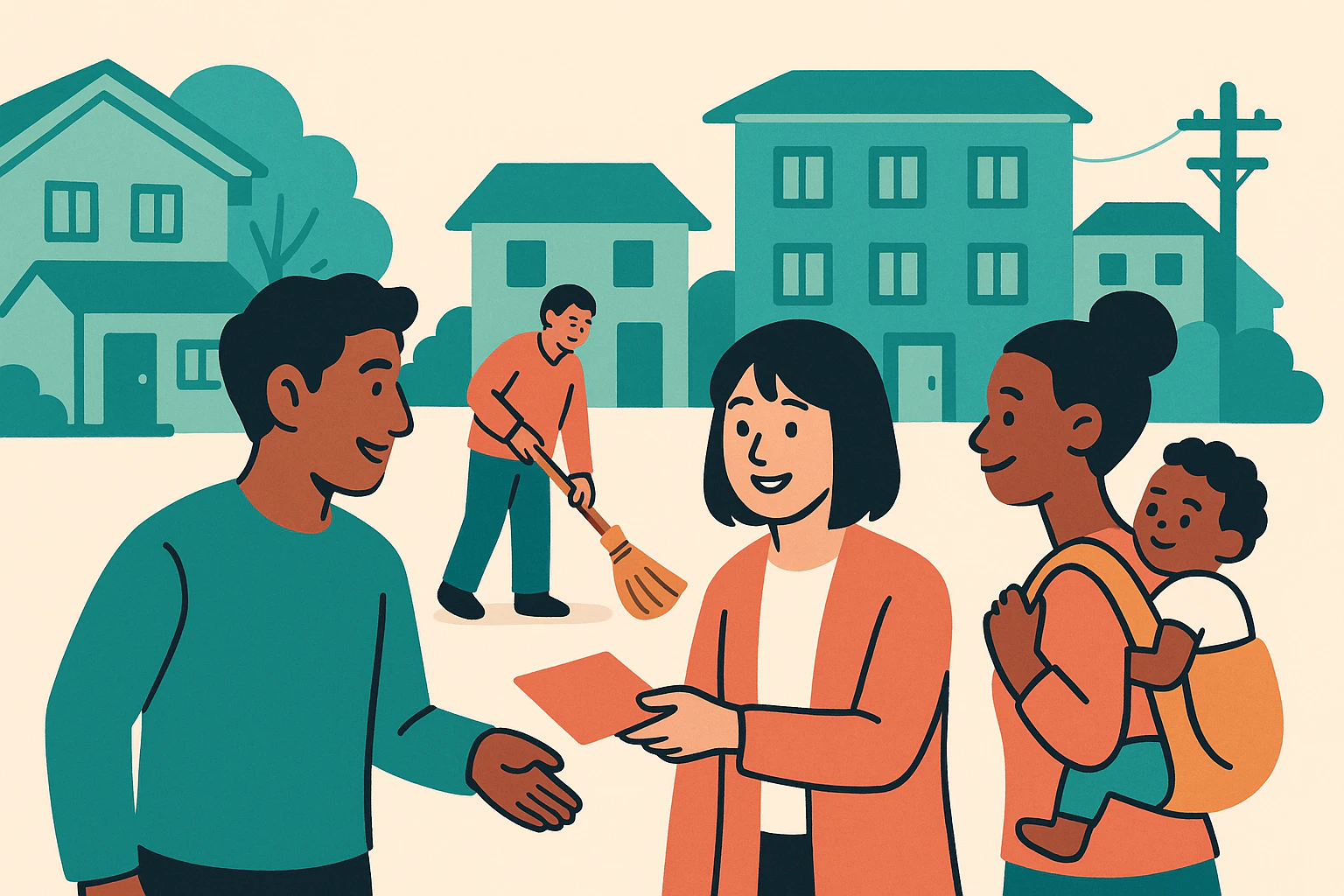
If you searched “neighborhood association Japan mandatory”, there’s a good chance it wasn’t out of curiosity. Most foreign residents only Google this after a conflict: a surprise chonaikai/jichikai membership fee, a note in the mailbox about “duties,” or (most common) being warned about the trash station (gomi).
In 2026, many city halls publish clear Q&As in Japanese (and sometimes English) that explain what’s legally voluntary, what’s practically expected, and how to solve problems without turning daily life into a neighbor-vs-neighbor situation.
Quick answer (2026): Neighborhood associations (町内会・自治会 / chonaikai・jichikai) are generally described by municipalities as voluntary organizations, and multiple city Q&As explicitly say garbage collection is handled regardless of membership. However, garbage stations are often maintained locally, so you may still need a local agreement about cleaning/rotation or contributions.
What a Chonaikai/Jichikai Is (and why it affects daily life)
In Japan, a neighborhood association is usually called 自治会 (jichikai) or 町内会 (chonaikai). Names vary by region, but the idea is similar: residents organize locally to support daily life, safety, and community activities.
Municipal guidance commonly describes them as resident-led groups that work with the city on practical matters like safety, local notices, and community cooperation. For example, Hamamatsu’s intercultural guidance explains that neighborhood associations are formed by residents’ own will and are part of making daily life smoother, including understanding community rules like garbage disposal. See Hamamatsu Intercultural Portal’s neighborhood association guidance.
Why you feel it quickly as a foreign resident
Even when membership is voluntary, neighborhood associations often touch the “invisible infrastructure” of daily living. That includes:
- Disaster prevention and local drill information
- Local notices (回覧板 / kairanban circulars)
- Streetlights, patrols, and beautification
- Trash station upkeep (cleaning, nets, signage, rotation)
Some cities spell out these everyday functions directly. Kawanishi City, for example, notes that associations handle things like garbage station management, disaster preparedness, and local watch activities, while also clarifying that joining is not compulsory. See Kawanishi City’s “Join a neighborhood association” page.
Chonaikai/Jichikai membership fee (chonaikai jichikai membership fee): what it usually pays for
Fees vary by neighborhood, but they’re commonly used for shared needs (disaster supplies, cleaning tools, notice printing, events, garbage station nets, and sometimes meeting hall costs). Yokohama City’s multilingual “Community life” page gives a concrete reference point: it explains that joining typically involves paying a membership fee of a few hundred yen per month. See Yokohama City’s guidance on community life and how to join.
In apartments, you may also have separate payments to a building management association (管理組合) or management company, which is different from the neighborhood association. This is one reason “my friend in Tokyo doesn’t pay” and “my coworker in rural areas must join” can both be true.
Is Joining Mandatory? (neighborhood association Japan mandatory) The Legal Reality vs. Local Custom
Here’s the core point: “mandatory” in law and “expected in practice” are not the same thing in Japan. Municipal Q&As and multilingual guidance in many areas consistently frame chonaikai/jichikai as voluntary.
Legal reality: freedom of association
Japan’s Constitution guarantees freedom of association. Article 21 states that freedom of assembly and association is guaranteed (in the official English translation). See The Constitution of Japan (Japanese Law Translation).
In plain English: a private local group cannot generally “force” you to become a member just because you moved into the area. That’s also why many city pages use the term 任意団体 (voluntary organization) when explaining neighborhood associations.
Local custom: what neighbors may still expect
Even if you don’t join, the neighborhood may still rely on shared labor for shared systems (especially the garbage station). City halls often acknowledge this tension and recommend a relationship-based approach: confirm city policy, then coordinate locally about upkeep.
For example, Iida City’s public Q&A answers a question about whether membership/fees are compulsory and whether refusing means you can’t use the garbage station. Iida states that neighborhood associations are voluntary and that not paying fees is not a reason to prevent use of a garbage collection point, while also explaining that the station is managed locally through delegated community management. See Iida City’s Q&A (updated June 19, 2024).
What is “voluntary” vs. what is “practically necessary”?
These are typical patterns (but your neighborhood may differ):
- Usually voluntary: joining the association, attending events, taking official roles (though social pressure can exist).
- Practically important: agreeing on garbage station rules (time, sorting, cleaning), and how upkeep costs are covered.
- Often building-specific: in condos/apartments, garbage areas are managed by the building, and rules come from the landlord/management company rather than the chonaikai.
If you’re unsure who controls your trash disposal rules, start by asking: “Is this a city rule, a building rule, or a neighborhood association rule?” That question alone reduces conflict.
Trash Station Problems: What to Do If You’re Told You Can’t Use It
The most stressful conflict is being told: “If you don’t join/pay, you can’t use the gomi station.” In 2026, multiple cities publish Q&As that directly address this issue, and the answers are often more helpful than rumors from neighbors.
Know the basics: municipalities are responsible for waste management
Under Japan’s national framework, municipalities have obligations regarding municipal waste. The English translation of the Act on Waste Management and Public Cleaning describes municipal responsibilities to manage municipal waste, including collection, transport, and disposal, in accordance with a municipal plan. See Act on Waste Management and Public Cleaning (Japanese Law Translation).
That does not mean every neighborhood must provide the same station setup, but it supports the general principle found in many city Q&As: collection itself is not supposed to depend on association membership.
What official city Q&As say (real examples you can show, with dates)
- Kofu City (updated June 24, 2025): Kofu states it collects burnable and non-burnable trash at collection points regardless of whether you joined the neighborhood association, while also noting that cleaning/maintenance is done by local users and non-members should discuss usage rules with the representative. See Kofu City’s FAQ (contact: Kofu City Waste Collection Division, 055-241-4313).
- Iida City (updated June 19, 2024): Iida states membership is optional and that non-payment of association fees should not prevent use of garbage collection points, while explaining local management practices. See Iida City’s Q&A (city hall main contact listed: 0265-22-4511).
- Inazawa City (updated October 3, 2025): Inazawa states trash disposal is possible regardless of joining, but also says maintenance is typically done by the local administrative district/neighborhood group, and advises consulting the local representative because ownership/management of collection sites varies (including private land). See Inazawa City’s Q&A-style response (city hall main line listed on the page: 0587-32-1111).
Trash station (gomi) dispute Japan: a “rights + relationship” step-by-step plan
If someone warns you about using the trash station, try this order. It keeps you calm, protects your rights, and shows respect for the community.
- Confirm the city’s policy (don’t argue from memory). Search your city site for “自治会 未加入 ごみ集積所” or call the waste collection section. In Kofu City, for example, the relevant office is listed on the FAQ page as 環境部ごみ収集課 with phone 055-241-4313. See Kofu City’s FAQ.
- Ask who manages that station. Is it on public land? Private land? A building site? Inazawa explicitly notes station ownership/management varies and that this affects how disputes should be handled locally. See Inazawa City’s guidance.
- Offer a practical contribution if you use it. Even when membership is voluntary, you can propose a fair solution: joining the cleaning rotation, paying a small “station upkeep” amount, or helping with net setup on collection mornings.
- Keep the discussion narrow. Focus on “station rules” rather than “whether you should be in the association.” This reduces personal conflict.
- If it escalates, ask city hall for mediation-style guidance. Many city halls won’t “order” a neighborhood to behave, but they can clarify rules, propose alternatives, and document complaints.
Useful Japanese phrases you can copy/paste
When talking to neighbors (polite, non-confrontational):
- Station use: 「ごみ集積所を利用したいのですが、清掃当番など、ルールを教えていただけますか。」
- Offer to help: 「加入は検討中ですが、利用する以上、清掃などは協力したいです。」
- Ask for the right contact: 「自治会のご担当者(区長さん/班長さん)はどなたでしょうか。」
When calling city hall (keep it factual):
- 「自治会未加入でも、ごみ集積所に出せるか、市のルールを確認したいです。」
- 「ごみ集積所の利用でトラブルになっていて、担当課に相談したいです。」
When the traditional model doesn’t fit: new local experiments
Some municipalities are openly experimenting with alternatives as lifestyles change. Minokamo City, for example, announced a city-managed paid garbage collection point pilot starting November 1, 2025, explicitly acknowledging that the traditional自治会-managed model doesn’t work for everyone. See Minokamo City’s pilot program page (contact listed: Environmental Division, 0574-25-2111).
This doesn’t mean you can demand the same option everywhere, but it’s a strong signal that cities recognize the problem and may offer workarounds if you ask politely and early.
How to Join (or Decline) Politely + Where to Ask for Help
Whether you want to join, or you want to stay independent, the goal is the same: avoid turning a system issue into a personal relationship issue. The best approach is to communicate clearly, contribute fairly when you use shared resources, and use official consultation routes when needed.
How to join a neighborhood association in Japan (typical procedure)
Many municipalities follow a similar flow:
- Find the local representative (班長/組長/自治会役員). If you don’t know who that is, ask your landlord, building manager, or a long-term neighbor.
- If you can’t find the contact, ask your ward/city office. Yokohama City’s English guidance says you can ask either an executive member or your ward office’s Community Promotion Division. See Yokohama City’s “How to join” section.
- Confirm fee amount and payment method (monthly/annual, cash collection, bank transfer, etc.). Ask what it covers and whether there are reduced-participation options for busy residents.
- Ask about garbage station rules immediately (location, time, sorting, net/cage use, cleaning rotation). This prevents the most common disputes.
Concrete “ask for help” contacts (examples you can model)
Yokohama (citywide guidance in English): Yokohama lists phone numbers for each ward’s Community Promotion Division. For example, Naka Ward is listed as 045-224-8131. See the Yokohama City page with ward phone numbers.
Yokohama Naka Ward (English page): Naka Ward’s “Information for Daily Life” page says to inquire at the ward office’s Regional Promotion Division (Chiiki Shinko-ka) and repeats the phone number 045-224-8131. See Naka Ward’s English daily-life guidance.
Hamamatsu: Hamamatsu’s intercultural portal provides neighborhood association context for foreign residents and lists consultation contact information (Hamamatsu Intercultural Center, phone 053-458-2170). See Hamamatsu’s guidance page.
Multilingual materials that can prevent conflict (bring these to the conversation)
Some cities explicitly publish foreign-resident-focused pamphlets and flyers so that “joining” isn’t explained only through Japanese-only, relationship-heavy conversations.
- Atami City (updated December 15, 2025): Atami published multilingual neighborhood association flyers and lists the supported languages (including English plus languages aligned with local foreign-resident demographics). See Atami City’s multilingual flyer announcement (contact listed: 0557-86-6233).
- Nagahama City (updated January 4, 2024): Nagahama provides downloadable multilingual pamphlets encouraging neighborhood association participation (Portuguese, Spanish, English, Chinese, Vietnamese, and Japanese). See Nagahama City’s pamphlet page (contact listed: 0749-65-8711).
If you want to decline: do it politely and propose a “use-based” contribution
Declining is not the same as refusing cooperation. If you use shared systems (especially a gomi station), a small contribution can protect relationships even when you don’t join.
You can say:
- 「今は自治会への加入は難しいのですが、ごみ集積所を利用する場合のルール(清掃当番など)には協力したいです。」
- 「会費の代わりに、集積所の清掃やネットの管理など、できる範囲で手伝えますか。」
This aligns with how cities describe real-world solutions. Kofu City’s FAQ, for example, mentions local rule-setting such as participating in cleaning duties when non-members use the station. See Kofu City’s guidance.
Need More Help? Ask on LO-PAL
If you want to know what’s true for your exact city and neighborhood—or you need help communicating politely at city hall or with a local representative—ask a local Japanese person on LO-PAL.
LO-PAL is our matching service where foreign residents and tourists in Japan can connect with local Japanese helpers for life questions and task support. You can post a question like “Is my neighborhood association mandatory?” or “How do I solve a gomi station dispute?” and get responses from people who understand the local norms.
We support multiple languages (English, Chinese, Vietnamese, Portuguese, Korean, Nepali, Tagalog, Indonesian, Spanish), and you can also request practical help—like going with you to a ward/city office or helping you draft a message to your neighborhood representative.
2026 takeaway: If you’re stuck on “neighborhood association Japan mandatory,” shift the question to two tracks: (1) your rights under city policy (many cities state garbage collection is not membership-based), and (2) your relationship with neighbors (agree on cleaning/rotation or fair contributions when using shared stations). When in doubt, confirm the rule at city hall, then negotiate locally with calm, practical language.
Written by

Founder, LO-PAL
Former Medical Coordinator for Foreign Patients (Ministry of Health programme) and legal affairs professional. Built LO-PAL from firsthand experience navigating life abroad.
Written with partial AI assistance
Read full bio →