Easy Japanese City Hall Paperwork in Japan: Free Guides (2026)
A procedure-first workflow to read city hall letters in Japan using official easy Japanese resources—and write simple replies confidently.
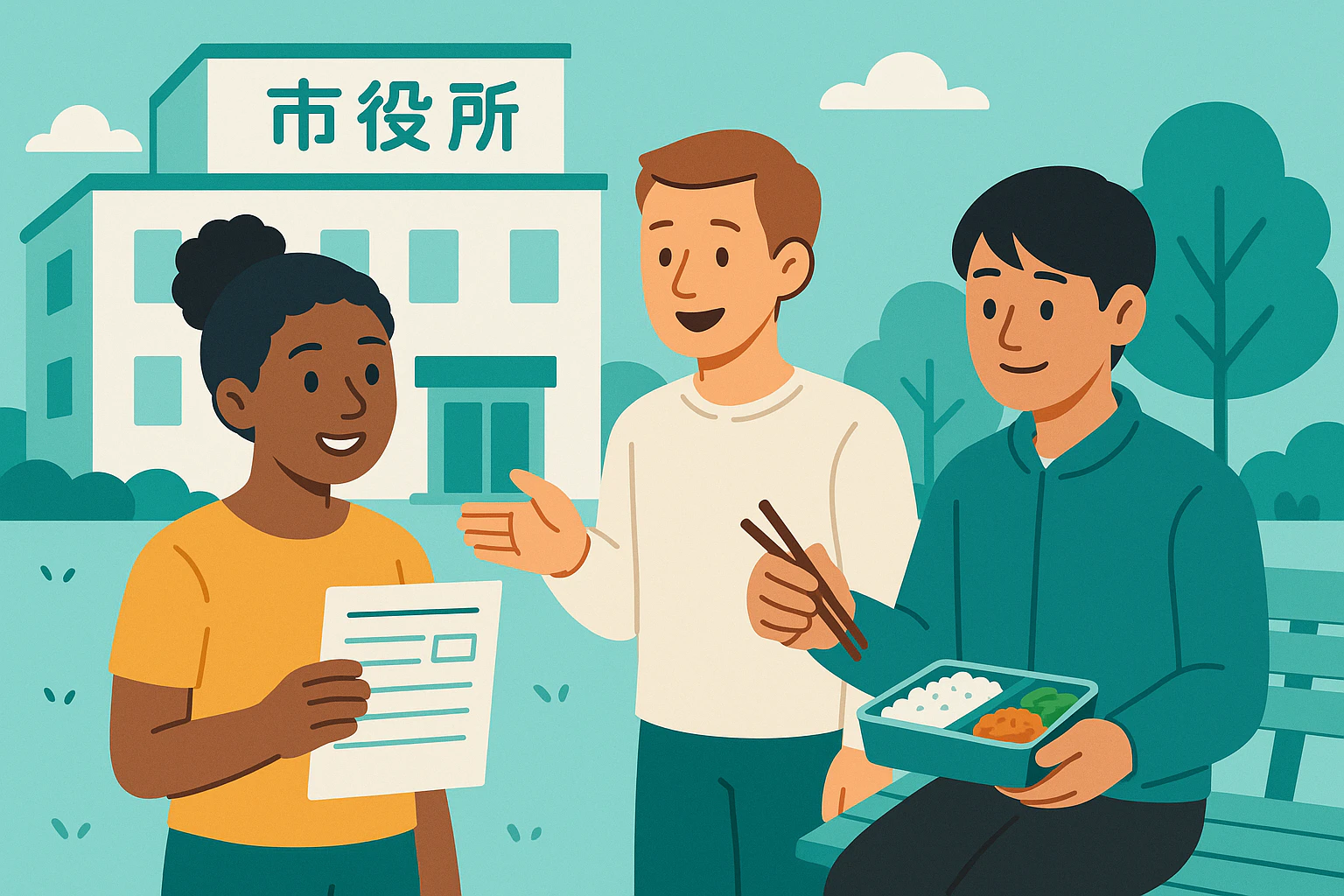
City hall paperwork in Japan can feel impossible when the letter is polite, formal, and full of kanji. This guide is different from “free Japanese study app” lists: it’s a procedure-first workflow for easy Japanese city hall situations—how to find official Yasashii Nihongo (やさしい日本語) resources, decode real notices and forms, and write short, clear messages back (plus tools to simplify your own Japanese before you send it).
If you only do one thing: Search your city/ward site for やさしい日本語 first. Many municipalities now publish “simple Japanese” versions that reach more residents than English-only support.
Why easy Japanese city hall communication matters for residents in 2026 (not just tourists)
“Easy Japanese” (やさしい日本語) is not “baby Japanese.” It’s a practical style of Japanese that uses shorter sentences, simpler words, and fewer ambiguous expressions so more people can understand—especially in public services, disasters, school notices, and health/tax procedures.
Municipalities are increasingly using やさしい日本語 because English coverage is limited, and residents speak many different languages. For example, Yokohama City explains that it publishes notices in multiple languages but also uses easy Japanese for people who don’t understand those languages, and it promotes using easy Japanese alongside multilingual info. (city.yokohama.lg.jp)
Akita City makes the same point with data: it cites a local survey of foreign residents showing that about 92% reported they can read Japanese at least at hiragana/katakana level, and about 89% reported they can write at that level—supporting the idea that “simple Japanese” can be more scalable than partial translation. (city.akita.lg.jp)
There’s also a 2026 policy reason to take this seriously. A government expert panel recommended creating a mandatory “integration” program for foreign residents (recommendation, not a confirmed requirement), and political proposals in late 2025 discussed adding Japanese ability and program participation to permanent residency conditions (proposal, not final). (japantimes.co.jp)
Separately, national reporting in 2025 described plans to tighten residency screening around unpaid taxes, social insurance, and unpaid medical costs—with implementation targets around June 2027 (plans may change; always confirm your own case). (asahi.com)
Step-by-step: Find easy Japanese city hall pages and guides from your city/ward
Your city/ward is the first stop for day-to-day paperwork (moving, health insurance, school, taxes). The fastest win is often finding the “easy Japanese” version of the exact procedure page your letter is referring to.
Step 1: Search your municipality site with the right keywords
Copy/paste one of these into Google (or your preferred search engine). Replace CITY with your city/ward name:
CITY やさしい日本語 手続き(procedures)CITY やさしい日本語 くらし(daily life)CITY やさしいにほんご(many sites have a “kids-style” easy Japanese page)site:city.CITY.lg.jp やさしい日本語(forces results from the official domain)
If you can’t type Japanese yet, search in English first (example: “Yokohama easy Japanese city hall”), then look for the Japanese phrase やさしい日本語 on the page and switch language from there.
Step 2: On the page, look for “last updated” and downloadable PDFs
City hall rules and forms change. Prefer pages that show an update date (examples below) and include PDFs—because PDFs often contain the same content the staff uses at the counter.
Step 3: Bookmark “communication” tools made for counters
Some cities publish pointing sheets (指さしシート) or support boards you can literally point to. These are gold when you’re nervous or your speaking Japanese is limited.
Example (Yokohama City): Yokohama publishes easy Japanese pages explaining the concept and offers pointing sheets (指さしシート) for ward office counters, including separate sheets for general guidance and for the family registry section (戸籍課), in easy Japanese plus English/Chinese/Korean and illustrations. The page shows it was last updated January 29, 2025, and includes a direct city contact phone/email. (city.yokohama.lg.jp)
Useful bookmarks for Yokohama readers:
- Yokohama: Easy Japanese notices + pointing sheets (やさしい日本語)
- Yokohama: Easy Japanese information dissemination (やさしい日本語での情報発信)
Example (Otaru City): Some cities go further and publish a full lifestyle guidebook in easy Japanese. Otaru City published an “Everyone’s Living Guidebook (easy Japanese)” with furigana tips and local class info (updated November 12, 2025), and even lists a direct contact email for its international exchange 담당. (city.otaru.lg.jp)
Regional reality check: In some areas (often larger cities), you’ll find rich easy Japanese pages and PDFs. In other areas, you may get only partial pages and will rely more on prefecture portals, international associations, and national-level resources (next section).
Step-by-step: Use national-level free guides (ISA) + free study sites (Tsunahiro/Minato)
If your city doesn’t have an easy Japanese page for your exact topic—or your letter is “national system” related (tax, pension, immigration, employment)—use national-level resources first, then come back to your city page for local details.
Step 1: Use the Immigration Services Agency Living & Working Guidebook (free, official, easy Japanese)
The Immigration Services Agency (ISA) provides a free “Guidebook on Living and Working” (生活・就労ガイドブック) in many languages, including やさしい日本語. It includes chapters on topics city halls handle every day—like procedures at municipal offices, taxes, pensions, medical services, childcare, and education. (moj.go.jp)
- ISA: Guidebook on Living and Working (all languages, includes easy Japanese PDF)
- ISA: Daily Life Support Portal for Foreign Nationals
How to use it like a “paperwork dictionary”: Open the easy Japanese PDF, then use search (Ctrl+F / Find in page) for the exact word from your letter (example: 国民健康保険, 住民税, 児童手当). Read the guidebook explanation first, then return to your city’s page for the local steps, deadlines, and counters.
Step 2: Steal pro-level simplification patterns from ISA’s free easy Japanese training materials
ISA also publishes downloadable training materials created for immigration staff, but explicitly shared so municipalities and support desks can use them too. These are excellent if you want to learn how to rewrite formal Japanese into Yasashii Nihongo (with examples and workbooks). (moj.go.jp)
- ISA: Easy Japanese (Plain Japanese) training materials (text + workbooks)
- ISA: Guidelines for using easy Japanese in resident support (talking points + training guide)
Step 3: Learn “daily life procedure Japanese” with Tsunahiro (つなひろ) — free, government-backed
The site “Tsunagaru Hirogaru Nihongo de no Kurashi” (つながるひろがる にほんごでのくらし, nickname: Tsunahiro) is positioned as ICT learning materials for foreign residents to study Japanese for real-life scenes. In a March 29, 2024 release, Japan’s Agency for Cultural Affairs announced new video content added in the childcare/education domain. (bunka.go.jp)
- Tsunahiro: つながるひろがる にほんごでのくらし (official site)
- Agency for Cultural Affairs: announcement about Tsunahiro childcare/education videos (Mar 29, 2024)
Tip: Prefectures actively promote Tsunahiro as a free self-study option. For example, Kagoshima Prefecture’s page (updated June 9, 2025) introduces Tsunahiro, notes it supports 19 languages, and lists a prefectural contact phone number. (pref.kagoshima.jp)
Step 4: Use Minato for structured, free Japanese study (when you need consistency)
If Tsunahiro is “situational practice,” the Japan Foundation’s JF Japanese e-Learning Minato is helpful when you want structured courses and steady progress. It’s a Japanese learning platform with multiple free courses and communities. (minato-jf.jp)
Best combo for paperwork: ISA Guidebook (official rules) + your city’s easy Japanese page (local counter & deadlines) + Tsunahiro (phrases you actually say at the counter).
Practical workflow: Decode a letter, draft your reply, and get help fast (easy Japanese city hall)
Here’s the workflow we use internally when we help people handle formal city hall documents. The goal is not perfect Japanese—it’s correct action by the deadline.
Workflow A (10–20 minutes): decode the letter safely
- Identify the document type: look for big labels like 通知 (notice), お知らせ (information), 申請 (application), 提出 (submit), 期限 (deadline).
- Extract the “must-not-miss” fields:
- いつまで (by when): deadline date/time
- どこへ (where): department name/counter, address, phone
- なにを (what): documents/items you must bring or submit
- いくら (how much): fees, payment amount, bank transfer details
- ID: reference number (整理番号/問い合わせ番号)
- Find the matching official page: search the city site using 2–3 key nouns from the letter (example: 国民健康保険 + 納付 or 住民税 + 納税).
- Confirm details with a second source if it’s high-stakes: taxes, pension/insurance, immigration status, or anything with penalties—check both the city page and an official national guide (ISA guidebook is a good baseline).
Workflow B: draft a reply in simple Japanese (email/phone/in-person)
Most city hall communication doesn’t require advanced keigo. If you can be clear and polite, you’re already doing it right.
Start with a short template (copy/paste):
〇〇市役所(区役所) 〇〇課 の かたへ
わたしは 〇〇(なまえ)です。
きょう(または 〇月〇日)、手紙(てがみ)を もらいました。
手紙の番号(ばんごう)は 〇〇 です。
これについて ききたいです。
1)なにを だしますか(もっていきますか)。
2)いつまでですか。
やさしい日本語(にほんご)で おねがいします。
Phone call “one-sentence opener”:
すみません。やさしい日本語で はなして ください。
手紙(てがみ)を もらいました。なにを したら いいですか。
Workflow C: simplify your Japanese before you send it (free checkers)
If you write a message in Japanese (or translate from English), run it through a “make it easier” pass. In Tokyo, the Tokyo Metropolitan Government lists practical tools for creating/checking easy Japanese, including an automatic easy Japanese checker and a vocabulary/JLPT-level checker. The page is updated October 24, 2025. (seikatubunka.metro.tokyo.lg.jp)
How to use the tools (fast):
- Write your message in Japanese (even rough).
- Paste it into an easy Japanese checker (e.g., やさにちチェッカー) and see what looks “too hard.”
- Paste into a vocabulary difficulty checker (e.g., リーディングチュウ太) to spot high-level words and replace them.
- Shorten sentences. Replace one long sentence with two or three short ones.
Workflow D: get official help fast (when you’re stuck)
If the letter is immigration-related (status of residence, renewals, permissions), use an official consultation line rather than guessing. Many local living guides list the Immigration Information Center phone and email. For example, Chuo City lists: 0570-013904 (IP phones/overseas: 03-5796-7112) and info-tokyo@i.moj.go.jp (hours: weekdays 8:30–17:15). (city.chuo.lg.jp)
If you’re in Tokyo and need broader “living + immigration + legal” direction, consider the Foreign Residents Support Center (FRESC) in Yotsuya. Public guidance pages describe walk-in and phone support, multilingual services, and the location (Yotsuya Tower / Co・MO・Re Yotsuya). (houterasu.or.jp)
Important: Procedures differ by municipality. Always confirm the correct counter, required documents, and deadlines on your city/ward’s official site or by calling the number shown on the letter.
Need More Help? Ask on LO-PAL
If you want to know more about this topic or need specific local information for your city hall/ward office, ask a local Japanese person on LO-PAL.
LO-PAL is our matching service where foreign residents and tourists in Japan can connect with local Japanese helpers to ask life questions and request task help. Post your question or request a task in the app, and local Japanese helpers in your area will respond and support you.
For easy Japanese city hall situations, LO-PAL is a great next step when you need a human who understands local wording and “what the office actually means.” Ask a helper to:
- Interpret confusing city hall wording in simple Japanese (やさしい日本語) and clear English
- Check your draft message before you submit it (email, form notes, short explanation letters)
- Practice the exact phrases you’ll say at the counter, based on your real document
We also support multiple languages in the app: English, Chinese, Vietnamese, Portuguese, Korean, Nepali, Tagalog, Indonesian, and Spanish. Whether you’re handling a moving notice, a school letter, a health insurance question, or a tax reminder, you don’t have to do it alone.
Written by

Founder, LO-PAL
Former Medical Coordinator for Foreign Patients (Ministry of Health programme) and legal affairs professional. Built LO-PAL from firsthand experience navigating life abroad.
Written with partial AI assistance
Read full bio →