Otoshi Charge Japan at Izakaya: Safety Tips to Avoid Hidden Fees

The all-in-one Japanese learning app
From travel phrases to real fluency — all in one app.
All 2,136 standard kanji included. Every feature is free to use.
Avoid billing surprises: understand otoshi charges, nomihodai rules, and how to stay safe from Kabukicho tout scams.
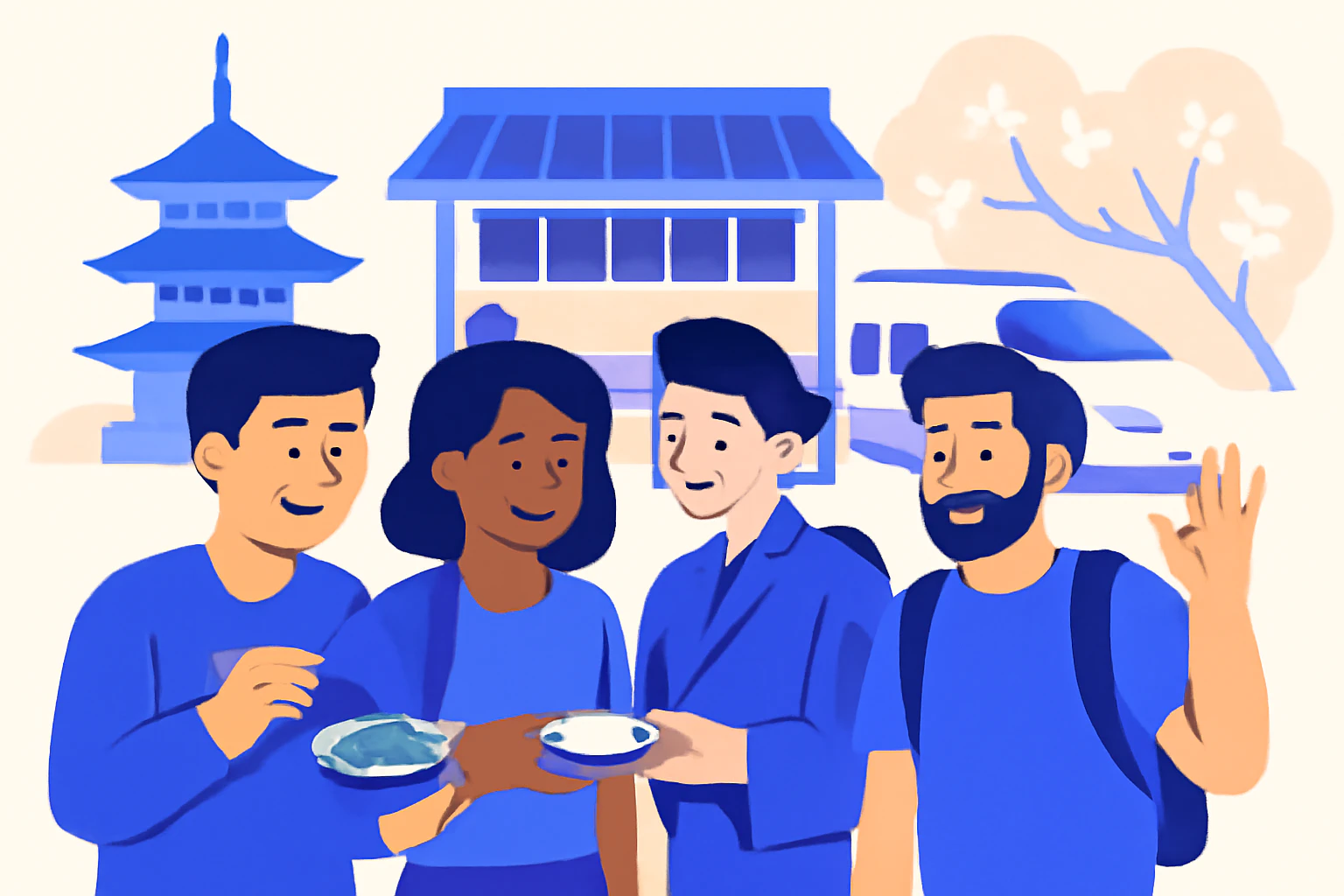
If you’ve never been to a Japanese izakaya before, the otoshi charge Japan system can feel like a “gotcha”: you sit down, a small appetizer appears (even before you order), and later it shows up on the bill as a per-person fee.
Most izakaya guides focus on what to eat and drink. This one focuses on staying safe from billing surprises (otoshi/seat fees, nomihodai time-limit rules) and nightlife rip-offs (especially street-tout scams in areas like Kabukicho).
Quick reality check: Otoshi is a common izakaya custom and can be considered a table/seat charge, so it’s not automatically a scam. The problems start when fees and rules aren’t explained clearly—or when you’re lured into a shady bar by a street tout.
Otoshi Charge Japan: What Is Otoshi (and Why You’re Charged for Food You Didn’t Order)?
In many izakaya, you’ll be served a small dish right after you’re seated—before you order any food. This is called otoshi, and it’s part of izakaya culture; it can be considered a table charge you pay at the end. You can read the official traveler-friendly explanation from the Consumer Hotline for Tourists.
One key confusion point: in some places, there may be a separate “seating charge” in addition to the otoshi. If you want to know exactly what charges apply, ask the staff to explain—ideally before ordering. The Consumer Hotline for Tourists specifically notes this “otoshi + separate seating charge” possibility. Source
On the bill, it may appear as:
- お通し (otoshi)
- お通し代 (otoshidai) or similar wording
- 席料 (sekiryō) meaning a seating/cover charge (some guides group these together as a “seating charge”). Source
How much is it? It varies by shop and neighborhood, but it’s commonly a per-person fee. Tokyo Cheapo notes the fee is often between ¥200 and ¥1,000 per person, and recommends asking before you enter if you’re worried about it. Source
Budget tip (fast math): If you’re traveling as a couple, assume otoshi could add roughly ¥400–¥2,000 total (two people × ¥200–¥1,000). For a group of four, it could be ¥800–¥4,000 total—before any drinks.
Why does otoshi exist? The Consumer Hotline for Tourists explains a practical reason: many izakaya take drink orders first, and food orders later, so the otoshi is something to nibble on while you wait. Source
Also important for short-term visitors: if you’re vegetarian, have religious restrictions, or allergies, you should tell staff right away. The Consumer Hotline for Tourists explicitly encourages communicating these needs. Source
What to do before you sit down (2-minute prevention routine):
- Check the menu board / entrance signage for any mention of cover or seating fees.
- Ask directly at the door (phrases below). If you’re being seated immediately, ask while the staff is walking you to your seat.
- Confirm the “per person” logic if you’re with kids: “Is it per adult only, or everyone seated?”
- If you’re price-sensitive, take a quick photo of the fee explanation/menu (helpful if you need to clarify later).
Useful phrases for the izakaya table charge question:
- Otoshi wa arimasu ka? (お通しはありますか?) — “Do you have an otoshi charge?”
- Sekiryō wa arimasu ka? (席料はありますか?) — “Is there a seating charge?”
- Ryōkin wa ikura desu ka? (料金はいくらですか?) — “How much is the fee?”
- Kore wa otoshi desu ka? (これはお通しですか?) — “Is this the otoshi?”
Small but helpful “tax display” detail: In Japan, there is a “total price display” obligation (総額表示) that requires businesses to show prices including consumption tax when they display prices to consumers. You can see the official explanation on the National Tax Agency page on total price display and a broader overview on the Ministry of Finance overview.
In practice, many menus are tax-included, but you should still look for small print such as 税込 (tax included) or 税抜 (tax excluded) if you’re trying to avoid surprises.
Otoshi Charge Japan + Nomihodai Meaning: Nomihodai (All-You-Can-Drink) Rules That Can Create Extra Costs
Nomihodai meaning: “all-you-can-drink” for a fixed price, but only from a designated menu and only within a set time limit. It can be a great deal for groups—until you miss a rule and end up paying extra.
Common nomihodai rules tourists misunderstand are clearly summarized by LIVE JAPAN’s nomihodai guide:
- Order from the nomihodai menu—otherwise, drinks can be charged separately. Source
- “Empty-glass” rule: finish your current drink before ordering another. Source
- Last call is often ~30 minutes before the time ends. Source
There are also “structure” rules that can affect your final bill:
- Food minimums: LIVE JAPAN notes it’s customary to order multiple side dishes per person, and some places only offer nomihodai if you order a course. Source
- Premium upgrades (“rank up”): some venues charge an extra ¥500–¥1,000 to upgrade sake/liquor quality. Source
How much does nomihodai cost? It varies a lot by city and shop, so always confirm on-site. As a real-world reference, some chain-style izakaya advertise ¥2,000 for 120 minutes for combined all-you-can-eat/all-you-can-drink plans, and their listing will often state the time limit and that last order is 30 minutes before. Example listing: Gurunavi course details for an Ueno izakaya.
Nomihodai money-saving rule: If you’re a light drinker (1–2 drinks), nomihodai may be more expensive than ordering individually. If you’re planning 3+ drinks within the time limit, nomihodai often becomes worthwhile—especially in central Tokyo where individual drinks can be pricey.
Time-limit trap (very common): Your timer usually starts when the plan starts—not when you finish your first drink. If your group arrives late, you may still be charged the full plan but get less time.
Also, many Japanese pubs have a “last order” earlier than closing. Guides on izakaya etiquette note last order is often 30 minutes to 1 hour before closing. Source
Peak season timing tip (for travelers here 1–3 weeks): If you’re visiting during year-end/New Year party season or the end/start of the school and work calendar, reservation pressure goes up—and time limits can feel stricter. LIVE JAPAN specifically flags peak times as late December through early January and end of March to early April. Source
Reservation and logistics tips you can use today:
- Book where possible (especially Fri/Sat nights in big cities) and confirm: start time, time limit, last order timing, and whether it’s “everyone must join.”
- Plan your arrival: aim to be seated 5–10 minutes before your reservation to avoid losing nomihodai time.
- Know typical izakaya hours: many izakaya open around 5:00 p.m. and close around midnight or later, depending on the area and day. A broad overview of typical izakaya hours is summarized by tsunagu Japan.
Useful phrases for nomihodai confirmation:
- Nomihōdai wa nan-pun desu ka? (飲み放題は何分ですか?) — “How many minutes is the all-you-can-drink?”
- Rasuto ōdā wa itsu desu ka? (ラストオーダーはいつですか?) — “When is last order?”
- Nomihōdai wa minna hitsuyō desu ka? (飲み放題はみんな必要ですか?) — “Does everyone have to do nomihodai?”
- Kono nomimono wa fukumaremasu ka? (この飲み物は含まれますか?) — “Is this drink included?”
Touchscreen/QR ordering doesn’t eliminate surprises—verify fees anyway. More izakaya now use touchscreen terminals or QR ordering, often with multilingual options, which makes ordering easier for tourists. But if you want a course meal, nomihodai, or other set plans, you should tell staff at the beginning and still confirm rules/charges. Source
Kabukicho Tout Scam Warning: Rip-Off Izakaya & Bar Scams—Why You Should Never Follow Touts
Tokyo is generally safe, but nightlife districts have a very specific risk pattern: street touts trying to guide you into certain bars or izakaya. The simplest rule that prevents the biggest losses is: don’t follow them.
The Tokyo Metropolitan Police Department provides multilingual crime-prevention information for entertainment/nightlife districts and includes materials explicitly warning people about being ripped off and about not following street hawkers. Source
In Kabukicho (Shinjuku), there have also been high-profile cases involving deception. The Asahi Shimbun reported that Tokyo police arrested a group of touts accused of pretending to be affiliated with a well-known izakaya chain and luring customers to unrelated eateries that then charged exorbitant prices. Source
Where this happens: Kabukicho is a nightlife area near Shinjuku Station (East Exit) and Seibu-Shinjuku Station. Similar touting approaches can happen in other nightlife-heavy areas (for example, parts of Roppongi in Tokyo or some busy club streets in Osaka), but Kabukicho is the name tourists hear most often.
Practical “no-tout” strategy: Choose a venue first (from a listing or a chain you recognize), walk straight there, and ignore anyone trying to “redirect” you. If someone claims “that place is full” and offers a “sister shop,” treat it as a red flag—especially in Kabukicho.
What the rip-off pattern can look like:
- A tout offers “cheap nomihodai,” “English menu,” or “no cover,” then leads you into a building away from the main street.
- Once inside, the bill includes unexpected charges (seat fees, weekend fees, premium drink upgrades, multiple card charges, etc.).
- If you’re intoxicated, it’s harder to track what you agreed to—this is one reason scams cluster around drinking. The Consumer Hotline for Tourists warns about cases where a bar places huge charges on a card or charges multiple times. Source
How to pick a safer izakaya in 60 seconds:
- Prefer well-known chains (especially on your first night) or places with clearly posted pricing.
- Use reservations and official listings rather than following anyone on the street. Listings often show hours, last order, and access info (for example: “3 minutes from JR Ueno Station”), like on Gurunavi.
- Stay on main streets if you’re exploring nightlife areas, and avoid being guided into “members-only” vibes unless you knowingly booked it.
If you’re worried about comfort/health (smoke exposure): Smoking policies vary by establishment and region. The Consumer Hotline for Tourists explains that facilities with smoking rooms must post pictograms so you can check whether smoking is allowed, and some restaurants such as bars may be permitted to allow smoking throughout. Source
GOOD LUCK TRIP also notes that since Japan’s revised Health Promotion Act took effect in April 2020, more izakaya—especially chains in urban areas—have become completely non-smoking, but policies still vary, so check before you enter. Source
Outdoor smoking is also local: The Consumer Hotline for Tourists notes outdoor smoking rules vary by municipality, and gives Tokyo as an example where some wards prohibit street smoking outside designated areas. Source
Otoshi Charge Japan Safety Checklist + Useful Phrases (and Who to Call for Help)
This section is designed to be practical: you can screenshot it and use it on your first izakaya night. It includes quick checks for otoshi charge Japan issues, izakaya table charge questions, nomihodai meaning misunderstandings, and the Kabukicho tout scam pattern.
Before you enter (30 seconds): If a stranger is trying to lead you somewhere, don’t go. If staff at the door can’t explain fees clearly, choose a different place.
Checklist A: Before ordering
- Ask: “Otoshi wa arimasu ka?” (Is there an otoshi charge?)
- Ask: “Sekiryō wa arimasu ka?” (Is there a seating/cover charge?)
- If doing nomihodai, ask: time limit, last order timing, everyone must join?, and food minimum/course required? (LIVE JAPAN highlights these as common cost drivers). Source
- Confirm whether your intended drink is included (some shops charge extra to “rank up” sake/liquor). Source
Checklist B: During the meal
- On nomihodai: follow the empty-glass rule and watch for the last call announcement around 30 minutes before the end. Source
- If ordering on a touchscreen/QR system, still confirm any set-plan rules with staff at the start (GOOD LUCK TRIP notes you should inform staff early for course/nomihodai plans). Source
- If you have allergies or dietary restrictions, communicate them early (otoshi may contain fish/meat). Source
Checklist C: Paying
- Ask for the bill: “Okaikei onegaishimasu.” (お会計お願いします) — “Check, please.”
- If something looks off: “Meisai o misete kudasai.” (明細を見せてください) — “Please show me an itemized breakdown.”
- Don’t be embarrassed to ask: otoshi is normal, but double fees or unexplained add-ons are worth clarifying.
If you feel pressured: Prioritize safety over arguing. Move to a brighter public area, and contact official help lines (below). Avoid escalating with intoxicated staff or in isolated stairwells/elevators.
Who to call for help (tourist-friendly, multilingual):
- Consumer Hotline for Tourists (Japan): Call 03-5449-0906. Hours are Mon–Fri 10:00–12:00 and 13:00–16:00 (closed weekends, national holidays, and Dec. 29–Jan. 3). Languages listed include English, Chinese, Korean, Thai, Vietnamese, French, Japanese. Source
- Japan Visitor Hotline (JNTO): 24/7 tourist info and emergency assistance. Call 050-3816-2787 in Japan or +81-50-3816-2787 from overseas; support in English, Chinese, Korean. Source
- Police (urgent): 110. Fire/Ambulance: 119. Source
If you suspect a card scam: The Consumer Hotline for Tourists warns about situations where a bar claims a card payment “didn’t work” and charges multiple times, or pressures a drunk customer into huge charges. Source
As soon as you’re safe, contact your card issuer using the number on the back of your card, explain the situation, and ask about dispute/chargeback steps. Keep receipts, screenshots, and any photos of posted pricing.
Food safety micro-warning (especially if you’re bar-hopping): Some izakaya serve lightly cooked or raw-in-the-center chicken dishes such as toriwasa or chicken sashimi. Tokyo’s Food Safety Information Center notes that many Campylobacter food poisoning cases are linked to undercooked/raw chicken dishes and that properly heating chicken greatly reduces risk. If you’re unsure, choose fully cooked yakitori and fried items. Source
Need More Help Tonight? Ask a Local on LO-PAL
If you want to know more about this topic or need specific local information, ask a local Japanese person on LO-PAL. LO-PAL is our matching service where tourists can connect with local Japanese helpers for real-time Q&A or task support—so you’re not guessing in the moment.
Here are “ask a local” prompts that work especially well for avoiding hidden fees and nightlife rip-offs:
- “I’m near Shinjuku/Kabukicho. Can you recommend a safe izakaya with clear pricing (and tell me if they charge otoshi)?”
- “This menu says nomihodai. Can you help me confirm the time limit, last order time, and whether everyone must join?”
- “Can you translate this bill line? I see お通し and 席料—are both normal here?”
- “I have asthma and want a non-smoking izakaya near ___ station. What should I look for at the entrance?”
Post your question or request in the app, and local Japanese helpers in your area will respond and support you—available in multiple languages including English, Chinese, Vietnamese, Portuguese, Korean, Nepali, Tagalog, Indonesian, and Spanish.
Written by

Founder, LO-PAL
Former Medical Coordinator for Foreign Patients (Ministry of Health programme) and legal affairs professional. Built LO-PAL from firsthand experience navigating life abroad.
Written with partial AI assistance
Read full bio →