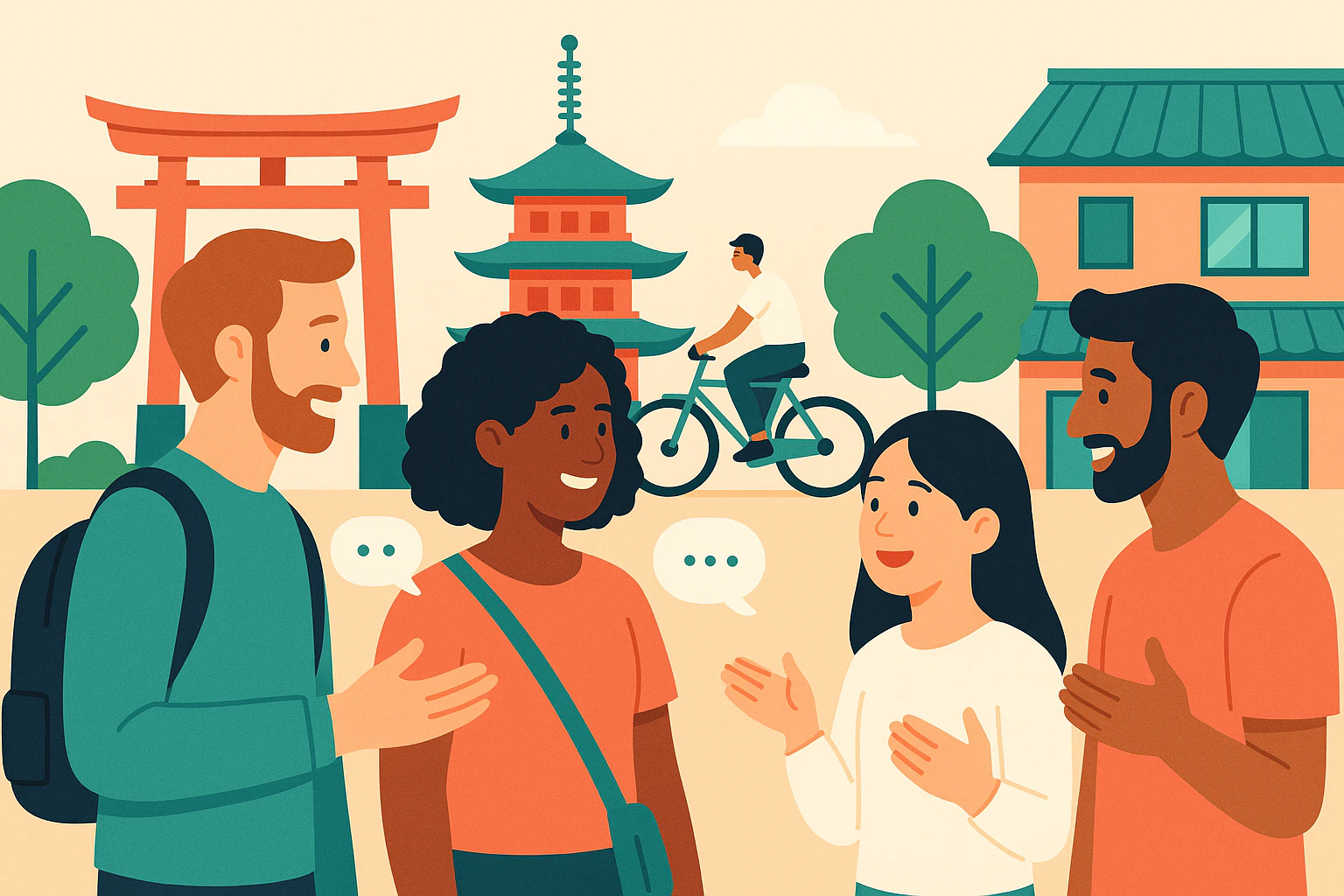
Making Friends in Japan as a Foreigner: City Hall & Events
Skip bars and apps—use city halls, international associations, and multicultural centers to meet locals who expect to connect.
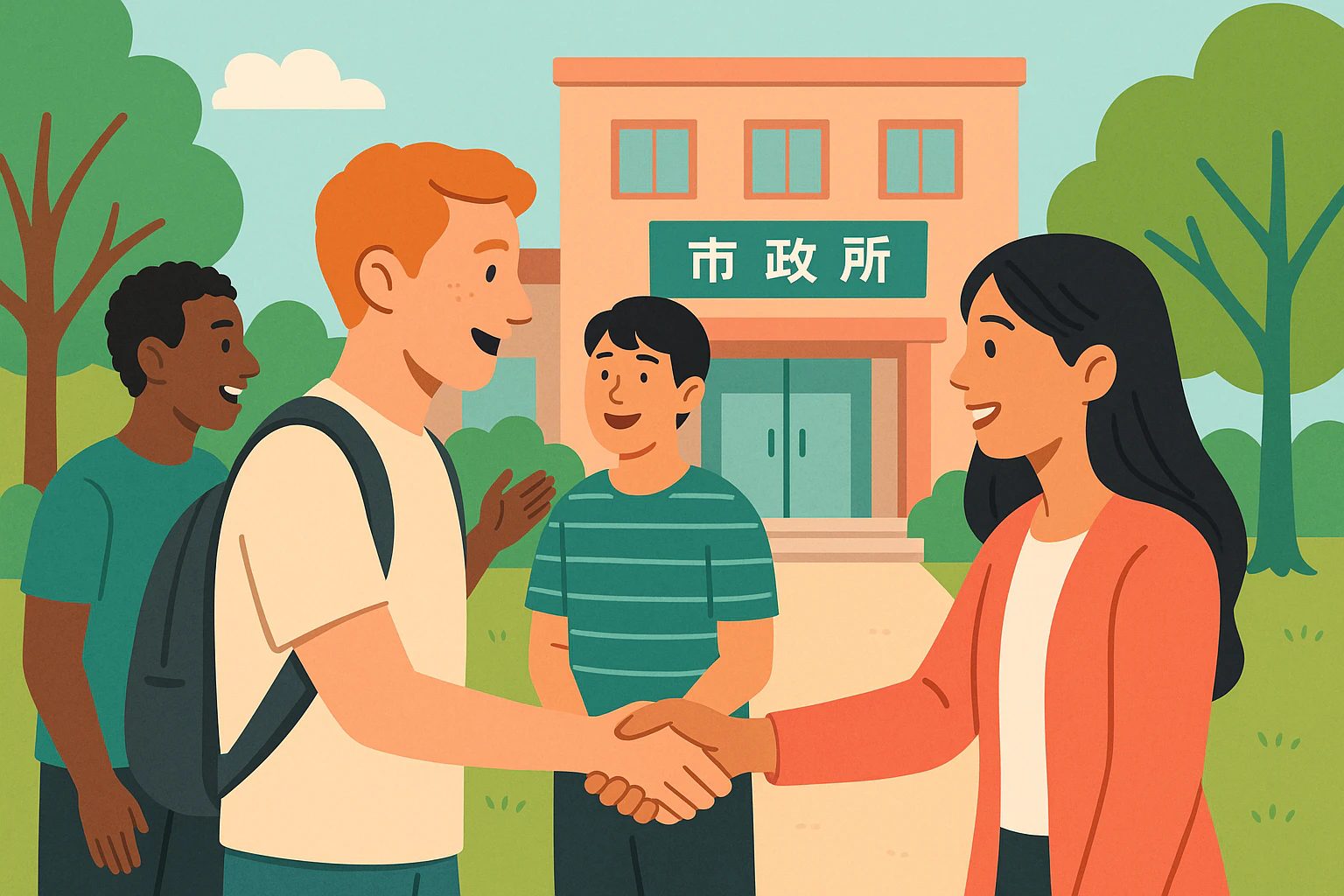
If you’ve been searching for making friends in Japan as a foreigner, you’ve probably noticed a pattern: most guides push nightlife, dating-ish social apps, or “just go to an izakaya.” Those can work, but they’re inconsistent—and they often put all the pressure on you to break into social circles where people didn’t come specifically to meet new foreign residents.
This guide focuses on the reliable, overlooked “public routes” where locals already expect to meet international residents: city/ward international exchange associations, multicultural/international centers, and one-stop support desks. These places are practical, repeatable, and (usually) safer—because they’re hosted by public bodies or established foundations, with clear rules, staff, and contact points.
Fast plan (60 minutes): 1) Search your area with the Japanese keywords below, 2) find the next “exchange salon / international exchange event,” 3) reserve/apply, 4) show up 10 minutes early, 5) follow up within 24 hours with a small, specific invite.
Where foreigners in Japan usually get stuck when making friends in Japan as a foreigner (and what works instead)
Many foreigners hit the same wall: you meet people once (a classmate, a coworker, someone at a café), but it never turns into a real friendship. In Japan, it’s common to avoid imposing on others’ time, so “Let’s hang out sometime” can stay vague forever unless someone makes a clear, low-pressure next step.
Another trap is relying only on places where people are there for something else—drinking, dating, networking, or practicing English. Those environments can be fun, but they often produce “event friends” rather than “life friends,” and you may keep starting from zero.
What tends to work better is joining recurring, local, structured activities—especially ones designed for residents and supported by a city, ward, or international foundation. These create repeated contact with the same faces, plus a socially accepted reason to talk to strangers.
The key shift in mindset: instead of asking “Where can I meet Japanese people?”, ask “Where do Japanese locals already go when they want to interact with foreign residents?” That’s exactly what international exchange associations and multicultural centers are built for.
The “official” friend-making hubs for making friends in Japan as a foreigner: city hall, international associations, multicultural centers
Japan has a surprisingly strong “public infrastructure” for international community-building. The names and organizations vary by region, but the core idea is the same: your local government (or a partner foundation) helps run exchange events, Japanese classes, volunteer programs, and information hubs.
1) City/ward international exchange associations (国際交流協会)
Many municipalities have an international exchange association that runs recurring meetups like international exchange salons (国際交流サロン) plus annual flagship events. For example, Chuo City in Tokyo explains that its association (CCIEA) holds an International Exchange Salon 11 times a year (one Saturday per month except November) and notes that reservation is required. It also describes an annual international exchange party in November that introduces Japanese culture and foreign cultures through activities like tea ceremony and kimono experiences. Chuo City: International Exchange, Volunteer Activities.
Eligibility rules are often location-based. A very common pattern is “residents of the ward/city, or people who work/study there.” Chuo City’s page states its Japanese language classes support foreigners living and working in Chuo City and mentions a textbook cost of about ¥2,500 with advance application required. CCIEA Japanese language classes (Chuo City).
Contact details are usually public and simple. Chuo City publishes CCIEA’s address and phone number (including English support) directly on the municipal page. If you live nearby, calling is often faster than emailing. CCIEA inquiry info on Chuo City site.
2) “Exchange salons” (国際交流サロン) and recurring community events
Exchange salons are one of the best formats for newcomers because they’re designed for conversation. Themes vary—tea ceremony, walks, cooking, seasonal culture—so you don’t need perfect Japanese or perfect English to participate.
These events also show you the real application process typical of municipal programs: reservation, email application, and sometimes a lottery if too many people apply. CCIEA’s event notice for an International Exchange Salon walk (Hama-rikyu Gardens) shows an “advanced application required” flow, asking applicants to email their name, address, phone, nationality, age, and (if not a Chuo City resident) whether they work/study in Chuo City. CCIEA International Exchange Salon notice (application by email).
3) Multicultural centers / international centers (多文化共生センター / 国際交流センター)
In bigger cities, you’ll often find a dedicated international center (sometimes run by a city foundation). These places act like offline “community dashboards”: staff who can point you to local programs, printed newsletters, and bulletin boards for events and personal postings.
Kyoto City International Foundation (kokoka) explicitly mentions bulletin boards where you can find information for situations like “I want to make friends,” plus learn about events happening around Kyoto. That’s exactly the kind of low-effort entry point that many people skip. Kyoto City International Foundation: places with lifestyle information bulletin boards.
4) One-stop support desks (ワンストップセンター) that quietly connect people
One-stop consultation centers are not “friend-making events” on the surface, but they’re powerful connectors: they know what programs exist, which neighborhoods have active communities, and where foreigners actually gather (classes, volunteer groups, seasonal festivals).
FRESC (Foreign Residents Support Center) is run by Japan’s Immigration Services Agency as a hub where multiple government consultation windows are gathered. Its official page includes a “New info/Event info” section and shows that event info updates are ongoing (for example, it lists “event info updated” entries dated January 26, 2026; January 15, 2026; and December 25, 2025). Immigration Services Agency: FRESC.
At the prefecture/city level, one-stop centers often publish language schedules, specialist consultation days, and contact details. The Hamamatsu Intercultural Center, for example, lists multilingual consultation hours and specialist consultations (including immigration/residency procedure consultation days) along with phone numbers and email. Hamamatsu Intercultural Center: One-Stop Consultation Corner.
Gunma Prefecture’s one-stop center page is another good example of how actively these services change over time: it shows an update date of October 22, 2024 and announces new Nepali language support, plus it lists hours, location, languages, and a phone number. Gunma One-Stop Consultation Center for Foreign Residents.
Even in smaller regions, new directories get published. Shimane International Center posted on January 22, 2026 that it published a list of foreign-language consultation windows in 7 language versions (Japanese, English, Chinese, Portuguese, Vietnamese, Tagalog, and “easy Japanese”), created with government partners. Shimane International Center: published list of foreign-language consultation windows.
Japanese search terms that consistently find the “public routes”
Copy/paste these into Google (or Yahoo! Japan) with your city/ward name in front. Example: “世田谷区 国際交流サロン” or “豊田市 多文化共生センター”.
- 国際交流協会 (international exchange association)
- 国際交流センター (international exchange center)
- 国際交流サロン (international exchange salon)
- 多文化共生センター (multicultural coexistence center)
- ワンストップセンター (one-stop center)
- 市民活動センター (citizen activity center)
- ボランティア (volunteer)
If you’re searching specifically for international exchange events Japan (international交流イベント) or language exchange Japan (言語交換), add these terms too: 交流イベント, 言語交換, 日本語教室, ボランティア募集.
How to find and join international exchange events (Tokyo vs rural checklist)
Finding the right event is less about “the best city” and more about knowing where your local government and partner foundations publish information. Use the steps below, then follow the Tokyo vs rural checklist to avoid common surprises.
Step-by-step procedure (works almost anywhere in Japan)
- Identify your jurisdiction. In Tokyo, the ward (区) often matters more than the city name; outside Tokyo, it’s usually your city (市) or prefecture (県).
- Search with Japanese keywords. Start with “(Your area) 国際交流協会” and “(Your area) 国際交流サロン”.
- Open the official site and look for: イベント (events), 交流 (exchange), サロン (salon), 日本語 (Japanese classes), ボランティア (volunteer).
- Check eligibility and costs. Look for words like 対象 (eligible people), 参加費 (fee), 定員 (capacity), 要予約 (reservation required).
- Reserve/apply exactly as requested. Many programs require a web form, email, or phone reservation; some use a lottery if demand is high.
- Show up early with basics. Bring ID if it’s a municipal facility, plus cash for small fees, and a pen (still useful in Japan).
Tokyo checklist (wards, high demand, more options)
- Expect ward-level rules. Some programs prioritize ward residents or people who work/study locally (Chuo City’s Japanese classes explicitly target foreigners living/working in Chuo City). Example eligibility pattern (Chuo City).
- Expect reservations. Some exchange salons require advance reservation, and popular themes fill quickly. Example: reservation required for salons (Chuo City).
- Know where “international exchange functions” moved. Tokyo’s metropolitan international exchange committee dissolved after transferring its work to the Tokyo Tsunagari Sosei Foundation as of March 31, 2021 (page updated April 1, 2021). Tokyo Metropolitan Government notice.
- Use official volunteer centers too. City social welfare councils and volunteer centers can introduce ongoing activities (not just one-off events). Chuo City lists a Social Welfare Council Volunteer Center with contact information on the same international exchange page. Chuo City Volunteer Center listing.
Rural / smaller-city checklist (fewer events, tighter communities)
- Start with prefectural international centers. Many prefectures publish directory-style lists of municipal associations and their contact info. For example, Chiba International Center publishes a long directory of municipal international exchange associations with addresses, phone numbers, and activities. Chiba International Center directory: municipal international exchange associations.
- Look for “exchange salons” and flagship festivals. The Chiba City International Exchange Association entry lists recurring items like an “exchange salon” and an international festival, showing the common pattern of recurring + annual events. Directory entry example (Chiba City International Exchange Association).
- Volunteer programs can be the main social scene. In smaller areas, volunteer training and local Japanese classes are often the most consistent place to see the same people weekly.
- Expect “everyone knows everyone” energy. This can be intimidating at first, but it’s often easier to become a “regular” quickly—especially if you help with set-up/clean-up or join a recurring class.
How to message or call (simple Japanese you can use)
- 国際交流サロンはありますか? (Do you have an international exchange salon?)
- 参加条件はありますか? (Are there eligibility requirements?)
- 予約が必要ですか? (Is a reservation required?)
- 日本語があまり話せませんが参加できますか? (My Japanese isn’t great—can I still join?)
FAQ: City hall & exchange events
Q: Do I need to live in the ward/city to join?
A: Often, yes—or you may need to work/study there. Many municipal programs prioritize locals; Chuo City’s Japanese classes, for example, target foreigners living/working in Chuo City. Always check the event’s 対象 (eligibility) section. Example eligibility wording.
Q: Are these events free?
A: Many are free or low-cost, but some require small fees (materials, insurance, textbooks). Chuo City notes about ¥2,500 for Japanese class textbooks, and some events use reservation/lottery systems depending on capacity. Cost example.
Q: What should I bring the first time?
A: Your phone (for maps and follow-ups), a little cash, and—if you’re going to a municipal facility—some form of ID. If you’re applying by email, follow the organizer’s requested fields exactly (some ask for address, phone, nationality, and age). Example application fields (CCIEA).
Q: What if I can’t find anything in English?
A: Use the Japanese keywords above, and also visit an international center’s bulletin board. Kyoto’s international foundation explicitly points out that bulletin boards can help when you “want to make friends” and also help you learn about local events. Kyoto bulletin board note.
Turn one meetup into real friends: follow-ups, safety, and small-ask invites
Meeting people once is easy. Turning that into friendship is the real skill—especially if you’re trying to learn how to make Japanese friends in Japan without feeling pushy.
Do a “24-hour follow-up” (keep it light and specific)
Within a day, message the person you clicked with. Thank them for chatting, mention one specific topic you discussed, and make a small next invite that doesn’t feel like a big commitment.
- Good small-ask: “Want to grab coffee near the station for 30 minutes next weekend?”
- Better small-ask (Japan-friendly): “There’s a festival/event in our area—would you like to go together for an hour?”
- Best small-ask: “I’m going to the next exchange salon too—want to meet 10 minutes early?”
Simple Japanese template you can send on LINE:
今日はありがとうございました! (Thanks for today!)
今度、駅の近くで30分くらいお茶しませんか? (Next time, want to have tea near the station for about 30 minutes?)
Use “recurring attendance” to become a regular
The fastest path to real friends is to show up repeatedly. Recurring exchange salons, weekly Japanese classes, and volunteer programs create natural familiarity—people stop seeing you as a “visitor” and start seeing you as part of the community.
If you can, volunteer for something tiny: moving chairs, handing out name tags, cleaning up. In Japan, being the person who helps quietly is one of the most respected social signals—and it gives you an easy reason to talk to the organizers and other volunteers.
Safety: keep public boundaries (and watch for solicitation)
Public-route events are generally safer than random meetups, but use basic precautions: meet in public places, avoid sharing your home address early, and trust your instincts if someone pressures you.
As a secondary option, you can use private platforms (like Meetup) for language exchange Japan opportunities—but treat them as “bonus channels,” not your foundation. Some Meetup groups explicitly prohibit solicitation (religion/MLM/investment), which is a good standard to look for in any event description. Example Meetup group rules (Tokyo).
When you’re stuck, ask a one-stop center for “the right door”
If you can’t find events in your town, don’t guess—ask the places whose job is to know. One-stop centers often publish phone numbers, multilingual schedules, and specialist consultation days, and they can point you to the local associations that host community events. Hamamatsu One-Stop Consultation Corner.
Also check prefectural pages for updates (like new language support) and newly published directories. These updates are a signal that the system is alive—and that someone is actively maintaining the “map” you need to find your community. Gunma one-stop center updates.
Bottom line: The most reliable way to make friends is to join official, recurring local programs where meeting new foreign residents is normal—and then do small, fast follow-ups that create a second meeting.
Related Articles
- Find free Japanese classes near you (2026 city hall guide)
- Use Easy Japanese for city hall paperwork and daily life
- Understand neighborhood associations (and how local community groups work)
Need More Help? Ask on LO-PAL
If you want to know more about this topic or need specific local information (your ward’s international exchange association, how reservations work, what to bring, or which events are welcoming for beginners), ask a local Japanese person on LO-PAL.
LO-PAL is our matching service where foreign residents and tourists in Japan connect with local Japanese helpers. Post a question or request a task in the app, and people in your area respond—whether you need help finding international exchange events Japan, joining a language exchange Japan meetup, or even getting support with city hall visits.
- Multilingual support: English, Chinese, Vietnamese, Portuguese, Korean, Nepali, Tagalog, Indonesian, Spanish
- Community-based: locals in your area reply with practical, location-specific guidance
- Q&A + task requests: from “which center should I visit?” to “can someone come with me to register?”
Written by

Founder, LO-PAL
Former Medical Coordinator for Foreign Patients (Ministry of Health programme) and legal affairs professional. Built LO-PAL from firsthand experience navigating life abroad.
Written with partial AI assistance
Read full bio →