Report Discrimination in Japan (2026): Where Foreign Residents Get Heard
Japan has no general anti-discrimination law that names foreign residents as a protected class. Article 14 of the Constitution guarantees equality, but enforcement runs through sector-specific statutes and the 法務局 人権擁護課. This guide maps every scenario — housing, workplace, police, hate speech — to the right counter with realistic timelines.
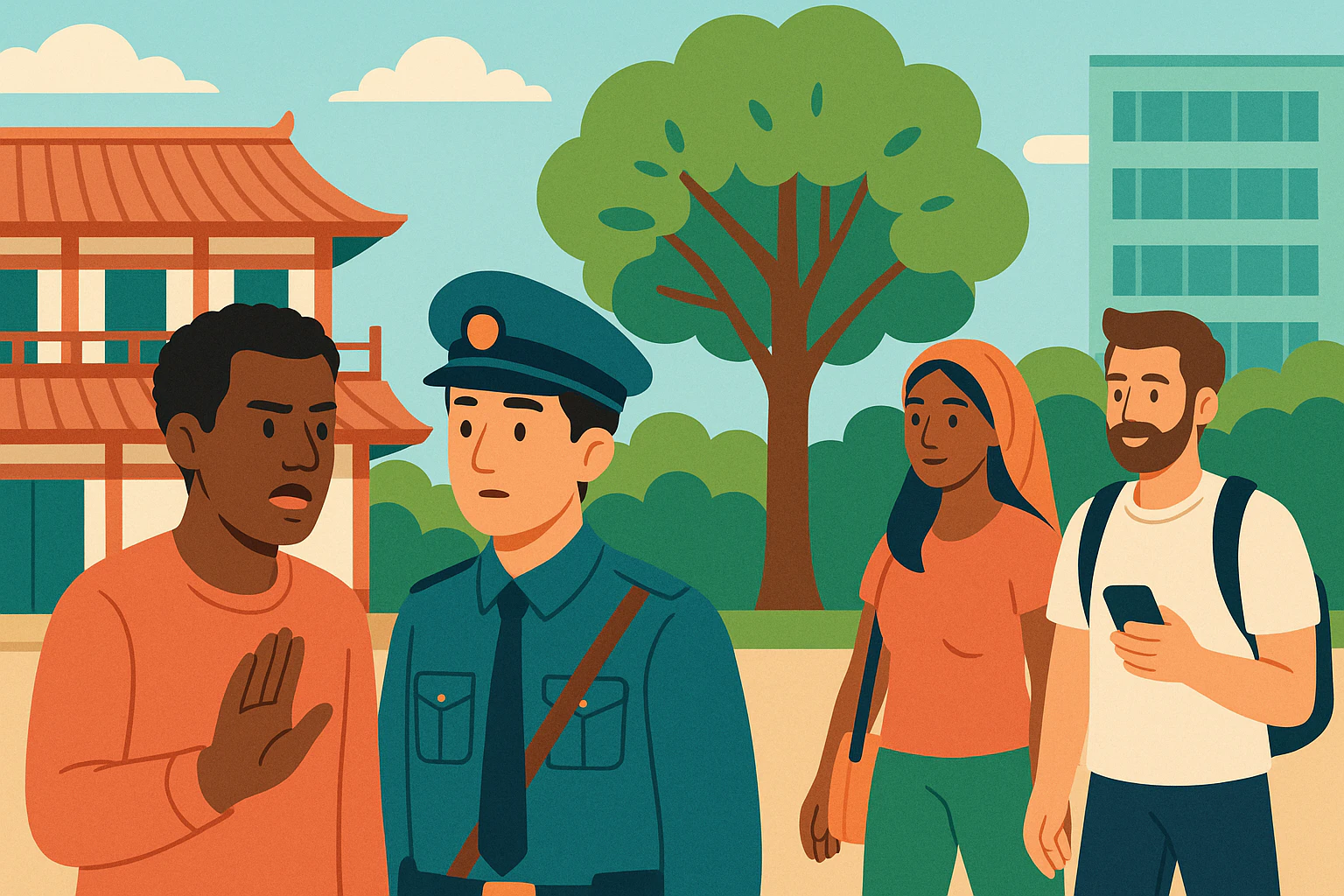
Japan has no comprehensive anti-discrimination law that names foreign residents as a protected class. Article 14 of the Constitution guarantees equality, but enforcement runs through sector-specific laws (gender, hate speech, disability) and one administrative channel: the 法務局 人権擁護課 (MOJ Human Rights Bureau). Knowing which counter handles which incident is the difference between resolution and a wasted year.
- Workplace (hiring, pay, harassment) → 労働基準監督署 + 都道府県労働局雇用環境・均等部
- Housing ("外国人お断り") → 法務局 人權擁護課 + 都道府県外国人相談センター
- Police profiling → 警察相談 #9110 + 都道府県公安委員会への苦情申出
- Hate speech / online → 法務局 + プロバイダ責任制限法 (発信者情報開示)
- Free multilingual legal aid: 法テラス 0570-078377 (10 languages)
Information current as of May 2026. This guide is written by Taku Kanaya — LO-PAL founder, legal-affairs background — and is sourced from the MOJ Human Rights Bureau "Minna-no-Jinken 110-ban" page, e-Gov statute texts, and ministry consultation pages cited throughout.
If you have been refused an apartment because of your nationality, paid less than Japanese coworkers for the same job, or stopped by police without cause, you do have administrative recourse — but the system is fragmented. There is no "EEOC" equivalent. This article maps each discrimination scenario to the specific counter that handles it, what those counters can and cannot do, and how to file in a way that actually moves.
The legal framework: equality without a general anti-discrimination law
Article 14 of the Constitution of Japan guarantees equality "in race, creed, sex, social status or family origin." The Supreme Court has read Article 14 to cover foreign nationals on most fundamental rights questions. But the Constitution binds the government — not private landlords, employers, or restaurants.
For private-sector discrimination, Japan relies on three sector-specific laws and one administrative bureau:
- 男女雇用機会均等法 (Equal Employment Opportunity Law, Law 113 of 1972) — gender discrimination in hiring, pay, promotion
- ヘイトスピーチ解消法 (Hate Speech Elimination Act, Law 68 of 2016) — declarative; no criminal penalty, but supports local ordinances
- 障害者差別解消法 (Disability Discrimination Elimination Act, Law 65 of 2013) — disability-based discrimination, including by businesses
- 法務局 人権擁護課 — the catch-all administrative bureau for human rights violations, including nationality- and race-based discrimination
A general anti-racial-discrimination law has been debated in the Diet since Japan ratified the International Convention on the Elimination of All Forms of Racial Discrimination in 1995, but has not been enacted. The Otaru bath case (Sapporo District Court, 2002; Sapporo High Court, 2004) — a landmark "Japanese only" sign case — found the businesses liable for damages under 民法 §709 (tort) but explicitly held that civil court could not order anti-discrimination relief absent a statute.
Scenario-to-counter matrix
If you don't read past this section, read this table. Each row maps a real-life incident to the specific body with jurisdiction.
| What happened | Where to report | What they can do |
|---|---|---|
| Refused apartment because foreigner | 法務局 人權擁護課 + local 外国人相談センター | 啓発・説示 to landlord; mediation |
| "Japanese only" at restaurant / bath | 法務局 人權擁護課 | 啓発; sometimes 勧告. Civil suit possible (Otaru precedent) |
| Underpaid vs Japanese coworker, same role | 労働基準監督署 (if 労基法 violation) + 都道府県労働局雇用環境・均等部 | 是正勧告, mediation |
| Not hired despite same qualifications (nationality stated as reason) | 都道府県労働局 + ハローワーク外国人雇用サービスコーナー | Administrative guidance to employer |
| Sexual / power harassment at work | 都道府県労働局 均等部 + 内部通報窓口 | Mediation, employer guidance under 均等法 §11 |
| Police stopped you on race basis | 警察相談 #9110 → 都道府県公安委員会苦情申出 | Internal investigation; formal response within 60 days |
| Online hate speech / harassment | 法務局 (削除要請) + プロバイダ責任制限法 §5 (発信者情報開示請求) | Takedown request; identification of poster for civil suit |
| Hospital refused care due to nationality | 厚労省 医政局 + 都道府県 患者相談窓口 | Administrative guidance; rare |
| School bullying / nationality slurs against child | School → 市町村教育委員会 → 都道府県教育委員会 → 文科省 | Investigation under いじめ防止対策推進法 |
The 法務局 Human Rights Bureau: how it actually works
The "Minna-no-Jinken 110-ban" (0570-003-110) is the single most useful number for nationality- or race-based discrimination. It connects you to the human rights counter of the nearest 法務局 (Legal Affairs Bureau). Calls are confidential.
What it can do:
- 任意調査 (voluntary investigation) — the bureau contacts the alleged respondent and asks for their account. Cooperation is not legally compelled.
- 説示 (admonition) — explaining to the respondent why their conduct violated human rights principles.
- 啓発 (education) — providing written human-rights materials to the respondent.
- 勧告 (recommendation) — a formal written recommendation. Reserved for serious cases.
- 援助 (assistance) — referring you to free legal counsel, including 法テラス.
What it cannot do: issue binding orders, award damages, or impose fines. The bureau's measures are non-binding. If you want legally enforceable relief, you need civil court.
For complex cases (housing, employment), filing a written 人権侵犯被害申告 with photos, texts, and dated notes triples your chances of an active investigation versus a phone-only intake. Submit to your local 法務局 by post or online via the internet jinken sōdan form. The MOJ's foreign-resident human rights page outlines the protections in plain language.
Workplace discrimination: 労基法 vs 均等法 vs general discrimination
Workplace claims split into three buckets:
- Pay gap, unpaid wages, illegal dismissal → 労働基準監督署. These are 労働基準法 violations. Equal pay for equal work is required under 労基法 §3 (均等待遇) — "nationality, creed, or social status" cannot be a reason for discrimination in working conditions.
- Gender, harassment, indirect discrimination → 都道府県労働局 雇用環境・均等部 (per 均等法). The 均等部 handles 男女雇用機会均等法, パワハラ防止法 (労働施策総合推進法 §30-2), and harassment claims.
- Foreign-resident-specific employment issues → 厚労省 外国人雇用対策 through Hello Work's foreign-worker corner.
The 労基署 has the strongest powers: 是正勧告 (correction recommendation), on-site inspection (臨検監督), and referral to the Public Prosecutor for criminal offenses. Wage and dismissal cases that meet 労基法 thresholds usually move within 1–3 months — faster than 法務局 channels.
Retaliation is prohibited. 労基法 §104-2 bars unfavorable treatment of workers who report to 労基署. Whistleblowers in broader contexts are protected by the 公益通報者保護法 (Whistleblower Protection Act, Law 122 of 2004).
Housing rejection: the most common scenario
"外国人お断り" is illegal in spirit but not specifically criminalized. There is no statutory penalty for a landlord who refuses to rent based on nationality. Your channels:
- 法務局 人権擁護課 — file a written complaint with screenshots of agent emails, dated rejection notes, and any "no foreigners" listings. The bureau will contact the landlord/agent and issue 啓発 or 説示.
- 都道府県・市町村 外国人相談センター — in Tokyo, the Tokyo International Communication Committee (TICC); in Osaka, OFIX. They often maintain lists of agencies that work with foreign tenants.
- MLIT (国土交通省) publishes a foreign-tenant 賃貸住宅標準契約書 with multilingual guidance, but enforcement is limited.
Case study: a Bangladeshi resident's 3-month housing fight
R, a 30-year-old engineer from Dhaka with PR-pending status and a ¥7M salary, was refused at three Setagaya apartments in early 2026. Two were posted on SUUMO with no "no foreigners" tag; one agent disclosed by email that "the landlord doesn't accept foreigners." R took these steps over 12 weeks:
- Week 1. Documented every rejection — date, agent name, email screenshot. Saved the SUUMO listing URL with the Wayback Machine before the agent could change it.
- Week 2. Called みんなの人権110番 0570-003-110. Filed a written 人権侵犯被害申告 with the Tokyo 法務局 East Branch, attaching the email screenshot.
- Week 3. Cross-posted on a foreign-tenant forum and consulted the Tokyo Intercultural Portal (TICC). They referred R to two agencies specialized in foreign tenants (Ichii, GTN).
- Week 4–6. 法務局 contacted the original landlord. The landlord declined to comment; the bureau issued 啓発 paperwork to the agent.
- Week 7. R signed a lease at a GTN-listed property at the same rent, with a foreign-resident guarantor company replacing the personal 連帯保証人 requirement.
- Outcome. No legal damages, no apology, but documented record at MOJ. R later linked the case to a Mainichi reporter who covered housing discrimination, contributing to one local ordinance proposal in 2026.
Lesson: the 法務局 doesn't get you a forced lease, but the record-building plus the parallel "find an inclusive agency" path resolves the housing problem within months.
Police profiling: #9110 and the 公安委員会
Racial profiling by police — stop-and-question (職務質問) based primarily on apparent foreignness — is the issue Amnesty Japan and the Tokyo Bar Association have raised most loudly since 2021. The National Police Agency issued an internal directive in 2021 telling officers not to base stops on race or nationality alone.
Your two channels:
- 警察相談専用電話 #9110 — the general police consultation line. Files a record of the incident with the local police HQ.
- 都道府県公安委員会への苦情申出 — formal complaint under Police Act §79. The Public Safety Commission must investigate and issue a written response, typically within 60 days. The Tokyo Metropolitan Public Safety Commission's procedure is published on the Tokyo Metropolitan Police site.
For severe incidents (physical contact, prolonged detention, slurs), also file with 法務局 — police misconduct falls within their human-rights jurisdiction. Document badge number, koban location, time, and witness names within 24 hours.
Free legal aid: 法テラス multilingual
The Houterasu multilingual line 0570-078377 provides free intake in 10 languages (English, Chinese, Korean, Portuguese, Spanish, Vietnamese, Tagalog, Thai, Nepali, Indonesian). For low-income residents (means-tested), Houterasu provides full legal aid — lawyer fees advanced and repaid over months.
| Hotline | Number | Languages |
|---|---|---|
| みんなの人権110番 (MOJ) | 0570-003-110 | Japanese; foreign-language line separate |
| 外国人人権相談 (MOJ) | 0570-090911 | EN, ZH, KO, TL, PT, VI, ES, NE, ID, TH |
| 法テラス Multilingual | 0570-078377 | 10 languages |
| 警察相談 | #9110 | Japanese; some prefectures multilingual |
| TICC (Tokyo) | 03-5805-5039 | 14 languages |
How to file in a way that moves: documentation discipline
The single biggest predictor of whether your complaint gets investigated is the quality of your record. A phone call with "the landlord said no" produces a referral. A folder with dated screenshots, witnesses, and time-stamped photos produces an investigation.
- Date, time, place, witnesses — written down within 24 hours.
- Screenshots / photos with metadata intact (do not edit). Save listing URLs through the Wayback Machine before the page changes.
- 内容証明郵便 — for written complaints to a landlord or employer, send by content-certified post. The post office stamps that a specific letter was delivered on a specific date. ¥1,500 service available at most main post offices.
- Follow-up if no response in 30 days — the bureau will not chase respondents on your behalf without prompting. Call your assigned 法務局 case officer at week 4.
Civil court: 民法 §709 tort and the Otaru precedent
If administrative remedies fail and you have damages (lost rent deposit, lost wages, emotional distress with medical record), a civil suit under 民法 §709 (tort liability) is the option. The bar is high — you must prove the discriminatory act, that it was illegal, and quantifiable damages.
The Otaru bath case (Sapporo District Court 2002-11-11; Sapporo High Court 2004-09-16) — three foreign plaintiffs sued an onsen and the City of Otaru after being denied entry on "Japanese only" signs — won ¥1M each from the bathhouse but lost against the city. Damages are typically small (¥500K–¥3M) and litigation costs offset much of the award, so 民法 §709 cases are usually about precedent and apology, not money.
What does not work
| Action | Why it backfires |
|---|---|
| Yelling at the counter clerk | The clerk is not the decision-maker; they will refer you out and your case sits |
| Public callout on X without prior filing | Defamation counterclaim risk under 名誉毀損 (刑法 §230) |
| Threatening media coverage to extort apology | 恐喝 (criminal extortion) territory under 刑法 §249 |
| Filing with the embassy | Embassies rarely intervene; their consular role is notarization and referral, not advocacy |
| Anonymous online complaint | Bureaus cannot investigate without a verifiable complainant |
Realistic timelines
| Channel | Typical resolution time |
|---|---|
| 労基署 (labor standards) inspection | 1–3 months |
| 法務局 human rights inquiry | 3–6 months |
| 公安委員会 complaint response | ~60 days (statutory) |
| 民法 §709 civil suit (first instance) | 12–24 months |
| Online takedown via プロバイダ責任制限法 | 1–3 months (faster for clear defamation) |
None of these are fast. Plan around that — keep paying rent, keep going to work, keep collecting documentation while the system grinds.
Related articles
- Worker Rights in Japan for Foreign Residents
- Recover Unpaid Wages in Japan
- Apartment Rental Rejection in Japan
- Block a Divorce Filing in Japan
Disclaimer: This article is general information, not legal advice. Statutes and counter procedures can change without notice. For an active case, consult a licensed 弁護士, contact 法テラス for means-tested aid, or call the relevant counter directly. The author has a legal-affairs background but is not your attorney, and reading this article does not create an attorney-client relationship.
Get Help Drafting the Complaint
The hardest part of filing is the first Japanese letter — the 人権侵犯被害申告 form, the 内容証明郵便 to a landlord, or the 苦情申出書 to the 公安委員会. Post your situation on LO-PAL for free: a local Japanese person can help you draft the document, accompany you to the 法務局 intake counter, and translate the response. You only pay if you accept hands-on task help.
Written by

Founder, LO-PAL
Former Medical Coordinator for Foreign Patients (Ministry of Health programme) and legal affairs professional. Built LO-PAL from firsthand experience navigating life abroad.
Written with partial AI assistance
Read full bio →