Japanese Apartment Etiquette for Foreigners: Quiet Hours & Neighbors
Apartment-first checklist for quiet hours, shared spaces, trash areas, move-in greetings, and handling noise complaints in Japan.
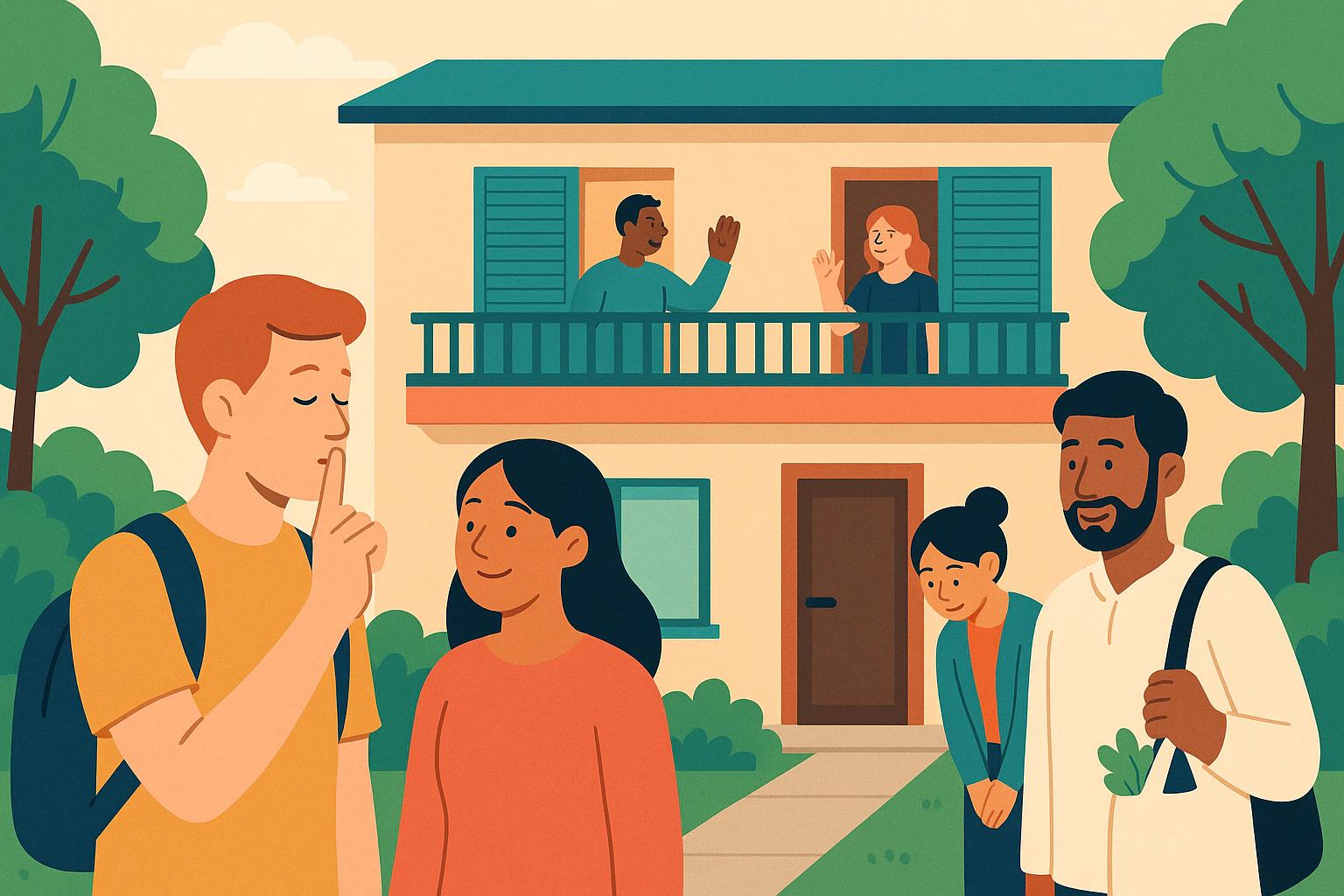
Your biggest “Japan manners” surprise probably won’t happen on a train—it’ll happen at home. In many apartments, sound travels more than you expect, shared hallways are treated like semi-private space, and the garbage area can be stricter than any office rulebook.
This Japanese apartment etiquette for foreigners guide turns official city guidance into an apartment-first checklist: how quiet hours actually work, what locals notice in shared spaces, and how to build a low-stress relationship with your neighbors (including ready-to-use Japanese phrases).
Apartment-first checklist (save this): 1) Find your building’s house rules, 2) treat 22:00–06:00 as “night” by default, 3) avoid laundry/vacuuming late, 4) don’t store anything in corridors/stairs, 5) keep balcony use conservative, 6) park bikes only where allowed, 7) follow your city’s trash schedule and bag rules, 8) greet neighbors appropriately for your area, 9) route complaints through management, 10) know your escalation options if things feel unsafe.
The real rulebook: national standards vs city guidance vs building bylaws
When foreigners get warned for “noise” or “trash,” it can feel personal—but in Japan, there are three layers of rules influencing what neighbors expect and what a building can enforce.
- National standards (baseline concepts, not your building’s house rules): Japan’s Environmental Quality Standards for Noise define daytime as 06:00–22:00 and nighttime as 22:00–06:00, with residential-area target levels such as 55 dB (day) / 45 dB (night) for typical residential classifications (A and B). (Ministry of the Environment: Environmental Quality Standards for Noise)
- Prefecture/city guidance (what your local government explicitly tells residents to do): Many municipalities publish multilingual living guides that directly mention apartment life issues like garbage disposal and being careful about sound/voices. For example, Chiba City’s living guide (updated 2026-01-23) lists “life rules (garbage disposal, sound/voices)” as a key topic, and includes contact info for the city’s International Exchange Division.
- Building bylaws (what actually gets enforced in your building): Your lease, “house rules,” condominium management rules, and posted notices in the trash room/elevator. These may set stricter quiet hours, define which appliances are prohibited at night, and specify trash times, smoking rules, bicycle parking, and corridor storage.
Practical takeaway: if you only follow “Japan etiquette” blog posts but ignore your building’s posted rules, you can still get warned. If you only follow your building rules but ignore city trash rules, you can still get in trouble at the garbage station.
Where to find your building rules (fast):
- Your rental contract pack (often includes a “house rules” sheet and trash instructions).
- Building bulletin boards (entrance, elevator, mail area).
- The trash area sign (collection days/times, bag types, do-not rules).
- Ask the management company: 管理会社 (kanri gaisha).
If you’re signing a lease soon and want fewer surprises, start with our Japan rental contract guide for foreigners (2026) so you know what documents typically include house rules and what happens when rules are violated.
Quiet hours in Japan (and why they differ by city/building) — Japanese apartment etiquette for foreigners
“Quiet hours Japan apartment” isn’t one universal rule. Most people anchor their expectations around what “nighttime” means in official standards (22:00–06:00), but your building (and sometimes your city) may ask for earlier or longer quiet periods.
Start with the national “night” concept: Japan’s Environmental Quality Standards for Noise define night as 22:00–06:00. That doesn’t automatically mean “legal quiet hours,” but it strongly influences what feels reasonable to neighbors and management. (Ministry of the Environment noise standards)
Then check city/building guidance: Miki City (Hyogo) publishes a multilingual apartment-living PDF that warns residents to be especially careful at night (9 PM to 7 AM) and lists examples like loud talking, music/TV volume, running indoors, and late-night laundry/vacuuming. (Miki City: Rules for living in multi-family housing)
Why people are sensitive about sound: The Ministry of the Environment reported 19,890 noise complaints nationwide in FY2023 (Reiwa 5), with construction work as the largest category. (MOE press release, 2025-02-21)
What “counts as noise” in an apartment (common triggers):
- Footsteps/heel-walking, running (especially above someone’s bedroom)
- Door slams, cabinet bangs, dragging chairs
- Washing machine spin cycles, vacuuming
- Loud calls, speakerphone, gaming with voice chat
- Instrument practice (even “quiet” instruments)
Quiet-hour habits that usually prevent problems:
- After 22:00: avoid laundry, vacuuming, loud cooking (blenders), calls on speaker, and “impact” sounds.
- Use slippers and add a rug/mat in high-traffic paths.
- Close doors gently (some people add soft door cushions).
- Use headphones at night; keep bass low (low frequencies travel).
- If you work nights: assume neighbors sleep “early,” and proactively reduce impact noise.
If you have kids: teach “no running indoors” early, and consider a play mat. If you can, schedule high-energy play outside earlier in the evening.
If you have to do something noisy late: communicate through management in advance when possible (repairs, moving furniture), and keep it short.
Ready-to-use Japanese phrases (quiet-hours friendly):
- 音に気をつけます。
Romaji: Oto ni ki o tsukemasu.
Meaning: I’ll be careful about noise. - 夜は静かにします。
Romaji: Yoru wa shizuka ni shimasu.
Meaning: I’ll keep it quiet at night. - うるさかったら教えてください。
Romaji: Urusakattara oshiete kudasai.
Meaning: If it’s noisy, please tell me.
Shared-space etiquette locals care about (hallways, balconies, bikes, trash)
In many buildings, the “shared zones” are where apartment culture shock hits hardest. These areas are watched—quietly—because they affect everyone’s safety, cleanliness, and comfort.
Hallways & stairs: keep them empty and quiet
Corridors and stairs are not an extension of your storage space. Miki City’s apartment rules explicitly remind residents that stairs and corridors are common areas used as evacuation routes in earthquakes/fires, and says not to leave personal belongings there. (Miki City PDF: Rules for safe and secure living)
- Do not leave umbrellas, bikes, strollers, or boxes outside your door unless your building explicitly allows it.
- Keep phone calls short/quiet in hallways (voices echo).
- Don’t shake rugs or bedding in shared corridors.
Balconies: treat them as “emergency space” + neighbor space
Balconies in Japan often double as emergency escape routes (especially in older layouts) and are visually/physically close to neighbors. Even if your balcony feels private, smoke, smells, and sound travel quickly.
- Follow building rules on smoking (many buildings restrict balcony smoking).
- Be careful drying bedding—avoid banging rails and never let items fall.
- Keep plants and storage minimal if your building warns about evacuation access.
Bicycles: park only where you are assigned
Unapproved bike parking is one of the fastest ways to annoy neighbors because it blocks pathways and looks messy. Miki City’s guidance also stresses that bicycles are treated as vehicles under traffic rules and should be handled carefully. (Miki City PDF)
- Use the building’s bicycle lot; if spaces are numbered, park only in yours.
- Don’t lock bikes to stairs/handrails unless explicitly permitted.
- If your building has a “no bicycle inside elevator” policy, follow it (some do).
Trash areas: city rules first, building rules second
Trash is the #1 “unspoken test” of whether you’re a considerate resident. And it’s not just etiquette—cities publish rules, schedules, and multilingual materials.
Use multilingual city guides (examples you can copy for your city):
- Chiba City Living Guide (updated 2026-01-23) explicitly includes “garbage disposal” and “sound/voices,” and lists the city department contact (International Exchange Division, phone 043-245-5018).
- Fukuoka City Higashi Ward Living Guide for Foreign Residents (updated 2024-08-16) provides downloadable guides in multiple languages and ward contact info (Higashi Ward General Affairs Division, phone 092-645-1007).
- Nakano Ward’s living guidebook page (updated 2024-10-07) links to guidebook sections including greetings, renting, and garbage, and notes where you can pick it up at the ward office and related centers.
Procedures example (Fukuoka City): oversized trash (“sodai gomi”)
In Fukuoka City, oversized garbage collection requires advance application to the Oversized Trash Reception Center at 092-731-1153 (Mon–Sat 9:00–17:00). Fukuoka also provides an online reception desk and (in some cases) a LINE-based reception option. (Fukuoka City: Oversized garbage procedure)
If you’re overwhelmed by trash rules: use an English-first strategy—find your city’s official page, then confirm your building’s specific drop-off point/time. Our Garbage sorting app guide (2026) can help you locate tools many cities use for schedules and sorting.
Neighbor relationships: move-in greetings, gifts, and what to do if you get a complaint
Noise and trash are “systems” problems, but neighbors are “relationship” problems. The good news: small, polite actions early on can prevent many future conflicts.
Move-in greetings: when they help (and when they don’t)
“Moving in greeting Japan apartment” customs vary by region, building type, and security culture. In family-oriented buildings or smaller towns, greetings can still be welcome. In some single-person buildings in big cities (especially where auto-lock security is emphasized), people may prefer distance.
What official local guidance says: Miki City’s apartment rules explicitly encourage building relationships: “Let’s greet neighbors,” and even encourages joining evacuation drills and local events. (Miki City PDF)
A safe, modern approach:
- Ask management first: “Do people here do move-in greetings?”
- If yes, greet the units next to you and below you (and sometimes above you).
- Go early evening (not late), and keep it under 30 seconds.
Gift (optional): something small and sealed (about 500–1,000 yen): hand towel, small snacks, drip coffee/tea. Avoid anything messy or strongly scented.
Move-in greeting phrases (ready to copy):
- はじめまして。となりの部屋に引っ越してきた〇〇です。よろしくお願いします。
Romaji: Hajimemashite. Tonari no heya ni hikkoshite kita ___ desu. Yoroshiku onegaishimasu.
Meaning: Nice to meet you. I’ve moved into the room next door. Thank you in advance. - うるさかったら、遠慮なく言ってください。
Romaji: Urusakattara, enryo naku itte kudasai.
Meaning: If it’s noisy, please tell me without hesitation.
If you get a complaint: what to do (and what not to do)
“Noise complaints Japan apartment” situations escalate when people argue directly in the hallway. Your goal is to lower emotion and raise clarity—usually through the management company.
Step-by-step response:
- Acknowledge and apologize (even if you’re not sure it was you).
- Get specifics: time window, type of sound, how often.
- Change one thing immediately (rugs, slippers, headphones, appliance timing) and document what you changed.
- Route the situation to management if it repeats, feels aggressive, or involves unclear accusations.
Useful apology / clarification phrases:
- ご迷惑をおかけして申し訳ありません。
Romaji: Gomeiwaku o okake shite moushiwake arimasen.
Meaning: I’m very sorry for the trouble. - 何時ごろ、どんな音でしたか?
Romaji: Nanji goro, donna oto deshita ka?
Meaning: Around what time, and what kind of sound was it? - すぐに改善します。管理会社にも相談します。
Romaji: Sugu ni kaizen shimasu. Kanri gaisha ni mo soudan shimasu.
Meaning: I’ll improve it immediately. I’ll also consult the management company.
If you feel stuck: Osaka Prefecture’s “Daily Life Noise Handbook” materials emphasize that “daily life noise” is complex and that there are no legal/ordinance numeric limits specifically for daily-life noise, so prevention and early communication matter. When communication is difficult, it also points to using outside options like legal consultation or mediation. (Osaka Prefecture: Daily Life Noise Handbook)
When it’s not “etiquette” anymore: escalation and safety
If a neighbor becomes threatening, repeatedly bangs on your door, stalks you, or you fear violence, treat it as a safety issue—not a manners issue.
- Emergency: call 110.
- Non-emergency police advice: in Japan you can consult police via #9110. Tokyo Metropolitan Police explain that dialing #9110 connects (in Tokyo) to their General Advisory Center for advice on issues like trouble in your immediate environment, stalkers, and more. (TMPD help hotline info)
Quick FAQ
Q: Are quiet hours always 22:00–06:00?
Not always. National noise standards define nighttime as 22:00–06:00, but your city/building can ask for earlier or longer “be especially careful” windows (for example, Miki City calls out 21:00–07:00 in its apartment rules). (MOE standards) (Miki City PDF)
Q: Should I do a move-in greeting in Tokyo?
It depends on the building culture. Ask management first; in some buildings it’s welcomed, while in others people prefer privacy for security reasons.
Q: If I get a noise complaint, should I confront the neighbor directly?
Usually no. Keep it polite and short, then use the management company to avoid escalation and “he said/she said” conflict.
Q: Where do I find my city’s official living rules in English?
Search your city/ward site for “living guide,” “foreign residents,” or “multilingual,” and look for official PDFs like the examples from Chiba City, Fukuoka Higashi Ward, and Nakano Ward linked above.
Related Articles
- Japan rental contract for foreigners (2026): guarantors & fees
- Garbage sorting app Japan (2026): English trash rules by city
- Japan garbage separation rules in English (2026): work-move checklist
Need More Help? Ask on LO-PAL
If you want to know more about Japanese apartment etiquette for foreigners or need building-specific local advice (quiet hours, garbage station rules, whether move-in greetings are normal in your neighborhood), ask a local Japanese person on LO-PAL.
Post a question in your language, and local helpers can explain what’s normal in your area—and how to handle issues politely before they become stressful.
Written by

Founder, LO-PAL
Former Medical Coordinator for Foreign Patients (Ministry of Health programme) and legal affairs professional. Built LO-PAL from firsthand experience navigating life abroad.
Written with partial AI assistance
Read full bio →