Japan New Year Holiday Closures 2026: Foreigner Survival Guide
Plan for Dec 2025–Jan 2026 shutdowns: city hall, garbage, banks, deliveries, trains, and multilingual help for foreigners.
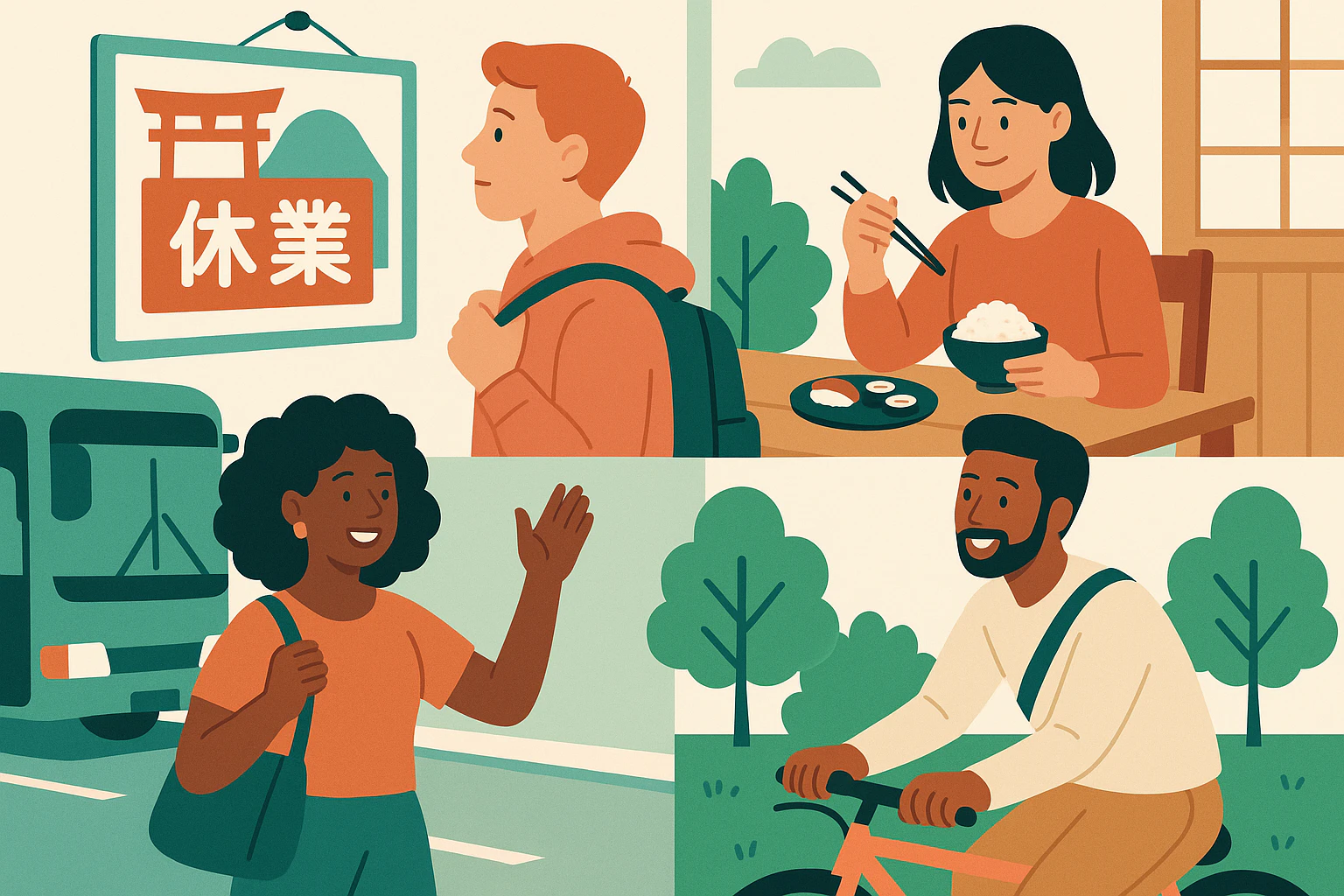
If you’re spending late December and early January in Japan, you’ve probably heard the phrase nenmatsu nenshi Japan (year-end and New Year). It’s not just a holiday vibe—it's a real, practical shutdown that can affect everything from city hall paperwork to your Japan New Year garbage collection schedule and even deliveries.
This guide is built as a practical Japan New Year holiday closures survival checklist for foreign residents (and long-stay visitors): what closes first, what still runs, and exactly how to confirm the rules for your ward/city—because Japan’s “New Year closures” are never 100% uniform.
2025–2026 shutdown window (most common): many offices and consultation desks are closed from Saturday, December 27, 2025 through Sunday, January 4, 2026 when weekends overlap the usual holiday period. For example, Nakano Ward (Tokyo), Chiba City, and Edogawa Ward all announced closures spanning Dec 27–Jan 4. Always confirm locally.
What is “Nenmatsu Nenshi” (Japan’s New Year shutdown) and why Japan New Year holiday closures dates vary
Nenmatsu nenshi is Japan’s year-end/New Year period, and it can feel like the whole country hits pause. In reality, the shutdown is a mix of (1) national holidays, (2) legally defined banking holidays, and (3) each municipality/company’s own holiday schedule.
The tricky part: Japan New Year holiday closures often “expand” when weekends overlap. In 2025–2026, many local governments announced longer closures that run December 27, 2025 to January 4, 2026 (instead of the more typical “around Dec 29–Jan 3”).
Real examples (so you can see the pattern)
- Nakano Ward (Tokyo): ward offices (with exceptions) were closed Dec 27, 2025–Jan 4, 2026 in their year-end/New Year guidance. Nakano Ward year-end/New Year closures page
- Chiba City: city and ward offices closed Dec 27, 2025–Jan 4, 2026, with reopening on Jan 5, 2026; they also listed a city hall call center schedule. Chiba City year-end/New Year notice (English)
- Edogawa Ward (Tokyo): explained its usual closure is Dec 29–Jan 3, but in 2025–2026 it extended to Dec 27, 2025–Jan 4, 2026 due to weekends. Edogawa Ward press release (year-end phone consultation + closure period)
Fast way to confirm your own area (5 minutes)
- Search your city/ward website for: 年末年始 (nenmatsu nenshi), plus the service you need (examples below).
- Look for PDFs titled like: 年末年始のご案内, 休庁 (office closure), ごみ収集 (garbage collection), 休日診療 (holiday clinics).
- If you’re in Tokyo, check the Tokyo multicultural portal (TIPS) and your ward site—Tokyo wards publish their own schedules.
Search phrases that work well:
- 区役所 年末年始 2025 2026 (ward office year-end/new year)
- ごみ 年末年始 収集 2025 2026 (garbage year-end/new year collection)
- 粗大ごみ 受付 年末年始 (oversized trash reception year-end/new year)
Japan New Year holiday closures checklist: what closes first (city hall, garbage pickup, banks/ATMs, and deliveries)
Think of this as your “life admin” checklist. If you handle these items before the shutdown, you’ll avoid 90% of New Year stress in Japan.
Do these before the last business day: city hall paperwork, cash withdrawals, bulky garbage bookings, and any time-sensitive deliveries (especially documents and parcels).
1) City hall / ward office: closed, but some urgent submissions still possible
Most city halls and ward offices close for multiple days, and in many places the closure expanded in 2025–2026 due to weekend overlap. Nakano Ward (Tokyo) listed ward office closure from Dec 27, 2025–Jan 4, 2026 with limited exceptions. Nakano Ward’s closure details
Even when the building is “closed,” some municipalities still accept certain filings (like family register notifications) via a security desk or after-hours window. Chiba City’s notice, for example, explains family register notifications can still be submitted during the holiday period. Chiba City notice (English)
- If you must submit something urgent: search your ward/city site for 戸籍 届出 年末年始 (koseki submissions over New Year) and confirm the drop-off location.
- If you need help reading city hall Japanese: prepare screenshots and the Japanese page title—those make it much easier to get help later.
2) Garbage pickup: the Japan New Year garbage collection schedule is neighborhood-specific
This is where many foreign residents get caught: you can live in the same ward as your friend and still have different collection days. During nenmatsu nenshi, entire categories may pause, and some areas get special “extra” pickups.
Tokyo example (Nakano Ward): Nakano Ward announced that burnable trash, ceramics/glass/metal, and plastic resources were suspended Dec 31, 2025–Jan 3, 2026, while bottles/cans/PET were suspended Dec 31, 2025–Jan 4, 2026. They also noted a limited special collection on Jan 4 for specific neighborhoods. Nakano Ward year-end/New Year garbage notice
Tokyo example (Minato City): Minato City published a ward-wide suspension period: no resource or waste collection from Dec 31, 2025 to Jan 3, 2026, plus area-by-area restart dates. Minato City waste collection notice
Hyogo example (Nishinomiya City): Nishinomiya states no garbage/resource collection from Dec 31, 2025 to Jan 4, 2026, and lists changed collection dates in January. They also publish a reservation-based drop-off system and a dedicated reception number: 0798-22-6600. Nishinomiya year-end/New Year garbage page
Osaka example (Sakai City, English): Sakai City publishes an English table showing last and first collection dates, plus deadlines for large garbage applications and phone numbers. Sakai City New Year garbage collection (English)
Garbage survival tips (when collection pauses)
- Don’t put trash out during the suspension period—many wards explicitly ask you not to. (Animals + wind + smell = disaster.)
- Store it smart: rinse containers, freeze food scraps, and use odor-seal bags until pickup resumes.
- Use your city’s “trash calendar” PDF or app: many wards offer a monthly calendar or an official sorting app.
If you want an English-first setup, start here: garbage sorting apps in Japan (2026).
3) Banks and ATMs: branches close, but cash access usually continues
In Japan, it’s normal for bank counters to close over New Year. The Bank of Japan’s holiday schedule lists closures from December 31 to January 3 (in addition to weekends and national holidays), and many retail bank branches follow a similar pattern.
ATMs are the key: some keep running, but hours and available functions vary by location (especially in rural areas). If you have rent, tuition, or a big transfer, do it before the shutdown—and keep a cash buffer for small, cash-only places.
Japan Post Bank (ゆうちょ銀行 / Yucho) specific 2026 notice: they announced that holiday-service ATMs remain usable from Jan 1–Jan 4, 2026 at about 14,000 locations (about 18,000 ATMs), including some small ATMs in places like FamilyMart (with some function limitations). Japan Post Bank year-end/New Year ATM announcement
Quick cash plan: withdraw by Dec 30, keep small bills and coins (useful for hatsumode offerings), and screenshot your bank’s emergency contact/lock-card instructions.
4) Deliveries + mail: New Year is not a normal delivery week
Japan Post holiday delivery schedule (2026): Japan Post published a table showing delivery is suspended on Jan 2 and Jan 4, 2026, while Jan 1 and Jan 3 are delivery days. They also list categories that are delivered even on holidays (e.g., certain special-handling mail, Letter Pack, Yu-Pack, EMS). Japan Post: delivery on 2026 holidays
Nengajo (New Year cards) timing + cost
If you’re participating in the tradition: Japan Post states that 2026 nengajo are accepted starting Dec 15, 2025, and recommends posting by Dec 25, 2025 to arrive on Jan 1. Japan Post FAQ: nengajo acceptance start date and recommended deadline
If you’re using a standard postcard, Japan Post lists postcard postage as 85 yen. Japan Post: postcard postage (English)
Private couriers (DHL/UPS/FedEx) and international shipments
Private courier operations vary, and some services pause pickup/delivery on Japanese public holidays. For example, UPS Japan publishes a holiday schedule showing no pickup/delivery during Jan 1–Jan 3, 2026. UPS Japan holiday schedule
If you’re waiting for something time-sensitive (a new bank card, a residence-related document, medication delivery, etc.), check the carrier’s official holiday schedule and build in extra buffer.
Getting around + enjoying New Year: transport changes and Hatsumode first shrine visit basics
Even if you don’t travel far, New Year changes how cities move. Many operators switch to holiday timetables, and late-night options can either improve (special runs) or disappear (earlier last trains outside major cities).
Transport changes: don’t assume “normal weekday” service
Greater Tokyo (JR East): JR East announced overnight service for the 2025–2026 New Year period on several major lines to support hatsumode and New Year’s outings. Their official JRE Media guide explains the overnight service for Dec 31, 2025 to Jan 1, 2026, including lines like Yamanote and Chuo-Sobu, with typical overnight operation around 1:00–5:00 (varies by line). JRE Media: overnight trains for New Year 2025–2026
Outside big cities: many areas do not run trains all night. If you’re doing a midnight hatsumode in a smaller city, plan your return first (taxi availability and pricing can also change).
Hatsumode first shrine visit: what to bring + basic flow
Hatsumode (初詣) is your hatsumode first shrine visit of the year, usually done between Jan 1 and early January. The biggest “foreigner survival” tip is simple: plan for crowds, cold, and cash-only moments.
- Bring cash + coins: small coins are useful for offerings; food stalls and amulets often aren’t card-friendly.
- Wear layers: you’ll stand still in lines, often late at night.
- Charge your phone: you’ll rely on route apps and possibly translation.
Basic shrine flow (simple and safe):
- At the gate: a small bow before entering (don’t stress if you forget—just be respectful).
- If there’s a purification fountain (temizuya), follow posted instructions (many popular shrines post picture guides).
- At the main hall: offering → bow → (clap if it’s a Shinto shrine) → pray → bow.
- Afterward: amulets (omamori), fortunes (omikuji), and sometimes stamps (goshuin) if the counter is open.
Expect peak crowding right after midnight on Jan 1, and again during daytime Jan 1–3. Going early morning or later in the afternoon is often calmer.
Emergency & multilingual support during Japan New Year holiday closures + how LO-PAL helps
If something goes wrong during Japan New Year holiday closures, the biggest challenges are (1) figuring out what’s open and (2) explaining your situation in Japanese. Save these contacts before the holiday starts.
Emergency numbers (nationwide)
- Police: 110
- Ambulance / fire: 119
Medical help in multiple languages (Tokyo)
The Tokyo Metropolitan Government runs the HIMAWARI medical information phone service to guide foreign patients (languages include English, Chinese, Korean, Thai, Spanish). It operates daily 9:00–20:00 and the number is 03-5285-8181. TMG: HIMAWARI medical information service
Tokyo also launched a dedicated portal for foreign residents and tourists on March 27, 2025 that explains how to find medical institutions, how Japanese medical care works, and where to consult when you’re stuck. TMG press release: Tokyo Medical Information Site for Foreign Tourists and Residents
Emergency interpreting support (for medical institutions in Tokyo)
If you’re already at a clinic/hospital and communication is breaking down, Tokyo provides an emergency interpreting service designed for medical institutions to use. Tokyo’s Bureau of Social Welfare and Public Health states the service supports multiple languages; English and Chinese are 24 hours, and in FY2024 they added video interpreting in addition to phone interpreting. TMG: emergency interpreting service for medical institutions (FY2024)
Multilingual daily-life consultation (Tokyo) + holiday closures
Tokyo also lists consultation desks like Tokyo Multilingual Consultation Navi (TMC Navi) (Tel: 0120-142-142, weekdays 10:00–16:00) and the Foreign Residents’ Advisory Center. TIPS: consultation desks in Tokyo (English)
But services can close over nenmatsu nenshi. TIPS published a notice that TMC Navi was closed Dec 27, 2025–Jan 4, 2026 (and listed alternatives to call during that period). TIPS notice: consultation desk closure Dec 27–Jan 4
If you’re in Tokyo and need a ward-level safety net (example: Edogawa Ward)
Some wards add temporary support during the longer closure. Edogawa Ward opened a phone consultation window on Dec 27, Dec 28, and Jan 4 (8:30–17:00) at 03-5662-1311, specifically because the ward office closure extended to Dec 27, 2025–Jan 4, 2026. Edogawa Ward: New Year phone consultation
Hotline support in multiple languages (nationwide option)
If you need someone to talk to—or help navigating where to consult—the Yorisoi Hotline is often shared by international support centers as an option with a foreign-language line. One multilingual center explains you can call 0120-279-338 (foreign language line 10:00–22:00), and press 2 after the guidance for foreign-language support. Nagano Prefectural Multicultural Counseling Center: Yorisoi Hotline guidance
FAQ: quick answers for Japan New Year holiday closures
Are city halls and ward offices closed for all of Dec 29–Jan 3?
Not always. Many areas close around that period, but in 2025–2026 some closures extended to Dec 27, 2025–Jan 4, 2026 due to weekend overlap (for example, Nakano Ward and Edogawa Ward). Always confirm on your ward/city website.
Does Japan Post deliver on January 2, 2026?
Japan Post’s 2026 holiday delivery table shows delivery is suspended on Jan 2, 2026 (and also on Jan 4, 2026), while Jan 1 and Jan 3 are delivery days. Some special-handling items and parcels may still be delivered on holidays. Japan Post: 2026 holiday delivery schedule
Can I withdraw cash from Japan Post Bank ATMs on Jan 1–Jan 4, 2026?
Japan Post Bank announced holiday-service ATMs will be available during Jan 1–Jan 4, 2026 at about 14,000 locations (about 18,000 ATMs), including some convenience-store ATMs (with limited functions). Japan Post Bank: year-end/New Year ATM availability
How do I confirm my Japan New Year garbage collection schedule?
Check your city/ward’s official year-end/New Year trash page (often a PDF calendar) and confirm by neighborhood and trash type. Tokyo wards like Nakano publish detailed suspension dates by category. Nakano Ward: year-end/New Year garbage notice
Related Articles
- Garbage sorting apps in Japan (2026): English trash rules by city
- Easy Japanese city hall paperwork in Japan: free guides (2026)
- Mental health support for foreigners in Japan (2026 guide)
Need More Help? Ask on LO-PAL
If you want to know more about Japan New Year holiday closures or need specific, local information (your building’s trash rules, your ward’s exact suspension dates, which clinic is open near you, whether a delivery will arrive), the fastest route is often to ask someone who lives locally.
That’s exactly why we built LO-PAL: a matching service where foreign residents and tourists in Japan can connect with local Japanese helpers to ask life questions and request task help. Post a question or request a task in the app, and local Japanese helpers in your area will respond and support you in multiple languages (English, Chinese, Vietnamese, Portuguese, Korean, Nepali, Tagalog, Indonesian, Spanish).
- Ask a local helper to confirm your ward/city pages (and explain the Japanese PDF in plain English).
- Request practical help, like calling a bulky-garbage center, checking a hospital’s holiday hours, or figuring out the right counter at city hall after reopening.
- Get neighborhood-specific tips (what convenience stores have working ATMs late at night, which route is safest during hatsumode crowds, etc.).
Written by

Founder, LO-PAL
Former Medical Coordinator for Foreign Patients (Ministry of Health programme) and legal affairs professional. Built LO-PAL from firsthand experience navigating life abroad.
Written with partial AI assistance
Read full bio →