Skip Insurance in Japan? Your Visa Is at Risk From 2027
Starting June 2027, Japan will check NHI and pension payments during visa renewal. Only 63% of foreign NHI enrollees are paid up. How to check your status and catch up before enforcement.
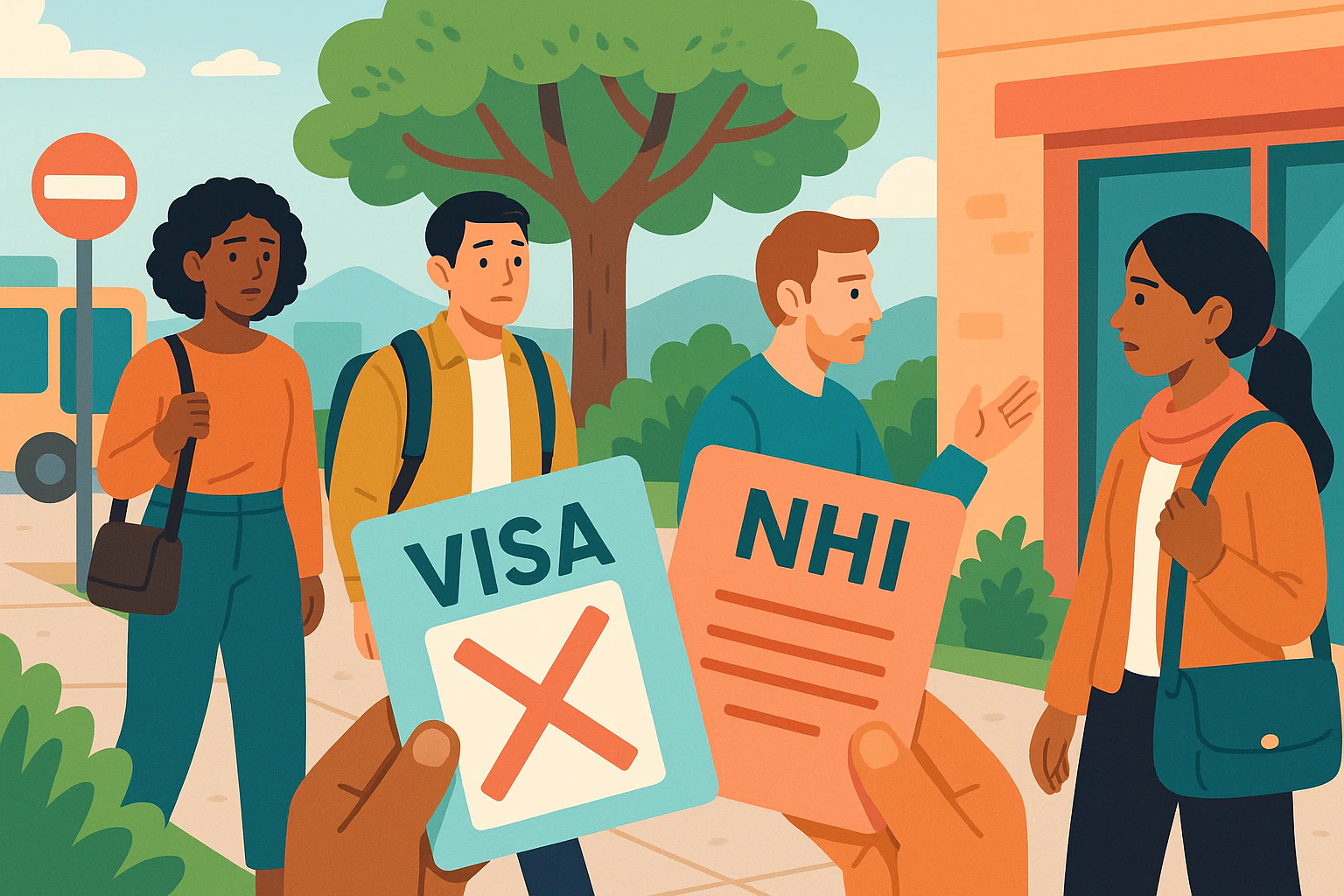
Bottom line: Starting June 2027, Japan's immigration bureau will check your National Health Insurance (NHI) and National Pension payment records when you apply for a visa renewal or status change. Chronic non-payment can now be grounds for denial. Of the ~970,000 foreigners on NHI, only 63% are fully paid up — and pension compliance is just 49.7%. If you have unpaid premiums, you still have time to fix it. Here's how.
Information current as of March 2026 based on the Immigration Services Agency, MHLW, and Digital Agency sources. The policy was formally adopted at an inter-ministerial meeting on January 23, 2026. As the founder of LO-PAL, I've been tracking this policy since it was first proposed — and I've seen how many foreign residents don't even know it's coming.
What exactly changed
On January 23, 2026, the Japanese government adopted a policy under the "Roadmap for the Realization of a Society of Harmonious Coexistence with Foreign Nationals" that directly links social insurance compliance to immigration decisions.
Starting June 2027:
- When you apply for a visa renewal (在留期間更新) or status change (在留資格変更), immigration will query your NHI and National Pension payment records
- The query runs through the Digital Agency's Public Services Mesh (公共サービスメッシュ), connecting municipal payment systems to the Immigration Services Agency
- FY2026 (April 2026 – March 2027) is being used for trial database linkage before full enforcement
Who is affected
| Affected | Not directly affected |
|---|---|
| Freelancers and self-employed on NHI | Full-time employees on Shakai Hoken (premiums auto-deducted from salary) |
| Part-time workers below Shakai Hoken threshold | Short-stay tourists (no insurance obligation) |
| International students on NHI | Diplomatic visa holders |
| Dependents with their own NHI enrollment | Permanent residents (no renewal needed, but PR revocation rules are tightening separately) |
| Specified Skilled Workers, Engineers, Business Managers, etc. |
Key point: If you're on Shakai Hoken through a company, your premiums are automatically deducted — you're likely fine. The risk is highest for people on NHI who must pay premiums themselves.
Permanent residents: You don't renew a visa, so this specific rule doesn't apply to your status directly. However, Japan is separately tightening PR revocation rules — and tax/insurance non-compliance is one of the grounds.
How immigration will screen you
The government has clarified that this is not an automatic rejection for any unpaid premium. Screening considers:
- Presence and amount of arrears — how much do you owe and for how long?
- Your response — have you contacted city hall? Are you on a payment plan?
- Correction status — have you started catching up? Are you making installment payments?
- Good faith — did you apply for premium reduction when eligible? Did you respond to payment notices?
In other words: the system focuses less on whether arrears exist, and more on how you've responded. A few months of missed payments that you're actively repaying is very different from years of willful non-payment.
The numbers: why the government is acting
| Metric | Figure | Source |
|---|---|---|
| Foreign residents on NHI | ~970,000 (roughly 1/3 of all foreign residents) | MHLW, 2025 |
| NHI premium compliance rate | 63% | MHLW survey, end of 2024 |
| National Pension compliance rate | 49.7% | Pension Service, through March 2025 |
| Policy adoption | January 23, 2026 inter-ministerial meeting | Immigration Services Agency |
| Target enforcement start | June 2027 | Immigration Services Agency roadmap |
What to do right now: get current before June 2027
Step 1: Check your payment status
Go to your city hall and ask for your NHI premium payment history (納付状況). For pension, check at your nearest Pension Office (年金事務所) or log in to the Nenkin Net portal online.
Step 2: If you have unpaid premiums
Option A — Pay in full: If you can afford it, paying off all arrears immediately is the cleanest solution.
Option B — Set up a payment plan (分割払い): City hall will negotiate an installment plan. This is documented in the system and shows good faith to immigration.
Option C — Apply for premium reduction (減額): If your income dropped (lost job, reduced hours), you may qualify for a significant reduction — sometimes 70% off. This is not automatic; you must apply at city hall.
Option D — Apply for exemption (免除): For National Pension specifically, if your income is below the threshold, you can get a full or partial exemption. Exempted periods still count toward your pension qualification (at a reduced rate). Apply at city hall or the Pension Office.
Step 3: Keep records
Save receipts, payment plan agreements, and reduction/exemption approval letters. If immigration questions your compliance, these documents prove your good faith.
What happens if you're already behind and your visa is up for renewal soon
If your visa renewal comes before June 2027, the new system isn't in place yet — but immigration can already request proof of insurance enrollment. The safest approach:
- Enroll in NHI if you haven't already (yes, even if you owe back premiums)
- Set up a payment plan for any arrears
- Bring evidence of your payment plan to your visa renewal appointment
Useful Japanese at city hall
| English | Japanese | Romaji |
|---|---|---|
| I want to check my premium payment status | 保険料の納付状況を確認したいです | Hokenryō no nōfu jōkyō o kakunin shitai desu |
| I'd like to set up a payment plan | 分割払いの相談をしたいです | Bunkatsu barai no sōdan o shitai desu |
| I want to apply for premium reduction | 保険料の減額を申請したいです | Hokenryō no gengaku o shinsei shitai desu |
| My income decreased | 収入が減りました | Shūnyū ga herimashita |
| I want to apply for pension exemption | 年金の免除を申請したいです | Nenkin no menjo o shinsei shitai desu |
| Please give me a payment receipt | 納付書の控えをください | Nōfusho no hikae o kudasai |
Related articles
- Health Insurance in Japan: 5 Mistakes That Cost Foreigners
- Japan PR Revocation Rules Tightening in 2027
- NHI City Hall Checklist After You Quit
- How to Get Back on Health Insurance After Quitting
Need help catching up on premiums? Post your question on LO-PAL for free — a local Japanese helper can go with you to city hall, explain your situation in Japanese, and help negotiate a payment plan or reduction.
Written by

Founder, LO-PAL
Former Medical Coordinator for Foreign Patients (Ministry of Health programme) and legal affairs professional. Built LO-PAL from firsthand experience navigating life abroad.
Written with partial AI assistance
Read full bio →