Having a Baby in Japan? Every Step Foreign Parents Need to Know
From pregnancy registration to ¥5M+ in benefits, 14-day birth deadlines, 30-day visa deadlines, embassy paperwork, and 2025-2026 policy changes. Complete guide for foreign parents.
Bottom line: Having a baby in Japan as a foreigner involves navigating a system built for Japanese speakers — ward offices, health insurance, hospital registration, embassy paperwork, and a stack of benefits worth over ¥5 million per child. This guide maps every step from confirming pregnancy to your child's first daycare enrollment, with links to detailed guides for each topic.
Information current as of March 2026 based on MHLW, Children and Families Agency, and municipal government sources. Japan updated several childbirth and childcare policies in 2024–2026 — this guide reflects those changes. As the founder of LO-PAL and someone who worked as a Medical Coordinator for Foreign Patients at a hospital in Osaka, I know firsthand how hard it is for foreign families to access the right information at the right time.
The timeline at a glance
| When | What to do | Detailed guide |
|---|---|---|
| Week 6–10 | Report pregnancy at ward office → get 母子手帳 and 14 checkup vouchers | Prenatal Checkups & 母子手帳 |
| Week 8–12 | Find and register at a maternity hospital | Finding an English-Speaking OB/GYN |
| Week 12–36 | Attend 14 prenatal checkups using vouchers | Prenatal Checkups & 母子手帳 |
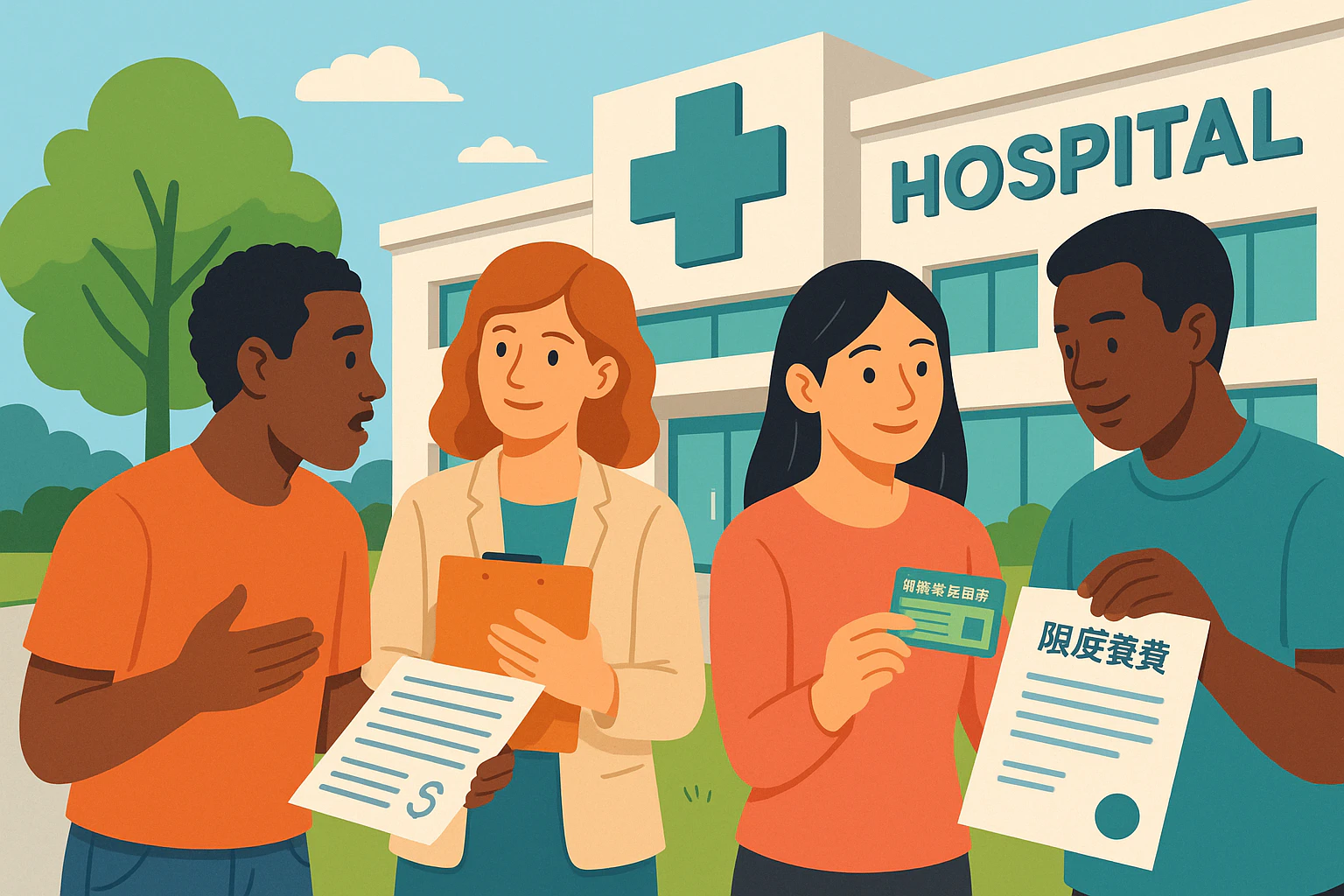
| Before birth | Understand delivery costs and apply for 限度額適用認定証 if needed | 2026 Free Childbirth Plan |
| Within 14 days after birth | Submit 出生届 at ward office + apply for 児童手当 + health insurance | Newborn's Visa Within 30 Days |
| Within 15 days | Apply for child allowance (¥15,000/month) | Child Allowance After 2024 Reform |
| Within 30 days | Apply for baby's residence status at immigration | Newborn's Visa Within 30 Days |
| ASAP after birth | Register birth at embassy + apply for passport | Embassy Registration & Passport |
| Before returning to work | Understand parental leave rights (80% pay available) | 2025 Parental Leave Reform |
| When ready | Apply for daycare (保育園 or こども誰でも通園) | Universal Daycare From 2026 |
Step 1: Confirm pregnancy and get your 母子手帳
Once a clinic confirms your pregnancy (typically around week 6), go to your ward office (区役所 / 市役所) and submit a pregnancy notification (妊娠届). You'll receive:
- 母子手帳 (boshi techo) — the Mother and Child Health Handbook that tracks your pregnancy and child's health until age 6. Available in English in many municipalities.
- 14 prenatal checkup vouchers — worth ¥80,000–¥120,000 total depending on your city. Without these, each checkup costs ¥5,000–¥15,000 out of pocket.
Don't delay. The vouchers only help from the date you receive them. See our detailed guide to prenatal checkups and the 母子手帳 for the full process and what to bring.
Step 2: Find the right hospital — early
In Japan, you register at one hospital early in pregnancy, and that hospital handles all your checkups and delivery. Popular English-friendly hospitals fill up by week 10–12, so start searching immediately.
Your best resources:
- AMDA International Medical Information Center: 03-6233-9266 (multilingual, free)
- HIMAWARI (Tokyo): 03-5285-8181 (English, daily 9:00–20:00)
- Your city's international association (国際交流協会)
Key decision: do you want an epidural (無痛分娩)? Japan's epidural rate is low (~8–10% nationally), and not all hospitals offer it. Confirm before registering. For a full list of resources and hospital comparison, see our guide to finding an English-speaking OB/GYN.
Step 3: Understand the cost
Normal childbirth in Japan costs ¥400,000–¥650,000+ depending on the hospital and location. The government provides a ¥500,000 lump-sum benefit (出産育児一時金) to offset this. In many cases, especially at public hospitals, your out-of-pocket is close to zero.
The government has announced plans to make normal childbirth covered by health insurance from fiscal year 2026 — potentially making the core delivery cost free. However, private rooms, meal upgrades, and premium services will not be covered regardless. For the full breakdown, see our guide to the 2026 free childbirth plan.
If you're on NHI or Shakai Hoken and face a C-section or complications, the high-cost medical care system caps your monthly out-of-pocket.
Step 4: After birth — the 14-day and 30-day deadlines
The days after birth are a race against deadlines. Here's what must happen:
Within 14 days: ward office
- 出生届 (shussei todoke): Birth notification. Hospital gives you the form with the doctor's certificate.
- 児童手当 (jidou teate): Apply for child allowance in the same visit. ¥15,000/month for children 0–2. If you apply within 15 days of birth, payment starts from the birth month. Miss it and you lose that month's payment. Details: child allowance guide.
- Health insurance enrollment: Add the baby to your insurance (Shakai Hoken via employer, or NHI at ward office).
- 子ども医療費助成: Apply for the child medical expense subsidy — free or heavily subsidized medical care for children. Coverage varies by city.
Within 30 days: immigration
- Baby's residence status (在留資格): If both parents are foreign nationals, you must apply for the baby's residence status at immigration within 30 days of birth. Full guide: newborn's Japan visa within 30 days.
If managing all these deadlines with a newborn feels impossible — ward office, immigration, insurance, embassy — that's exactly why I built LO-PAL. Post your question for free and a local Japanese helper can prepare your documents, accompany you to offices, and make sure you hit every deadline.
Step 5: Embassy registration and passport
Your baby needs to be registered with your home country's embassy or consulate in Japan. This is separate from the Japanese birth registration. You'll also need to apply for the baby's passport. Timelines and fees vary by country — the US requires an in-person appointment with both parents; the UK allows online registration.
For country-specific procedures (US, UK, Philippines, China, and more), see our guide to embassy registration, passport, and nationality.
Step 6: Parental leave — your rights have expanded
Japan's parental leave system is among the most generous in the OECD on paper. Since April 2025, it got even better:
- Mothers: 8 weeks maternity leave (67% pay) + childcare leave until child turns 1 (67% pay for 180 days, then 50%)
- Fathers: Up to 4 weeks postnatal papa leave within 8 weeks of birth + childcare leave until child turns 1
- New bonus: If BOTH parents take leave, benefits rise to effectively 80% of salary for 28 days
- New flexibility: Telework right for parents of children under 3, flexible work options for parents of children up to school age
These rights apply to all workers in Japan regardless of nationality. See our detailed guide to the 2025 parental leave reform. If your daycare application is rejected and you need to extend leave, see our guide to keeping childcare leave pay.
Step 7: Childcare and daycare options
When you're ready to consider childcare, you have several options:
- 保育園 (hoikuen): Full-time daycare for working parents. Ages 0–5. Competitive admission based on a point system (保育指数). Free for ages 3–5 since 2019. Income-based fees for 0–2.
- こども誰でも通園制度 (new from April 2026): 10 hours/month of daycare for children 6 months to under 3 — no work requirement. A game-changer for stay-at-home parents. See our guide to universal daycare.
- 幼稚園 (youchien): Preschool for ages 3–5. More education-focused, shorter hours (usually until 2 PM). Free since 2019.
- 認定こども園 (nintei kodomo en): Combined hoikuen + youchien. Accepts both working and non-working families.
The 保活 (hokatsu — daycare hunting) process is notoriously competitive in urban areas. Start researching 6–12 months before the April enrollment if you want a hoikuen spot.
How much is all of this worth?
Japan's benefits for families add up to a significant amount:
| Benefit | Approximate value |
|---|---|
| 出産育児一時金 (birth lump sum) | ¥500,000 |
| Prenatal checkup vouchers (14 visits) | ¥80,000–¥120,000 |
| 児童手当 (child allowance, birth to 18) | ¥2,000,000–¥3,500,000+ |
| 子ども医療費助成 (free/subsidized medical care) | Varies (potentially hundreds of thousands in savings) |
| Childcare leave benefits (1 year at 67%) | Depends on salary |
| Free preschool/kindergarten (ages 3–5) | ~¥700,000–¥1,000,000 saved |
The system is generous — but only if you know about each benefit and apply on time. Many foreign families miss benefits simply because the information isn't available in their language.
Osaka City parents: a special note
If you live in Osaka City, we have a dedicated guide covering the city-specific procedures, subsidies, and ward office steps: Osaka City after birth. For pregnancy-stage steps, see our Osaka baby checklist.
Related articles
- Prenatal Checkups in Japan: Your 母子手帳 and 14 Subsidized Visits
- Finding an English-Speaking OB/GYN in Japan
- Japan's 2026 Free Childbirth Plan
- How to Get Your Newborn's Japan Visa Within 30 Days
- Embassy Registration, Passport, and Nationality
- Child Allowance After October 2024
- 2025 Parental Leave Reform
- Universal Daycare From April 2026
- How to Keep Childcare Leave Pay After Daycare Rejection
- Having a Baby in Osaka City (2026 Checklist)
- Osaka City After Birth Procedures
Get a Local Helper for Every Step
From the first ward office visit to pick up your 母子手帳, to the immigration office with your 30-day-old baby, to calling your embassy for a passport appointment — every step is harder when you don't speak the language. Post your question or request a task on LO-PAL for free. A local Japanese person in your area can help with phone calls, paperwork, translations, and in-person accompaniment. You only pay when you accept completed task help.
Written by

Founder, LO-PAL
Former Medical Coordinator for Foreign Patients (Ministry of Health programme) and legal affairs professional. Built LO-PAL from firsthand experience navigating life abroad.
Written with partial AI assistance
Read full bio →