Emergency Numbers Japan Tourist Guide: 110, 119 & English Hotlines
Emergency calls in Japan made simple: when to dial 110/119/118, what to say, and where to get English medical help.
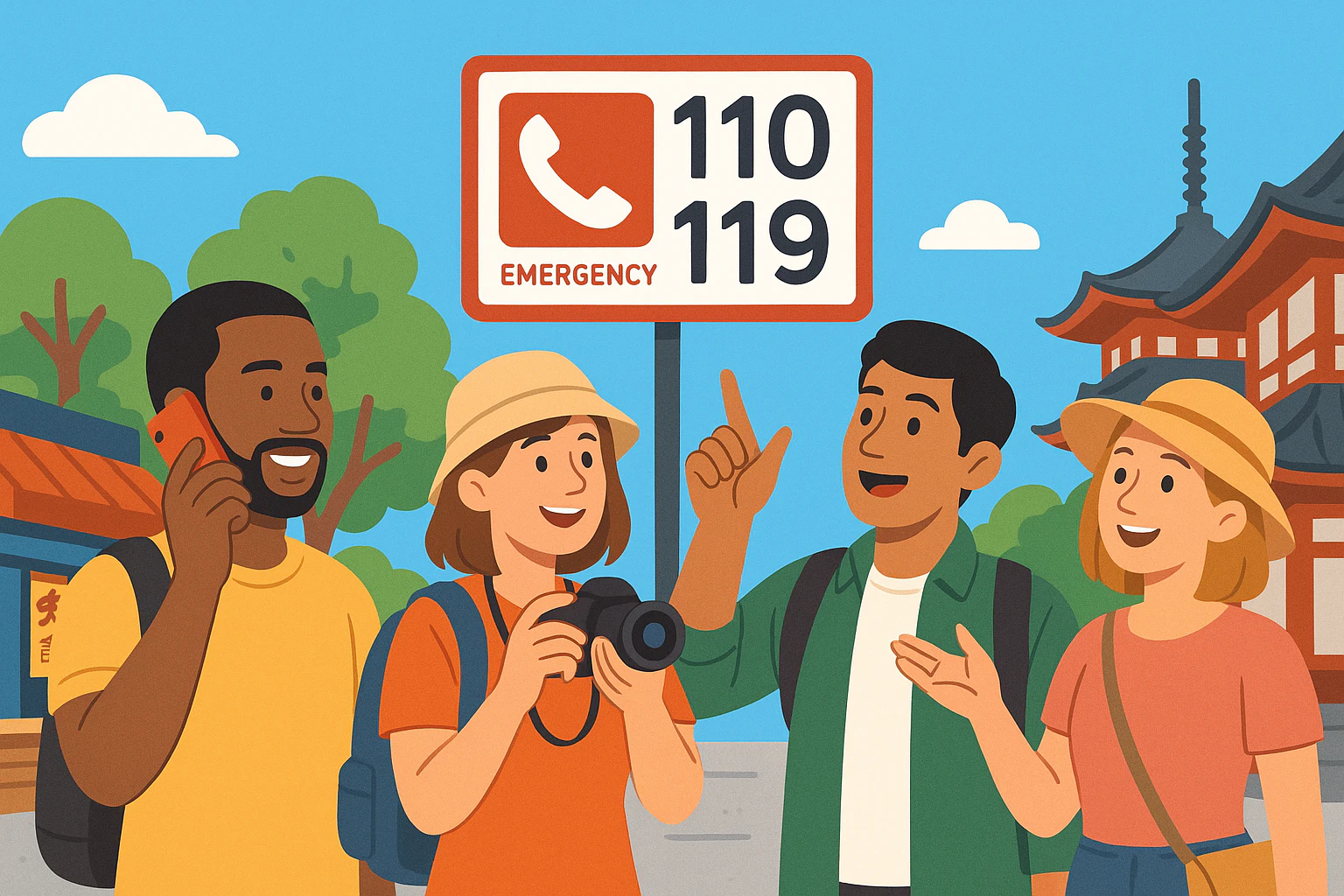
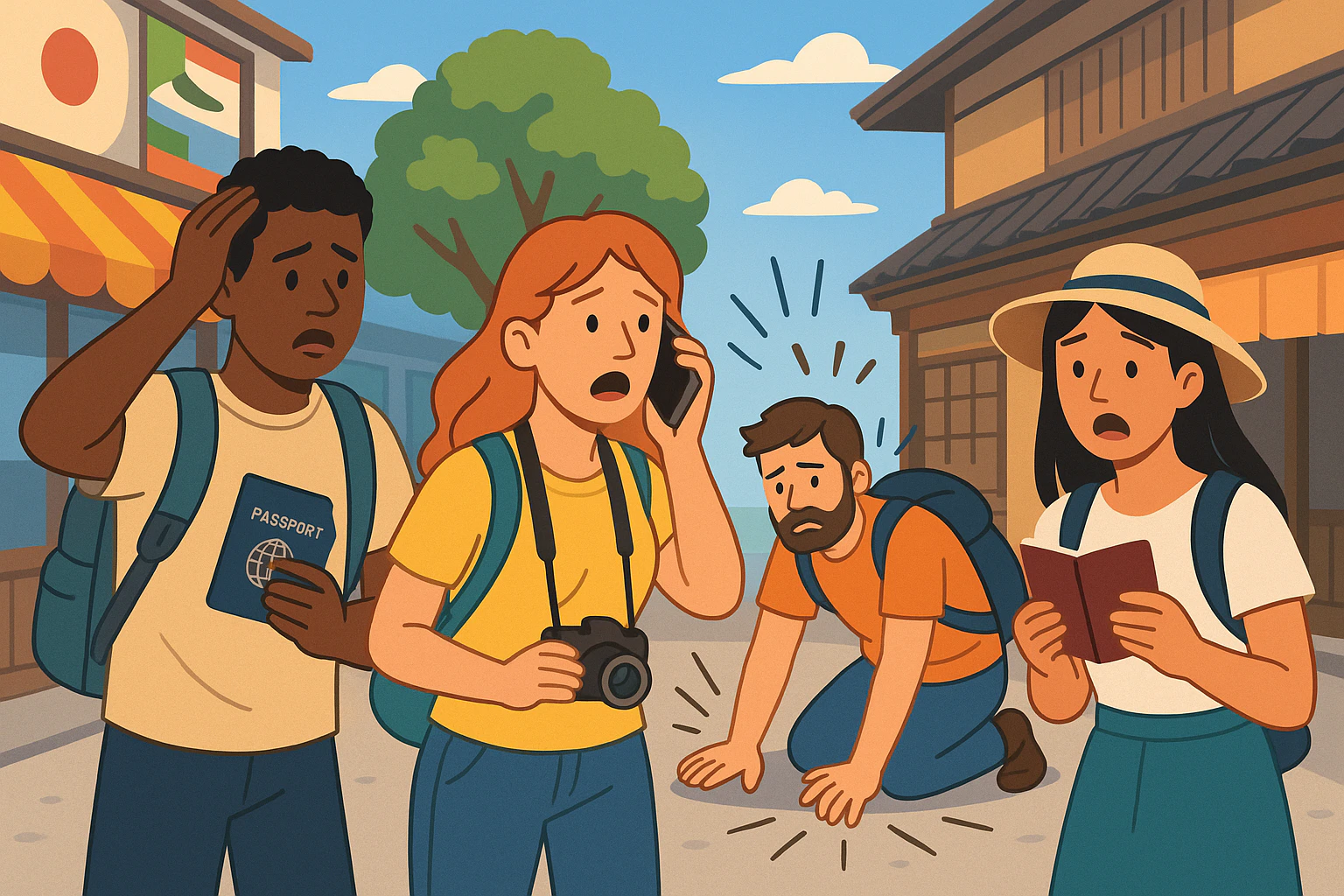
Japan is very safe—but when something goes wrong, tourists tend to fail in the same three places: (1) they can’t make a normal voice call on their data-only eSIM/pocket Wi‑Fi setup, (2) they freeze and don’t know what to say, and (3) they don’t know where to find English medical help fast.
This emergency numbers Japan tourist guide fixes those gaps with a 60-second call script, a pre-trip phone checklist, and a mini emergency contact card you can save offline.
Save this now (offline): Take a screenshot of the “Emergency contact card” in the last section, and add these to your phone contacts: 110 (Police), 119 (Fire/Ambulance), 118 (Japan Coast Guard), plus the Japan Visitor Hotline.
110 vs 119 vs 118: Which Japan emergency number to call (tourist scenarios)
Japan’s emergency system is straightforward once you match the number to the situation. The Japan National Tourism Organization (JNTO) lists 110 for police and 119 for fire/ambulance as the key urgent numbers for visitors. (See the Japan Visitor Hotline page for the official visitor-facing list.)
Quick decision table (tourist-friendly)
- Call 110 for urgent police help: assault, stalking, robbery, dangerous threats, a serious traffic accident you need police at, or if you feel unsafe right now.
- Call 119 for an ambulance, rescue, or fire services: serious injury, severe allergic reaction, chest pain, trouble breathing, unconsciousness, major bleeding, a fire, smoke, or someone trapped.
- Call 118 for emergencies at sea: drowning, boating accidents, missing swimmers, oil spills, suspicious activity in ports/coastal areas. Japan’s government public information site explicitly promotes “118” as the emergency number for the Japan Coast Guard—like 110 (police) and 119 (fire/ambulance). See Government Public Relations Online (Japan) on 118.
Common tourist scenarios (what to do)
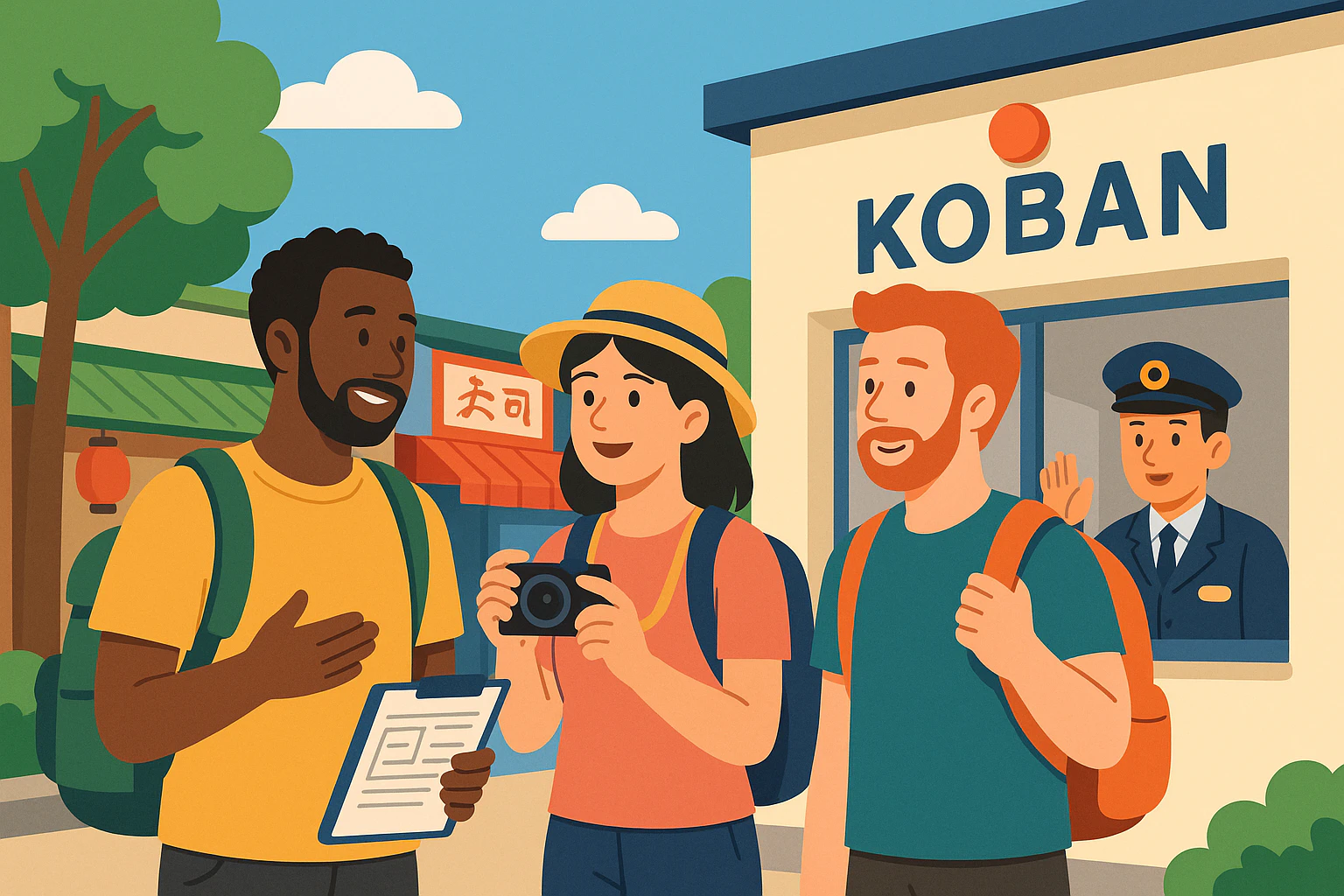
- Pickpocketed / phone stolen: If the theft just happened or the suspect is nearby, call 110. If it’s “after the fact,” go to the nearest police box (koban) or police station to file a report for your insurance claim and replacement documents.
- Car/bike crash: If someone is injured, call 119 first. If you also need police at the scene (which is common), call 110 after or ask a bystander to call.
- Heatstroke / fainting in summer: If someone is confused, collapses, or can’t drink water safely, call 119. Tokyo has seen record heat-related ambulance transports in recent summers; for example, the Tokyo Fire Department reported 8,341 suspected heatstroke transports from June through August 2025 (reported by The Asahi Shimbun).
- Beach emergency (someone pulled out by waves): Call 118 immediately, and also alert lifeguards if present.
If you don’t have coins: public phones still work in emergencies
Several municipal guides explain you can place emergency calls from public phones without coins or cards. For example, Shibuya City explains that on a public phone with a red emergency button, you press it and dial the emergency number; no coins/cards are required. See Shibuya City’s “Dial 119” page and Inagi City’s step-by-step instructions for public phones at Inagi City (Tokyo) 119 calling guidance.
Tourist reality check: Because April 2025 hit an all-time monthly inbound visitor record of 3,908,900 arrivals (JNTO reporting), more travelers are moving independently—meaning you’re more likely to be “on your own” when you need help. (See JNTO’s press release: US tourism to Japan continues to shatter records.)
What to say when you call (simple English script + key Japanese words)
The fastest emergency calls in Japan do three things, in order: (1) state the service you need, (2) give a location that a responder can actually find, and (3) describe what happened in simple words.
Even if your Japanese is zero, you can still succeed by reading a short script and using a few “anchor words” the dispatcher will recognize.
The 60-second emergency script (read this slowly)
Script (English):
- What you need: “Ambulance, please.” / “Fire, please.” / “Police, please.”
- Your exact location: “I am in [City/Ward], near [Landmark/Station + Exit]. The address is [address if known].”
- What happened: “A person is [unconscious / bleeding / having trouble breathing / severe pain].”
- Who it is: “Male/female, about [age].”
- Your callback number: “My phone number is [your number].”
- Language request: “English, please.”
If you only manage one line, say: “Ambulance, please. English, please. [Your location].”
Key Japanese words that unlock the call
You do not need perfect pronunciation—just recognizable keywords. These are the ones worth memorizing (or saving on your lock screen).
- Ambulance: “Kyūkyūsha” (救急車)
- Medical emergency: “Kyūkyū” (救急)
- Fire: “Kaji” (火事)
- Help! “Tasukete!” (助けて)
- English, please: “Eigo de onegaishimasu.” (英語でお願いします)
- Here: “Koko desu.” (ここです)
Location tips that work in Japan (especially when addresses are confusing)
Japan addresses can be hard to read on the spot, and many streets don’t have obvious names. Use any combination of these:
- Nearest station + line + exit: “Shinjuku Station, West Exit.”
- Visible landmark: “In front of [hotel name] / [convenience store name] / [big building].”
- Floor + entrance: “4th floor, elevator near the main entrance.”
- Pin on a map: If you have data, open your map app and read the place name slowly.
After you call: don’t turn your phone off
Some dispatch centers may call you back to confirm details. Shibuya City explicitly warns callers not to turn off their phone for about ten minutes after dialing emergency services. See Shibuya City’s emergency calling guidance.
English help beyond 110/119: Japan Visitor Hotline, Tokyo #7119, and finding a hospital
Calling an emergency number is only the first step. The next problem tourists hit is deciding whether they really need an ambulance, and then finding medical care that can handle English (or getting language support quickly).
Japan Visitor Hotline (JNTO): tourist support when you’re stuck
Japan Visitor Hotline is operated by JNTO 24/7/365 for tourist information and support in accidents and emergencies. The official number is 050-3816-2787, and from overseas it’s +81-50-3816-2787, with support in English/Chinese/Korean. (Source: JNTO Japan Visitor Hotline.)
Use it when you’re not sure what to do next—especially if you need help navigating options (nearest clinic open now, how to explain a problem, what to do after an accident), or if you need tourist-focused guidance during natural disasters.
Tokyo #7119: 24/7 “Should I call an ambulance?” medical consultation
In Tokyo, #7119 connects you to the Tokyo Fire Department Emergency Consultation Center. It’s designed for situations where you’re unsure whether to call an ambulance or go to a hospital immediately; operators are available 24 hours a day, year-round. See Tokyo Fire Department’s official web-based guide (it also lists #7119) at Tokyo EMS Guide (Web-based) and a Tokyo municipal explanation at Inagi City’s #7119 page.
If you’re in Tokyo for 1–3 weeks, this is one of the best numbers to save because it helps you avoid the classic mistake of calling an ambulance for something that should be handled by a clinic or pharmacy.
Tokyo ER Visit Guide (web-based): check urgency in ~1 minute and find nearby care
Tokyo Fire Department’s Tokyo EMS Guide (Web-based) lets you check urgency by entering symptoms and, if needed, search for nearby medical institutions. Tokyo Fire Department notes this guide is based on the medical system in Tokyo (excluding island areas). Start at Tokyo EMS Guide (Web-based).
Finding English medical help in Tokyo: HIMAWARI (Tokyo Metropolitan Government)
If your situation is urgent but not “ambulance-level,” Tokyo’s HIMAWARI service is one of the most practical tools. The Tokyo Metropolitan Government operates the Tokyo medical institution information service HIMAWARI to provide consultation and information on medical institutions with foreign language support.
- Phone: 03-5285-8181
- Hours: Daily 9:00 a.m. to 8:00 p.m. (365 days a year)
- Languages: English, Chinese, Korean, Thai, Spanish
Source: Tokyo Metropolitan Government: HIMAWARI.
Outside Tokyo: multilingual 119 support exists, but it depends on the city
Many areas support multilingual communication during 119 calls via three-way interpretation, but coverage and languages vary by municipality. For example, Inagi City (Tokyo) describes a multilingual interpretation service for 119 calls, including 24/7 support in English, Chinese, Korean, Portuguese, and Spanish. See Inagi City: Multilingual Interpretation Services for Emergency Calls (119).
Another example: Saitama City explains that fire trucks and ambulances are dispatched free of charge and that phone translation is available in multiple languages (English/Chinese/Korean/Spanish/Portuguese). See Saitama City: Fire and Medical Emergencies.
Not sure about your specific case? Ask a local Japanese person on LO-PAL for personalised advice.
Nationwide “hospital finder” option: Medical Information Net (Navi)
If you’re outside Tokyo (or need a nationwide directory), Japan’s Ministry of Health, Labour and Welfare provides Medical Information Net (Navi), a searchable database for hospitals/clinics/dental clinics/midwifery centers/pharmacies, with an English interface available from the official site. Start at Medical Information Net (Navi) (MHLW).
Travel insurance: do you really need it?
If you’re wondering “travel insurance Japan needed?”—it may not be legally required, but it’s strongly recommended. JNTO’s official travel insurance guidance says it is strongly recommended that all travelers to Japan get travel insurance. See Travel Insurance in Japan (JNTO).
JNTO’s emergency medical insurance guidance also warns that medical expenses can become very high and gives examples in the millions of yen, while also explaining “cashless payment” arrangements that some insurers can coordinate. See JNTO emergency guide: travel insurance.
Plain-English takeaway: Ambulance transport is typically described as free in many municipal guides, but hospital care is not free. Insurance is what keeps an emergency from turning into an expensive logistics problem during your 1–3 week trip.
Pre-trip setup: phone/SIM checklist, seasonal risks (heat/typhoons), and backup options
This is the part most “just dial 110/119” blog posts ignore. Do this setup once, and you’ll be dramatically more resilient if something happens.
Phone/SIM checklist (do this the day before you fly)
- Make sure you can place a real voice call: If you’re using a data-only eSIM or pocket Wi‑Fi, you may not be able to dial emergency services directly from your phone. Plan a voice-capable option (roaming voice on your home SIM, or a Japan SIM plan that includes voice).
- If you use Dual SIM on iPhone: Be careful which SIM is selected for cellular data. An Asahi Net notice explains that emergency calls (110/118/119) could fail on some Dual SIM iPhone setups when a data-only SIM is selected, and that updating iOS and selecting the voice-capable SIM can resolve it. See Asahi Net: Dual SIM iPhone emergency call notice.
- Save numbers as contacts: “Police 110”, “Ambulance/Fire 119”, “Coast Guard 118”, “Japan Visitor Hotline”. Add your hotel number too.
- Prepare a power plan: Carry a power bank (and a short cable) every day. If your battery dies, your “emergency plan” dies with it.
- Offline maps: Download offline maps of the cities you’ll visit so you can still identify a station/landmark when reception is weak.
- Medical notes on lock screen: Allergies, key medications, emergency contact, blood type (if known). Keep it short.
Backup options if your phone can’t connect
Even in a modern city, calls can fail (dead battery, broken phone, network congestion). Japanese municipalities explicitly advise using public phones or asking people nearby if you can’t connect—see Inagi City’s guidance when you can’t connect to 119.
- Public phones: Pick up the receiver; if there’s a red emergency button, press it; dial 110/119. (Coins/cards are not needed for emergency calls in the examples above.)
- Ask staff: Station staff, hotel front desk, department store information counters, and convenience store staff can often help you place a call or explain a location.
- Go to a koban (police box): Useful for urgent safety issues, reporting incidents, and getting directed to the right police station.
Seasonal risk signals you should plan for
Summer heat: Heat illness is one of the most common “tourist emergencies,” especially with long outdoor days and humidity. Tokyo reported a record 8,341 suspected heatstroke ambulance transports from June–August 2025 (Tokyo Fire Department figure reported by The Asahi Shimbun), so build a heat plan: water + electrolytes, shade breaks, and indoor stops during peak sun.
Typhoons and heavy rain: Japan Meteorological Agency (JMA) tourist climate guidance notes tropical cyclones are a factor in summer and that September precipitation is large due to the autumnal rain front and tropical cyclones. See JMA: Overview of Japan’s climate. If you want a data-driven view, JMA’s RSMC Tokyo Typhoon Center publishes monthly climatology showing most tropical cyclones occur in the warmer months (see RSMC Tokyo: Climatology of Tropical Cyclones).
Disaster alerts in your language: install Safety tips
For earthquakes, tsunami warnings, and weather warnings, JNTO’s official Safety tips app pushes alerts in multiple languages (including English, Chinese, Spanish, Portuguese, Vietnamese, Tagalog, Nepali, and more). Get it here: Safety tips for travelers (JNTO).
Mini emergency contact card (screenshot this)
JAPAN EMERGENCY CARD (save offline)
- Police: 110
- Fire / Ambulance: 119 (the 119 ambulance number Japan visitors should memorize)
- Coast Guard (sea emergencies): 118 (see Japan Government Public Relations Online)
- Japan Visitor Hotline (JNTO): 050-3816-2787 (from overseas: +81-50-3816-2787) (source: JNTO)
- Tokyo only (medical consultation): #7119 (source: Tokyo Fire Department)
- Tokyo only (English medical info): HIMAWARI 03-5285-8181 (9:00–20:00 daily) (source: Tokyo Metropolitan Government)
Your current hotel: ____________________ Room: ____
Your emergency contact back home: ____________________
Allergies/meds (short): ____________________
FAQ
These are the quick questions we see most from short-term visitors who want a simple, reliable plan.
Can I call 110/119 from a public phone without coins?
In several municipal guides, yes. For example, Shibuya City and Inagi City explain that emergency calls can be made from public phones without coins/cards (using the red emergency button when present). See Shibuya City and Inagi City.
Are ambulances free in Japan?
Many local government guides state ambulance dispatch/transport is free of charge, while medical treatment costs apply. See examples like Saitama City and Minato City’s living guide PDF at Minato City (Tokyo) living guide.
What if I’m not sure it’s an emergency?
In Tokyo, call #7119 (24/7) for guidance on whether you should call an ambulance or go to a hospital. See Tokyo Fire Department’s Tokyo EMS Guide.
Where can I find English-speaking medical help in Tokyo?
Try HIMAWARI (Tokyo Metropolitan Government) at 03-5285-8181 (9:00–20:00 daily) for information on medical institutions with foreign language support. See Tokyo Metropolitan Government: HIMAWARI.
What’s the best single number to save as a tourist (besides 110/119)?
If you can only add one extra, save the Japan Visitor Hotline run by JNTO: 050-3816-2787 (from overseas: +81-50-3816-2787). It’s 24/7/365 in English/Chinese/Korean. Source: JNTO.
Related Articles
If you’re building your “Japan stays safe” setup, these guides pair well with your emergency plan.
- Japan eSIM vs pocket Wi‑Fi (2026): choosing the right connection
- Japan hotel Wi‑Fi guide: staying connected with backups
- Late night Japan airport transfers: what to do if plans go wrong
Need More Help? Ask on LO-PAL
LO-PAL is our matching service where tourists in Japan can connect with local Japanese helpers for quick, practical support—whether you’re trying to decide if you should call #7119, find an English-friendly clinic nearby, or figure out what to do after a theft or accident.
If you want to know more about this topic or need specific local information, ask a local Japanese person on LO-PAL and get answers based on your exact neighborhood, timing, and situation.
Written by

Founder, LO-PAL
Former Medical Coordinator for Foreign Patients (Ministry of Health programme) and legal affairs professional. Built LO-PAL from firsthand experience navigating life abroad.
Written with partial AI assistance
Read full bio →