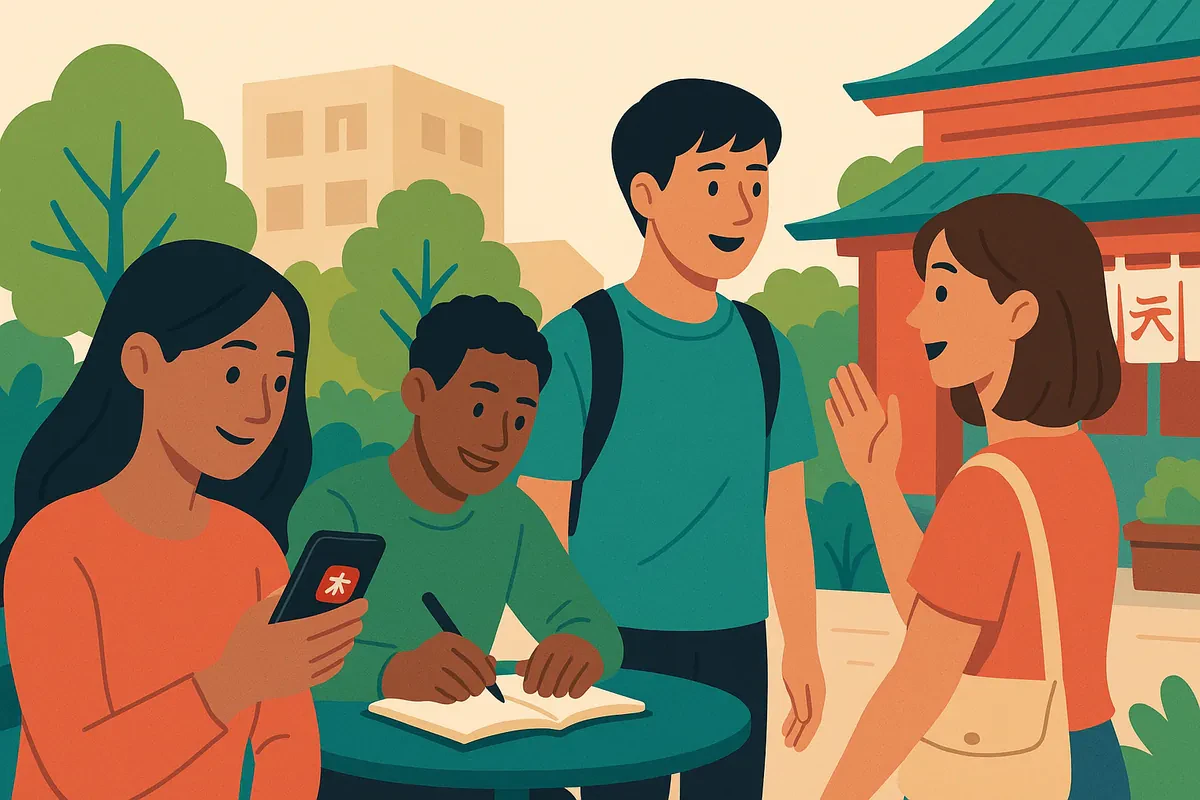
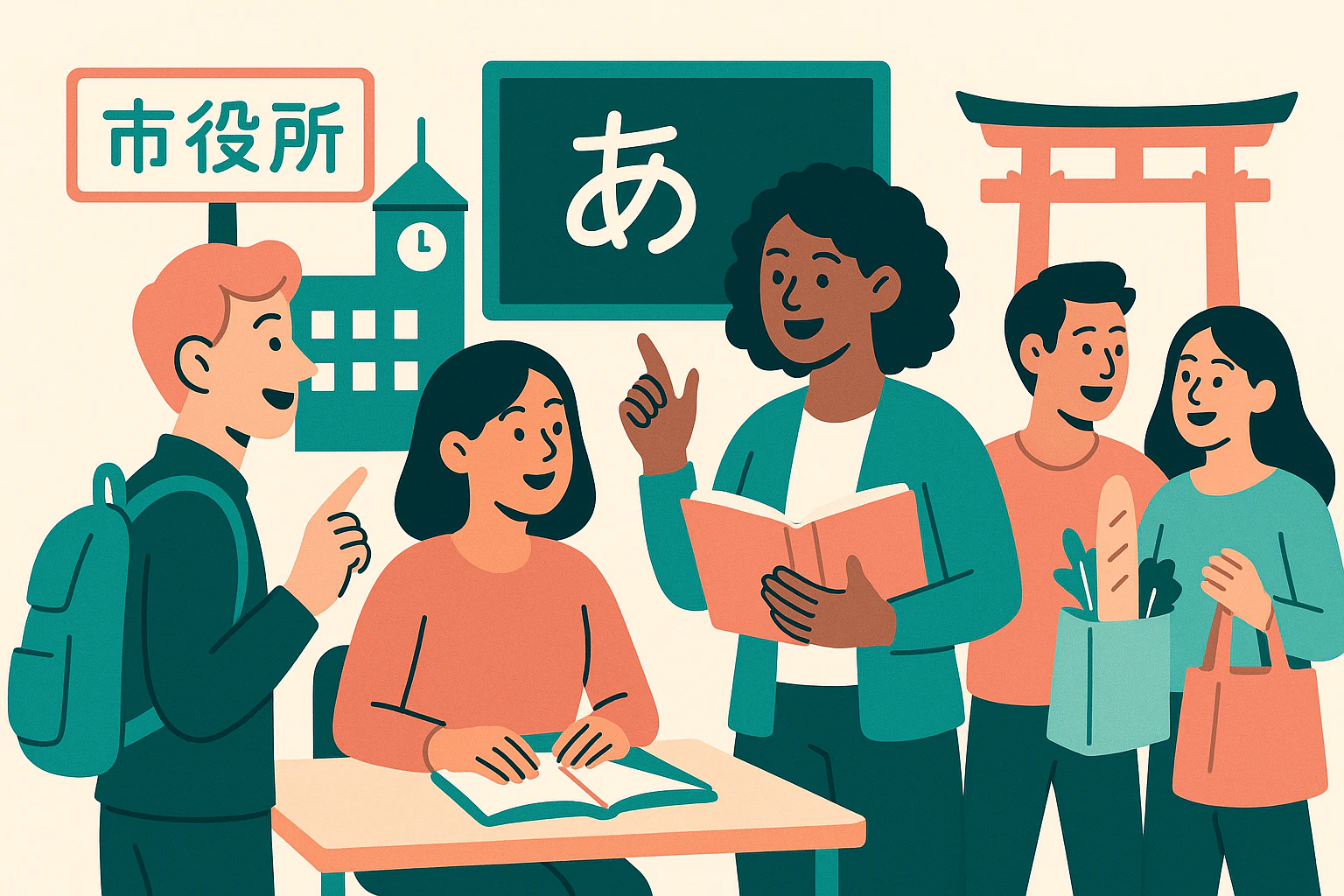
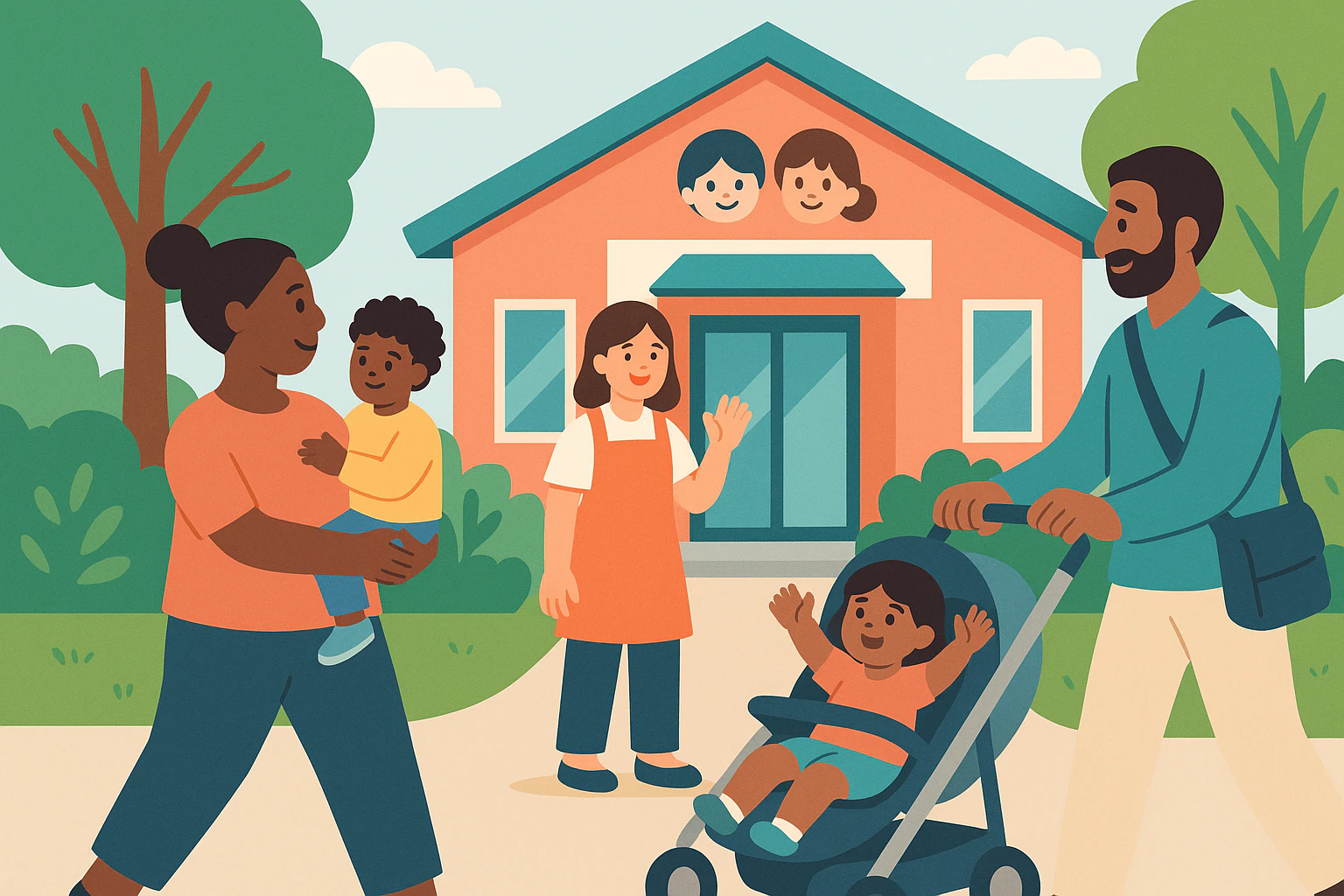
Japan Public School Survival Guide for Foreign Parents: Beyond Enrollment
Enrolling your child is the easy part. This guide covers the next 6 years: daily communication (renrakucho + apps), school lunch, supplies, events, PTA, after-school care, and where to get help when everything is in Japanese.
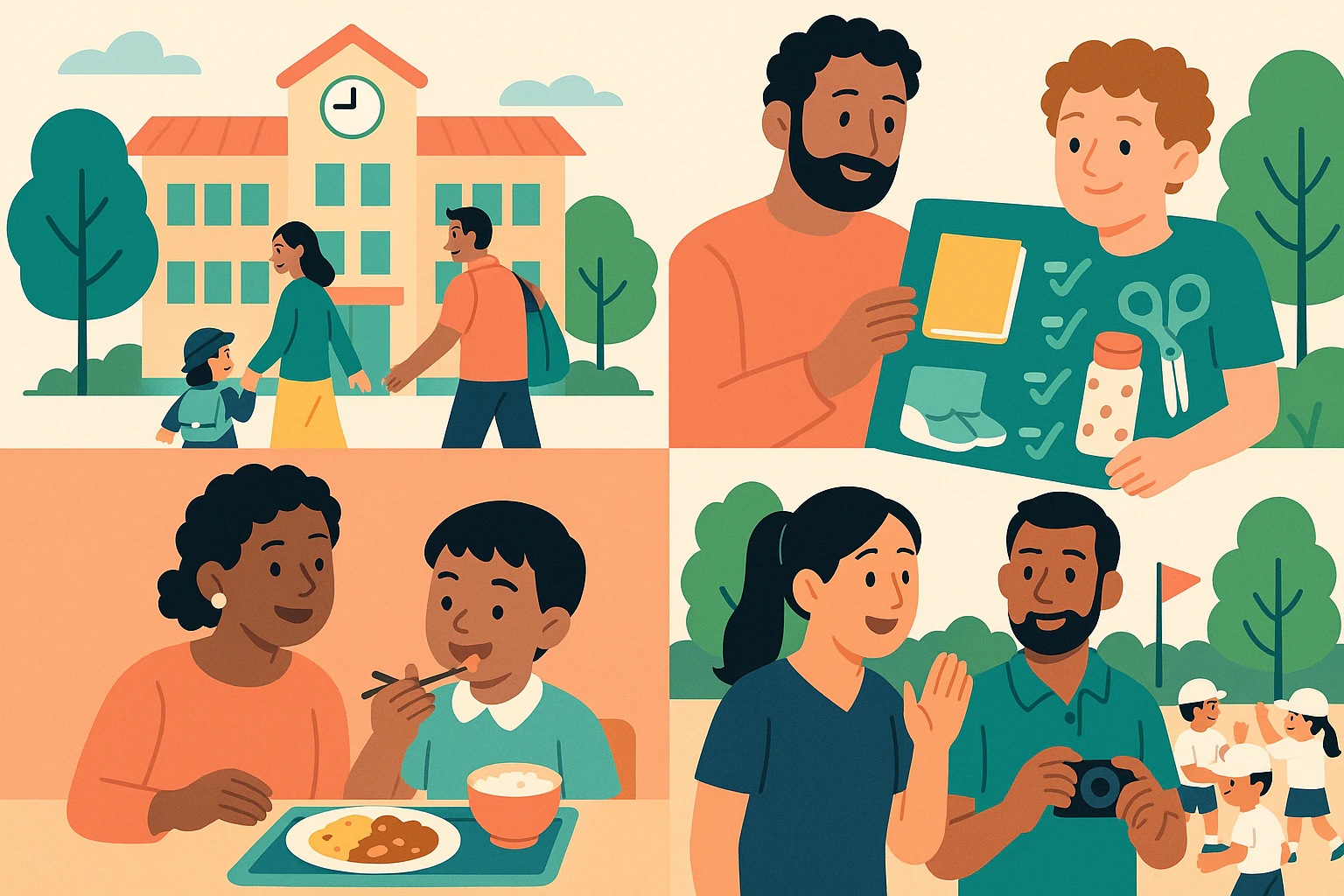
Who this is for: Foreign parents with a child in (or about to enter) a Japanese public elementary or junior high school. This guide covers the parts that come after enrollment — the daily reality nobody warns you about.
What this covers: Enrollment overview, school supplies, daily communication (renrakucho + apps), school lunch, events you'll attend, PTA, after-school care, and where to get help when everything is in Japanese.
Bottom line: Enrolling your child is the easy part. The hard part is the next 6 years of daily notes, Japanese-only forms, school events with unwritten rules, and deadlines hidden inside app notifications you can't read. This guide prepares you for all of it.
Information current as of March 2026 based on MEXT's FY2023 survey on students requiring Japanese language instruction, official municipal Board of Education pages, and school supply guides from Koto-koto and Savvy Tokyo.
If you searched for "public school in Japan for foreigners," you probably found step-by-step enrollment guides. That's helpful — for the first week. But what about the 2,000+ school days after that?
MEXT's FY2023 survey counted 114,853 foreign national students in Japanese public schools — a 23.3% increase from the previous survey. Of those, 41.5% needed Japanese language instruction. That's nearly 48,000 children navigating a school system that communicates almost entirely in Japanese, in families where the parents often can't read the notes coming home.
I work in legal and administrative support in Japan, and the families I help don't usually call about enrollment — they call three months in, overwhelmed by daily communication they can't decode. The school lunch form with an allergy checkbox they missed. The PTA meeting where they sat silently. The field trip permission slip that was due yesterday. This guide is for that stage.
Getting in: enrollment overview
The core steps are straightforward: file your 転入届 (moving-in notice) at city hall → tell the municipal counter and Board of Education you want school enrollment → complete any school-choice paperwork → visit the assigned school with your child.
The key rule: Do not wait for the school to contact you. You must go to the Board of Education and declare that your child will attend. Foreign children have the right to attend public school in Japan, but the system won't automatically enroll them the way it does for Japanese children.
For the full city-by-city enrollment checklist (including Tokyo, Osaka, and Yokohama deadlines and required documents), see: How to Enroll Your Child in Public School in Japan Fast →
Before April: what to buy for school entry
Japanese elementary schools expect a specific set of supplies, and most of them are not provided by the school. The list varies slightly by school, but here's what nearly every first-grader needs:
Required before the entrance ceremony (入学式)
| Item | Japanese name | New price (approx.) | Notes |
|---|---|---|---|
| School bag | ランドセル | ¥55,000+ | Average is ¥58,000–60,000. Alternatives exist (see below) |
| Indoor shoes | 上履き (uwabaki) | ¥1,000+ | White, designated style. Uwabaki & slippers guide → |
| Indoor shoe bag | 上履き袋 | ¥100+ | Drawstring or zipper bag |
| School hat | 通学帽 | ¥900+ | Yellow for 1st graders (some schools) |
| Gym uniform | 体操服 (top + bottom) | ¥2,500+ | Specified by school. Buy at designated shop. |
| Red/white reversible cap | 紅白帽 | ¥500+ | For gym and outdoor activities |
| Pencil case | 筆箱 | ¥1,500+ | Box-type preferred. No character designs (some schools ban them). |
| Protective hood | 防災頭巾 | ¥1,500+ | Earthquake safety. Hangs on the back of the chair. |
| Lunch set | 給食セット (bag + napkin) | ¥100+ | Napkin for desk, bag to carry it |
| Tool box | お道具箱 | ¥100+ | Stored in desk, holds crayons/scissors/glue |
| Entrance ceremony outfit | 入学式の服 | ¥5,000+ | Semi-formal. Used once. Consider secondhand. |
Added during the school year
| Item | Japanese name | New price (approx.) | When |
|---|---|---|---|
| Mathematics set | 算数セット | ¥2,500+ | 1st grade. Tiny pieces — all need name labels. |
| Keyboard harmonica | 鍵盤ハーモニカ | ¥3,000+ | 1st grade music class |
| Watercolor set | 絵の具セット | ¥2,500+ | Art class |
| Calligraphy set | 書道セット | ¥3,000+ | 3rd grade onward |
| Recorder | リコーダー | ¥1,500+ | 3rd grade music |
Total estimate: ¥60,000–¥100,000+ before entry (the randoseru is the biggest cost). Annual school-related expenses for public elementary average around ¥321,000.
Randoseru: do you have to buy one?
Technically, no. A few schools now accept any bag. But in practice, nearly all children use a randoseru, and not having one makes your child visibly different. If cost is a concern:
- Secondhand: Check Mercari, recycling shops, or community donation programs (some ward offices run free randoseru programs)
- Budget brands: Nitori and Aeon sell randoseru from ¥10,000–¥20,000
- Rental: Some companies now offer randoseru rental (from ~¥1,000/month)
- Timing: Buy in January–March for best prices. New designs appear in May (11 months before school entry), but early-bird prices peak in summer.
The name label marathon (お名前つけ)
Every. Single. Item. must have your child's name on it — including individual crayons, math set pieces, and chopstick cases. Order お名前シール (name stickers) online in advance. A set of 200+ stickers costs ¥500–¥1,500 on Amazon or Rakuten and saves hours of handwriting.
Daily communication: renrakucho, apps, and paper handouts
This is where most foreign parents hit the wall. Japanese schools communicate with parents daily, and almost all of it is in Japanese.
The renrakucho (連絡帳)
A physical notebook that travels between home and school every day in your child's bag. The teacher writes messages (homework assignments, schedule changes, things your child needs to bring). You write back (absence notices, health updates, requests).
What you need to write (and how):
- Absence notice: 「○○は体調不良のためお休みさせていただきます。」(○○ is absent due to feeling unwell.)
- Late arrival: 「○○は病院のため、△時に登校します。」(○○ will arrive at school at △ due to a hospital visit.)
- Acknowledgment: 「確認しました。ありがとうございます。」(Confirmed. Thank you.)
Many parents use Google Translate's camera function to read the teacher's handwriting, then draft a response and ask a Japanese-speaking friend to check it. This is completely normal and teachers understand.
School apps (Tetoru, Classi)
Many schools are transitioning from paper handouts to apps. The two most common are Tetoru (used in 5,000+ public schools) and Classi Home. These apps handle absence notifications, event reminders, urgent notices (typhoon closures), and fee collection.
The challenge: the apps are entirely in Japanese. You'll need to screenshot notifications and translate them. For setup instructions and safe translation tips, see: Japan School Apps for Parents: Tetoru & Classi Setup →
Paper handouts (おたより / プリント)
Despite the app trend, many schools still send home paper handouts — sometimes daily. Event schedules, class newsletters, permission slips, health check forms. All in Japanese. A practical system:
- Designate a clear folder in your child's bag for all papers
- Photograph each paper with your phone as soon as it comes home
- Use Google Translate camera or Google Lens to read it
- Look for dates, circled items, and anything that needs a signature or stamp (印)
- If a paper needs a response, prioritize it — deadlines are often 2–3 days out
School lunch (給食): what your child eats, what it costs, and how to handle dietary needs
Japanese public schools serve kyushoku (給食) — a hot, balanced lunch prepared in the school kitchen or a central facility. Your child doesn't need a packed lunch on regular school days.
What it costs
Parents pay for ingredients only (labor and facilities are government-funded). The national average is approximately ¥4,700/month for elementary school (~¥250–300 per meal). Payment is usually by bank auto-debit.
2026 trend: About 30% of municipalities (547 cities) now waive school lunch fees entirely, a seven-fold increase since 2017. The national government has announced plans to make school lunches free nationwide, starting with elementary schools. Check with your local Board of Education — your city may already be fee-free.
Low-income families can apply for 就学援助 (shugaku enjo) — a financial assistance program that covers lunch fees, school supplies, and field trip costs. Apply through your school or Board of Education.
Allergies and dietary restrictions
Schools take food allergies seriously. At enrollment or the start of each year, you'll receive an allergy survey form (食物アレルギー調査票). List all allergies — the school will provide modified meals or remove specific items. You may need a doctor's certificate (診断書) for severe allergies.
Religious dietary needs (halal, vegetarian)
This is harder. Most schools do not have dedicated halal or vegetarian menu options. What you can do:
- Talk to the school directly: Some schools will accommodate by removing pork dishes or allowing your child to skip certain items
- Provide a bento on problem days: If the monthly menu shows dishes your child can't eat, send a packed lunch on those days
- Request the monthly menu in advance: Called 献立表 (kondate-hyou). Most schools distribute it. Use it to identify problem days.
For city-specific guides on requesting halal accommodation: Osaka → | Yokohama →
School events: what to expect (and what to bring)
Japanese schools have a predictable yearly calendar of events that require parent attendance or preparation. Here are the ones you'll encounter:
| Event | Japanese name | When | What parents do |
|---|---|---|---|
| Entrance ceremony | 入学式 | Early April | Attend in semi-formal clothes. Bring indoor shoes. Takes 1–2 hours. |
| Classroom visit day | 授業参観 | 2–3 times/year | Watch your child's class. Bring uwabaki. What to bring → |
| Parent-teacher meeting | 個人面談 | July, December | 15-minute one-on-one with teacher. Prepare questions in advance. |
| Sports day | 運動会 | May or October | All-day event. Bring a packed lunch (unless school provides), ground sheet, sun protection. |
| Parent class meeting | 懇談会 / 保護者会 | After jugyou-sankan | Group discussion about class matters. PTA role assignments often happen here. |
| Field trip | 遠足 | Spring/Autumn | Pack a bento, water bottle, small backpack. Permission slip required. |
| Swimming class start | 水泳授業 | June–July | Need: swimsuit, swim cap, towel, goggles. Health check form. |
| School festival | 学芸会 / 文化祭 | November | Children perform. Attend and watch. |
| Graduation ceremony | 卒業式 | March | Formal dress. Elementary is 6th grade only, but sometimes lower grades attend. |
Practical tips for events
- Always bring uwabaki (indoor shoes) and a plastic bag for your outdoor shoes. Many events are inside the gym.
- Individual meetings (個人面談): The teacher will speak in Japanese. If you can't follow, bring a Japanese-speaking friend or book a LO-PAL helper for interpretation. Prepare 2–3 questions in advance about your child's progress and any concerns.
- Sports day seating: Arrive 30+ minutes early. Many parents lay tarps to reserve spots. Some schools now assign seating areas.
- Permission slips (同意書): These come home on paper. Look for the signature line (署名) and stamp space (印). If in doubt, sign your name in alphabet — most schools accept it.
PTA: what's expected of foreign parents
The PTA (Parent-Teacher Association) is technically voluntary. In practice, many schools treat it as mandatory — and some assign roles through a lottery or negotiation process at the 保護者会.
What the PTA actually does
- Organizes school events (festival booths, traffic safety patrols, etc.)
- Manages class-parent communication
- Fundraising
- Representing parent voice to the school
As a foreign parent
All PTA meetings and documents are in Japanese. You can decline a role — it is legally voluntary — but be aware that:
- Some schools assign "easier" roles to foreign parents (like event setup rather than documentation)
- Participating (even minimally) helps your child's social integration
- If language is the barrier, say so directly: 「日本語がまだ難しいですが、できることは手伝いたいです」(My Japanese is still difficult, but I want to help where I can)
PTA reform is slowly happening across Japan — some schools now explicitly allow opting out, and others have reduced obligations. Ask your school's current policy at the first 保護者会.
After-school care (学童保育 / gakudo)
If both parents work, your child can attend gakudo hoiku — public after-school care at the school or a nearby facility. Children stay until 5:00–7:00 PM (varies by municipality), do homework, play, and have a snack.
Key facts
- Cost: ¥5,000–¥10,000/month for public programs (varies by municipality). Some cities offer income-based subsidies.
- Eligibility: Both parents must be working, studying, or have another qualifying reason. Foreign residents are eligible on the same terms as Japanese families.
- Application: Through your municipal government (city hall or ward office). Apply early — waitlists exist in urban areas, though they've been shrinking since 2025.
- Hours: After school until 5:00–7:00 PM. Extended hours during school holidays (summer, winter, spring breaks).
Alternative: jidoukan (児童館)
Free community children's centers where kids can play after school without registration. No care commitment — children come and go. Available in most neighborhoods. Good as a supplement, but not a substitute for gakudo if you need supervised care until evening.
Japanese language support for your child
If your child needs help with Japanese, the school may offer:
- 取り出し指導 (toridashi shidou): Pull-out Japanese lessons during regular class time, with a dedicated teacher
- 特別の教育課程 (tokubetsu no kyouiku katei): A formal "special curriculum" for Japanese language instruction — 73.4% of eligible elementary students now receive this (up 12.6 points, per MEXT FY2023)
- 加配教員 (kahai kyouin): Additional teaching staff assigned to schools with many foreign students
These services vary dramatically by municipality. Schools with 4 or fewer foreign students (70% of schools with foreign students nationally) often have minimal support. Ask the Board of Education directly what language support is available at your assigned school.
If support is insufficient, consider supplementary options:
- Municipal international centers often offer free or cheap Japanese classes for children
- NPOs like YSC Global School offer online Japanese instruction
- Some juku (塾) accept foreign students and adapt instruction pace
970 children not enrolled: don't let your child be one
MEXT's FY2023 survey found 970 foreign children of school age not enrolled in any school — a 24.6% increase from the previous year. An additional over 7,000 children had unconfirmed enrollment status. These are children who fell through the cracks because their parents didn't know enrollment was available, moved without notifying the school, or faced language barriers too high to navigate alone.
If you know a foreign family whose child isn't in school: the Board of Education (教育委員会) at their city hall is the first step. Enrollment is free, available year-round (not just April), and the child's Japanese ability is not a barrier to entry.
Related Articles
- How to Enroll Your Child in Public School in Japan Fast
- Shoes-Off in Japan: Slippers & Uwabaki for School Visits
- Japan School Apps for Parents: Tetoru & Classi Setup
- Halal School Lunch in Osaka
- Halal School Lunch in Yokohama
Need More Help? Ask on LO-PAL
School forms, teacher meetings, PTA discussions, Board of Education visits — all of it happens in Japanese. If you need someone to translate a form, join a parent-teacher meeting as an interpreter, or help you navigate the Board of Education counter, LO-PAL connects you with a local helper who has done it before. Post your request — "help me read this week's school handouts" or "come with me to the individual meeting" — and get matched.
Written by

Founder, LO-PAL
Former Medical Coordinator for Foreign Patients (Ministry of Health programme) and legal affairs professional. Built LO-PAL from firsthand experience navigating life abroad.
Written with partial AI assistance
Read full bio →