Toothache in Sapporo in 2026? There’s an emergency dentist open 7–11pm

The all-in-one Japanese learning app
From travel phrases to real fluency — all in one app.
All 2,136 standard kanji included. Every feature is free to use.
Sapporo has an official night emergency dental clinic (19:00–23:00). Here’s who to call, where to go, and what to say tonight.
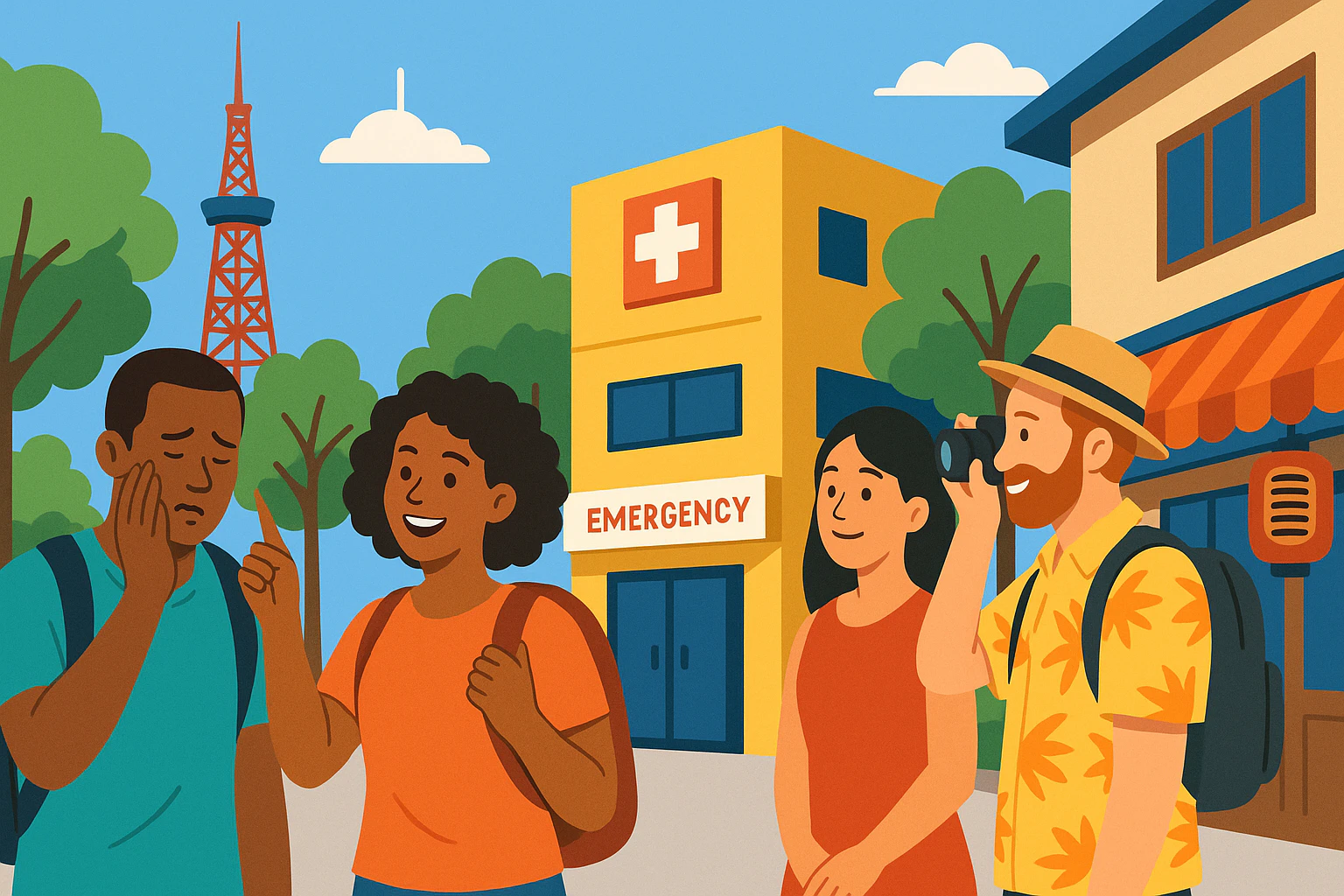
If you need a Sapporo emergency dentist tonight: the official night service runs 19:00–23:00 (7–11pm) at the Sapporo Dental Association Oral Medical Center (札幌歯科医師会口腔医療センター) in Chuo Ward.
Call first: 011-511-7774 (night emergency dentistry). Reception is listed as 18:30–23:00, so don’t wait until the last minute.
Not sure whether to go? Call the Sapporo medical hotline #7119 (or 011-272-7119). English support is available.
Go straight to 119: trouble breathing/swallowing, rapidly spreading facial swelling, uncontrolled bleeding, or serious injury.
Information current as of March 2026 based on Sapporo City’s official after-hours / emergency duty medical information (updated March 12, 2026) and the Sapporo Dental Association Oral Medical Center night emergency dentistry page.
A cracked tooth after ramen. Sudden throbbing pain in your molar. A mouth injury from skiing or slipping on icy sidewalks. In Sapporo, the scariest part isn’t the toothache—it’s realizing most regular clinics close early, and you can’t explain symptoms in Japanese.
Here’s the good news: Sapporo has an official night emergency dental service (19:00–23:00) specifically for urgent tooth pain and mouth injuries. This article is a “what to do tonight” checklist: who to call, where to go, what to say, and how to get help fast if you’re stuck.
| Item | Amount / count | Source / as-of date |
|---|---|---|
| Night emergency dentistry (Sapporo Dental Association Oral Medical Center (札幌歯科医師会口腔医療センター)) | 19:00–23:00; Tel 011-511-7774; Address: Minami 7 Nishi 10, Chuo Ward | Sapporo City (updated Mar 12, 2026) / Center page (accessed Mar 2026) |
| Sapporo #7119 medical hotline (Emergency Services Center Sapporo) | #7119 or 011-272-7119 (24/7) | Sapporo City medical support page (accessed Mar 2026) / multilingual availability shown in Sapporo childcare/life guide PDF |
| Interpretation support (Sapporo Medical Communication Hotline) | 011-211-2121 (operator reachable 24/7; hospital booking calls are weekdays 9:00–17:00) | Sapporo City medical support page (accessed Mar 2026) |
| Ambulance / fire | 119 | Listed in Sapporo childcare/life guide PDF (accessed Mar 2026) |
Do you need an emergency dentist tonight? Quick self-check
Not every tooth problem needs an urgent night visit—but some absolutely do. Use this quick check to decide what to do right now, especially if it’s late and you’re unsure.
Call 119 (ambulance) immediately if you have any of these red flags:
- Trouble breathing or swallowing (swelling can become dangerous)
- Rapidly spreading facial/neck swelling
- Uncontrolled bleeding from the mouth that won’t stop with pressure
- Major trauma (suspected jaw fracture, serious head injury, loss of consciousness)
Go to the night emergency dental clinic (19:00–23:00) if you have:
- Severe toothache that’s not controlled with normal painkillers
- Swollen gum, pus, or worsening pain that suggests infection
- A broken tooth, lost filling/crown causing sharp pain, or exposed nerve
- Mouth injury (lip/cheek/tongue cuts, dental trauma) or ongoing oral bleeding
You can usually wait until morning (and book a regular clinic) if:
- Mild sensitivity to cold/sweet without constant pain
- A small chip with no sharp edges and no pain
- A lost crown/filling with no pain (cover sharp edges and avoid that side)
If you’re still unsure, the safest move in Sapporo is to call #7119 for triage advice (and guidance on where to go). The Sapporo #7119 medical hotline has English support, according to Sapporo’s published multilingual materials.
The Sapporo night emergency dental option (hours, phone, what they treat)
Most tourists assume “after-hours dentist” means expensive private care—or no care at all. In Sapporo, there’s a clear official option: the Sapporo Dental Association Oral Medical Center (札幌歯科医師会口腔医療センター) provides night emergency dental treatment from 19:00 to 23:00, 365 days a year.
If you’ve been frantically Googling “night emergency dental clinic Sapporo 19:00 23:00”, this is the place those official listings point to.
1) Hours and phone (save this now)
- Name: Sapporo Dental Association Oral Medical Center (札幌歯科医師会口腔医療センター)
- Night emergency dentistry hours: 19:00–23:00 (every day)
- Reception: listed as 18:30–23:00
- Phone: 011-511-7774
These details are listed on Sapporo City’s emergency duty medical institutions page and the center’s own night emergency dentistry page.
2) Where it is (address + how to get there)
Address: 〒064-0807 Sapporo-shi, Chuo-ku, Minami 7-jo Nishi 10-chome (札幌市中央区南7条西10丁目) — Sapporo Dental Association building 1F (札幌歯科医師会館1階), per the center’s official access information.
Public transport options are listed on the center’s access (交通アクセス) section. In plain English, the easiest tourist-friendly routes are usually:
- Streetcar (Sapporo tram): get off at Higashi-Honganji-mae (東本願寺前) (then walk)
- Subway + walk/taxi: Susukino / Nakajima-Koen / Nishi 11-chome are listed as subway options, but walking can take around 15–20 minutes depending on the station and your pace
- Taxi: if you’re in central Sapporo, a taxi can save time when you’re in pain (show the address in Japanese)
3) What they treat (and what they don’t)
The center explicitly lists night emergency care for issues like night-time tooth pain, gum swelling, oral injuries, and mouth bleeding. It also clearly states it is for emergency treatment only—not ongoing/continuing care—so you should follow up at a regular dental clinic afterward.
- They can help with: emergency pain relief, swelling, bleeding, trauma-related dental/oral issues, and other urgent problems listed on their page.
- They are not for: ongoing treatment plans; the center says you should continue care at a regular clinic from the next day.
- Important limitation: their FAQ notes they do not make dentures or crowns at the emergency center.
4) A critical note for non-Japanese speakers
This is the part most tourists miss until they’re already at the door: the center’s official notice to foreign patients states that you should come with someone who can speak Japanese. That’s one reason calling ahead and arranging language support can make your night much smoother.
Tonight’s “get seen fast” steps
- Call 011-511-7774 and say you want night emergency dental care (sample phrases below).
- Go early if you can (waiting times vary; the center notes the order may change depending on treatment needs).
- Bring ID + medication info (and your insurance card if you have one).
- Expect emergency care, not a full multi-visit plan; plan to book a regular dentist tomorrow for follow-up.
What to prepare before you go (ID, payment, symptoms, key Japanese phrases)
When you’re in pain, you forget obvious things—and that’s when delays happen. Here’s what to prep in 5–10 minutes so you can get treated faster.
Bring these items
- Passport (tourists) or residence card (if you have one)
- Insurance card / My Number health insurance (if you’re a resident enrolled in Japanese insurance). The center states you must bring the original (copies are not accepted).
- Medication list (or Japan’s “medicine notebook” (お薬手帳 / Okusuri techo) if you have it). The center specifically asks patients taking medicines to bring something that shows the medication names.
- Cash + a payment card: payment methods vary by facility, so carry enough cash just in case and keep your card available.
If you don’t have an insurance card with you, the center’s FAQ says you’ll be treated but it will be handled as full out-of-pocket (10/10), with potential reimbursement procedures later for insured people. For short-term tourists, that usually means you should expect to pay out-of-pocket and claim through travel insurance if your policy covers it.
Write down your symptoms (this saves time)
- Which tooth/side hurts (upper/lower, left/right)
- When it started (today? after a meal? after an accident?)
- What makes it worse (cold, hot, biting, lying down)
- Any swelling, fever, bad taste, or pus
- Any allergies (especially to antibiotics or pain meds)
Optional but helpful: pre-fill the intake form
The center provides a downloadable medical/dental intake form PDF (診療申込書). If you can print it at your hotel (or copy the key answers onto paper), you’ll reduce stress at the counter.
Key Japanese phrases (copy/paste)
These are simple, polite phrases that work on the phone and at reception. If you’re using a translation app, showing the Japanese text is often faster than speaking.
- 今夜、歯がすごく痛いです。夜間救急歯科診療を受けたいです。 (Kon'ya, ha ga sugoku itai desu. Yakan kyūkyū shika shinryō o uketai desu.) — My tooth hurts badly tonight. I want to receive night emergency dental care.
- 歯ぐきが腫れています。 (Haguki ga harete imasu.) — My gums are swollen.
- 口の中をけがしました。出血しています。 (Kuchi no naka o kega shimashita. Shukketsu shite imasu.) — I injured the inside of my mouth. It’s bleeding.
- 歯が欠けました/詰め物(つめもの)が取れました。 (Ha ga kakemashita / Tsumemono ga toremashita.) — My tooth chipped / My filling fell out.
- 日本語があまり話せません。 (Nihongo ga amari hanasemasen.) — I don’t speak much Japanese.
- 通訳はありますか? (Tsūyaku wa arimasu ka?) — Is interpretation available?
- 旅行者です。パスポートがあります。 (Ryokōsha desu. Pasupōto ga arimasu.) — I’m a traveler. I have my passport.
- 保険証はありません。 (Hokenshō wa arimasen.) — I don’t have an insurance card.
Not sure what to say on the phone? Ask on LO-PAL.
If you’re stuck, ask a Sapporo local to call and help
In an ideal world, you could handle everything with Google Translate. In real life, dental emergencies are exactly when language barriers hit hardest: pain is hard to describe, you’re stressed, and intake questions get detailed (medications, allergies, medical history).
On top of that, the Oral Medical Center’s own notice to foreign patients asks you to come with someone who can speak Japanese. So if you’re alone and you don’t speak Japanese, getting a local to help isn’t “nice to have”—it can be the difference between quick care and a frustrating night.
Who can help fastest (tourist-friendly options)
- Your hotel front desk: ask them to call and explain your symptoms, then write down what time to go and what to bring.
- Your host / tour guide / ski resort staff: they often know the local after-hours system and can communicate clearly.
- A Japanese-speaking friend in Sapporo: have them call while you pack your ID and medication info.
A simple call script for your helper (Japanese + romaji + meaning)
- 今夜、外国人の旅行者が歯の痛み(口のけが)で受診したいです。受付は可能ですか? (Kon'ya, gaikokujin no ryokōsha ga ha no itami (kuchi no kega) de jushin shitai desu. Uketsuke wa kanō desu ka?) — Tonight, a foreign traveler wants to be seen for tooth pain (mouth injury). Is reception possible?
- だいたい何時までに行けばいいですか? (Daitai nan-ji made ni ikeba ii desu ka?) — Roughly what time should we arrive by?
- 支払い方法(現金・カード)は何が使えますか? (Shiharai hōhō (genkin / kādo) wa nani ga tsukaemasu ka?) — What payment methods (cash/card) can be used?
Why I’m so strict about “call first”
When I lived in the UK in my early twenties, I couldn’t even handle a basic phone booking in English—I had to call back multiple times just to get an appointment. Later, after returning to Japan, I worked as a Medical Coordinator for Foreign Patients at a hospital in Osaka, and I saw the same pattern daily: the problem wasn’t a lack of healthcare or systems. It was a lack of access.
That’s why I always recommend the “call first + bring the right items + show a clear symptom note” approach. In Japan, that combination is what makes reception and triage move smoothly—especially at night.
Real voices from travelers (for context)
Individual experiences may vary. These quotes are not medical advice—just examples of the real demand and what people found helpful in Sapporo when language was a barrier.
“Call the foreigner resident hotline and they will help locate a dentist near you or send you to the Sapporo Medical Interpreter Hotline… Very kind and patient. Number is 011 211 2121.”
Reddit thread: Treating a cavity as a foreigner (r/JapanTravel)
“Else I always recommend calling 011-211-2121, Sapporos Medical Communication Hotline. They will help you to find the doctor you need and make an appointment for you.”
Quick FAQ for tonight
These are the four questions I see most from panicked visitors who need a dentist after dinner in Sapporo.
Is the Sapporo night emergency dental clinic open every day?
Sapporo City lists the Oral Medical Center’s night dentistry as operating 365 days a year from 19:00 to 23:00. The center also describes its night emergency dentistry as available year-round on its official page.
What if it’s already after 23:00?
If you have danger signs (breathing/swallowing issues, rapidly spreading swelling, uncontrolled bleeding), call 119. Otherwise, call #7119 for medical triage advice and next steps; they can advise whether you should go to a medical facility tonight or wait until morning.
Can tourists be treated at the Oral Medical Center?
The center’s FAQ says people from outside Hokkaido can also receive treatment. If you’re a short-term visitor without Japanese health insurance, expect to pay out-of-pocket and keep receipts for any travel insurance claim.
Should I call #7119 or the dental center first?
If you’re clearly within the dental center’s scope (severe tooth pain, gum swelling, oral bleeding/injury) and it’s between 19:00–23:00, call 011-511-7774 first. If you’re unsure whether it’s dental vs. medical (fever, widespread swelling, injury beyond the mouth), call #7119 for triage guidance.
Related Articles
- Emergency numbers in Japan for tourists (110, 119, and English hotlines)
- Sick in Tokyo? How to find an English-speaking doctor fast
- Food poisoning in Osaka? What to do first (clinics, timing, what to say)
Need More Help? Ask on LO-PAL
If you can’t explain symptoms in Japanese or you’re worried you’ll be turned away, I built LO-PAL so you can quickly connect with a local Japanese helper in Sapporo who can call, interpret, and help you get seen faster tonight.
Written by

Founder, LO-PAL
Former Medical Coordinator for Foreign Patients (Ministry of Health programme) and legal affairs professional. Built LO-PAL from firsthand experience navigating life abroad.
Written with partial AI assistance
Read full bio →