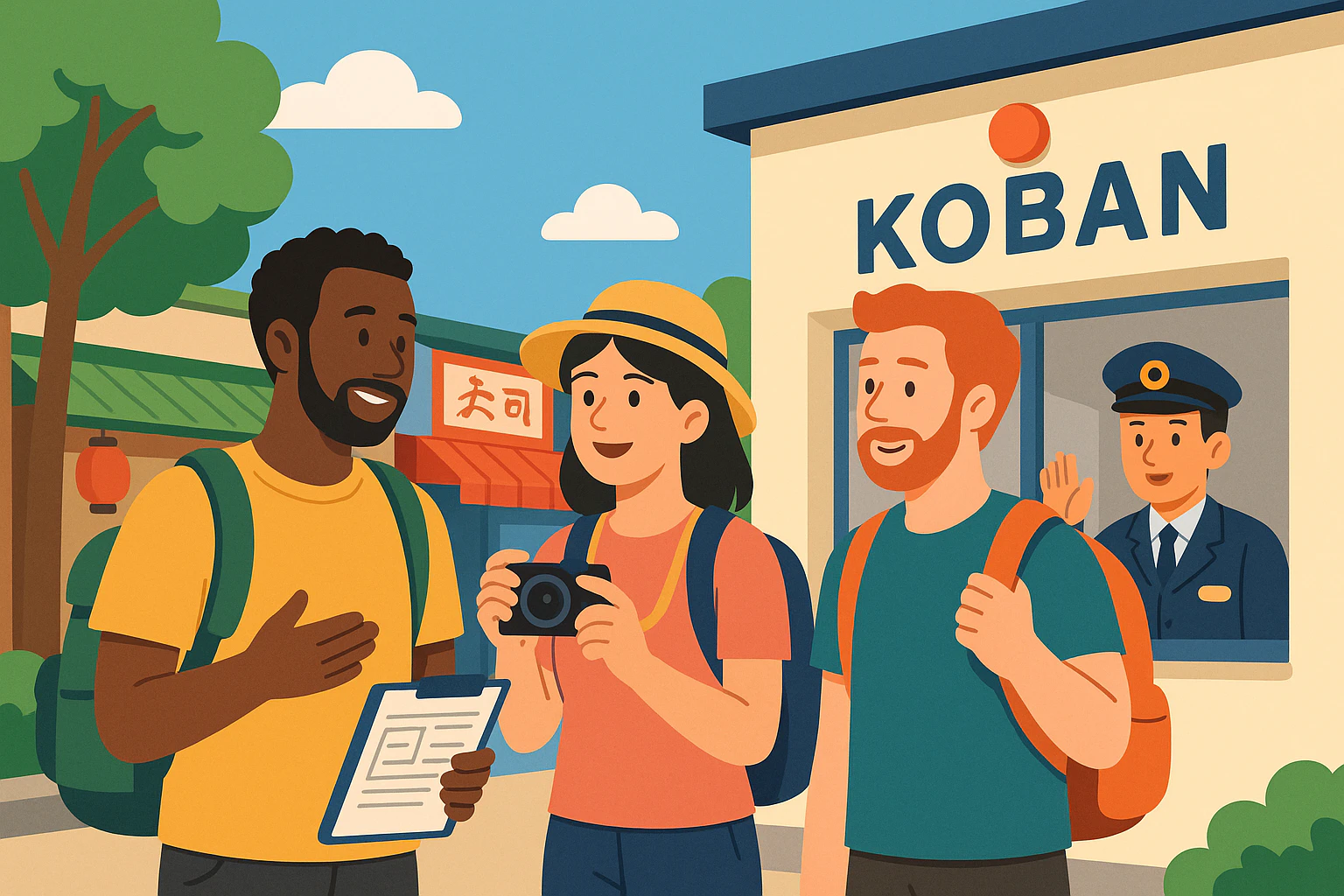
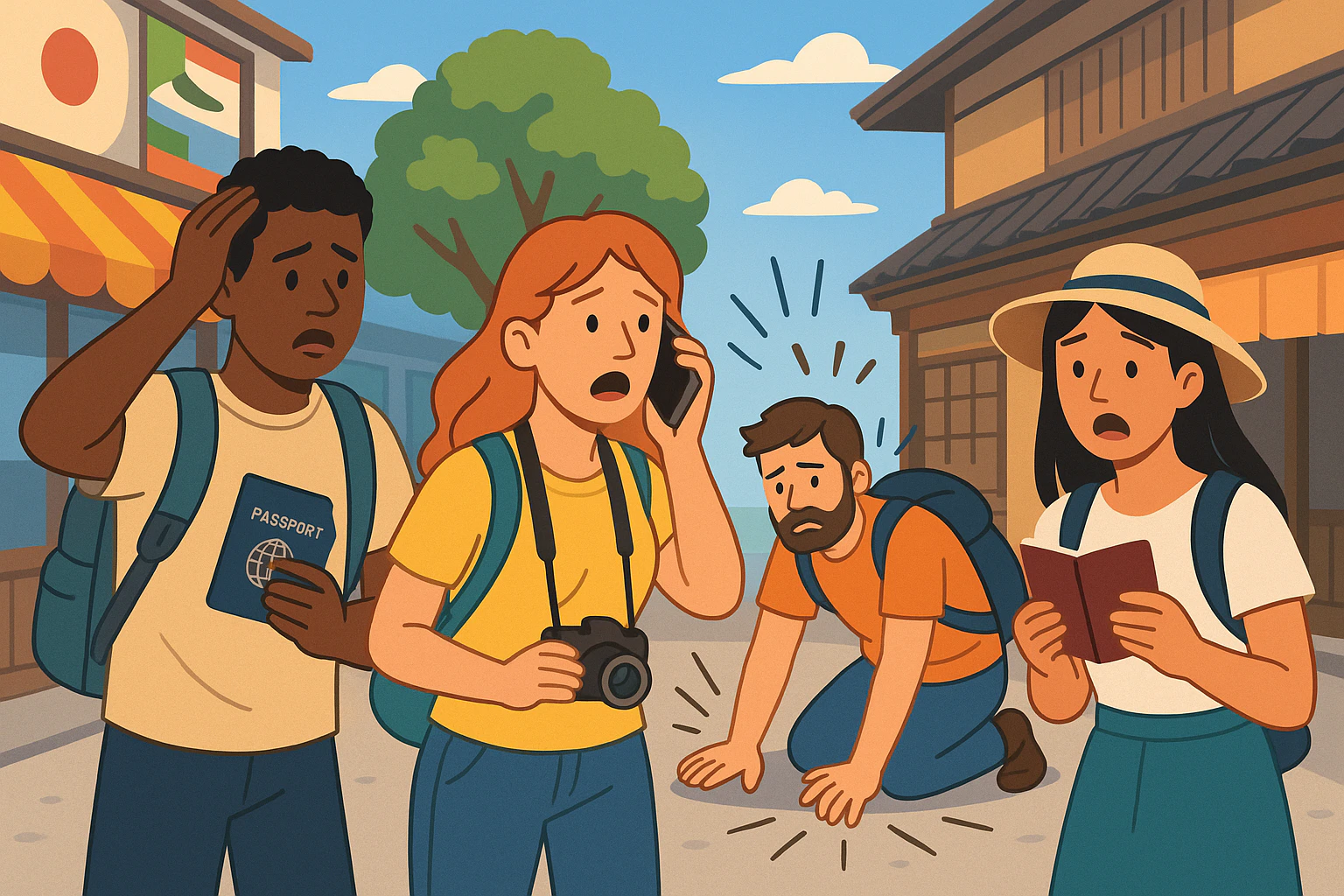
Need a Traffic Accident Certificate in Japan Before You Fly?
Call 110, collect the right details, and secure the certificate insurers need even if your flight home is only days away.

Bottom line: if you do not report the crash to police first, you cannot get the Traffic Accident Certificate later.
Key places: police or koban at the scene first, then the Japan Safe Driving Center (JSDC) by counter, post, or online.
Timing: counter issue can sometimes be same day if police data has arrived, but postal delivery usually takes about 10 days. If your flight is soon, line up a proxy in Japan before you leave.
Information current as of March 2026 based on the Ministry of Land, Infrastructure, Transport and Tourism, the Japan Safe Driving Center, the JSDC fee revision notice, the JSDC application page, the JSDC FAQ, and JNTO.
If you are searching for traffic accident certificate Japan because your flight home is close, here is the real issue: calling 110 is only the first step. The paper that usually matters for insurance, rental-car follow-up, and later compensation procedures is the Traffic Accident Certificate, issued by the Japan Safe Driving Center from police-held data.
Most tourists think the Japan police accident report is the end of the story. It is not. Police record the accident, but the document insurers usually ask for later is this certificate. I also work in legal affairs in Japan, and I see the same pattern again and again: the system exists, but travelers get stuck between the accident scene and the paperwork.
Call police first or the certificate cannot be issued
This is the non-negotiable rule.
MLIT states that anyone involved in a traffic accident in Japan must report it to police, and that a Traffic Accident Certificate will not be issued if the accident was not reported. The same MLIT guidance calls the certificate the only official document proving that you were involved in the accident, which is why insurers and related procedures keep asking for it.
If there is danger, move to safety. If someone is injured, call 119 for an ambulance as well as 110 for police. If you need a quick refresher on emergency calling, see our guide to 110, 119, and English hotlines in Japan.
- 交通事故です。来てください。 (Koutsuu jiko desu. Kite kudasai.) — There has been a traffic accident. Please come.
- けが人がいます。 (Keganin ga imasu.) — Someone is injured.
- 英語で話せる方はいますか。 (Eigo de hanaseru kata wa imasu ka.) — Is there someone who can speak English?
If you are too stressed to explain clearly, the Japan Visitor Hotline is available 24/7 at 050-3816-2787 in English, Chinese, and Korean. It is helpful for guidance and medical-institution information, although JNTO says it generally does not make reservations or act as a three-way interpreter for you.
If anyone may be hurt, do not wait to see if symptoms fade. MLIT warns that delaying medical attention can weaken the link between the injury and the accident. If you go to a clinic or hospital, ask for a 診断書 (Shindansho) as well if your insurer may need medical proof.
What to collect at the scene before your memory fades
Once police are on the way, start gathering the details you will need later.
MLIT specifically tells victims to confirm the other party's vehicle registration number, name, address, contact information, compulsory automobile liability insurance details, and insurer. It also recommends finding witnesses, saving drive-recorder footage, and making your own written or photo record before memory fades.
- Other party details: full name, address, phone number, vehicle plate number
- Insurance details: insurer name, policy or certificate number, and for rental cars the rental company name and contract number
- Scene record: wide photos, close damage photos, road signs, intersection layout, weather, and timestamp
- Witnesses: names and phone numbers if anyone saw the crash
- Police handling info: which police station, koban, or highway police unit handled the accident
- Medical record: hospital or clinic name, receipts, and any diagnosis paperwork if you were examined
A practical tourist tip: write down the exact place and the exact day and time the accident was handled. JSDC's application flow later depends on police-held data, and being vague about where the crash was processed can slow everything down.
If the accident involved a rental car, contact the rental company immediately after calling police. For the rental-company side of the process, our rental car accident guide in Okinawa is also useful even if your accident happened elsewhere, because the insurance and reporting logic is similar.
How to apply for the Traffic Accident Certificate
This Japan Safe Driving Center certificate is where many visitors lose time.
MLIT says application forms are available at JSDC offices, police stations, koban, police substations, and some non-life insurers. JSDC says the certificate is issued to the accident party or an eligible proxy, based on police-held data. You can apply by counter, post, or online.
Important update: many English pages still say the fee is ¥800. That was true before the latest revision, but JSDC officially raised the Traffic Accident Certificate fee from ¥800 to ¥1,000 on October 1, 2025. If you are comparing old blog posts, use the newer number.
| Item | Amount/count | Source / as-of date |
|---|---|---|
| Traffic Accident Certificate fee | ¥1,000 per copy | JSDC fee revision notice, effective October 1, 2025 |
| Online payment handling fee | ¥143 per copy | JSDC application page, accessed March 2026 |
| Online payment deadline | Within 7 days | JSDC application page, accessed March 2026 |
| Typical delivery time by mail | About 10 days; sometimes 10 days to 2 weeks | JSDC application page and FAQ, accessed March 2026 |
| Issue window after accident | 5 years for injury accidents / 3 years for property-damage accidents | MLIT and JSDC, accessed March 2026 |
- Choose your route. Counter is fastest if police data has already reached JSDC. Postal is slower but simple. Online is convenient only if you meet JSDC's conditions.
- If you need it urgently, use the accident prefecture's office. JSDC says you can apply at offices nationwide, but same-day counter issuance is only possible when the police material has arrived, and the FAQ says issuance is limited to the office in the prefecture where the accident occurred.
- Expect offices to be outside tourist areas. Many JSDC offices are inside prefectural driver's license centers, not downtown stations. Examples from JSDC's office list include Tokyo at Samezu in Shinagawa (03-5781-3660), Osaka at the Kadoma driver's license center (06-6909-5821), and Okinawa in Toyosaki (098-840-2822).
- In Hokkaido, double-check the region. Hokkaido uses several area offices, so contact the office that covers the police station which handled your crash.
For a counter visit, these phrases help:
- 交通事故証明書の申請方法を教えてください。 (Koutsuu jiko shoumeisho no shinsei houhou o oshiete kudasai.) — Please tell me how to apply for the Traffic Accident Certificate.
- 今日、受け取れますか。 (Kyou, uketoremasu ka.) — Can I receive it today?
- 委任状で代理申請できますか。 (Ininjou de dairi shinsei dekimasu ka.) — Can a proxy apply with a power of attorney?
Here is the part that matters most for short-term visitors: JSDC's FAQ says online application is only for the actual accident party, not a proxy, and only if that person is still living at the address they reported to police at the time of the accident. If you gave a hotel address and you will be gone before the document arrives, online may not be your best route.
If this feels overwhelming, that is exactly why I built LO-PAL. You can post your question for free and get answers from local Japanese people near you, and if you need hands-on help with calls or paperwork, you can request a task and only pay when the helper's work is completed.
Flying home soon? How to handle insurance and follow-up
If you only have a day or two left in Japan, focus on creating a clean handoff before you board your flight.
- Get the claim contact in writing. Ask the rental company, travel insurer, or credit-card insurer for the handler's name, direct email, and claim number before you leave Japan.
- Send the basic file the same day. Email photos, accident date and time, police station name, plate numbers, witness info, and medical receipts while everything is fresh.
- Confirm who will obtain what. Do not assume the rental company or insurer will automatically pull the certificate for you. Ask: who applies, who pays, and where the certificate will be sent?
- Use a proxy if you will already be overseas. JSDC's FAQ says overseas residents can apply through a family member, friend, or other proxy in Japan with a power of attorney, and that proxy applies at the office counter.
- Do not promise an English certificate that does not exist. JSDC's FAQ says there is no English version of the Traffic Accident Certificate. Ask your insurer whether they accept the Japanese original or a translation you arrange separately.
For an insurance claim after accident Japan visitors usually need more than just the certificate. If injuries are involved, keep the diagnosis record, receipts, prescription papers, and any medical certificate. If you still need treatment while in Tokyo, our guide to finding an English-speaking doctor fast may help.
If the case turns into a dispute, MLIT lists official consultation routes such as NASVA's traffic accident victims hotline, the Nichibenren Traffic Accident Consultation Center, and the Japan Center for the Settlement of Traffic Accident Disputes. Those services are more useful once you have the basic paperwork in hand.
What other travelers get stuck on
Individual experiences vary. Use the cases below as examples, not as the official rule.
One traveler on Reddit described reporting a minor rental-car accident in Hokkaido and then realizing they were scheduled to leave Japan in two days, with no idea how the certificate part would work.Another commenter in the same discussion said the rental company's insurer often handled later document retrieval after the police report, which is exactly the kind of point you should confirm in writing before you fly home.I built this guide because this is where visitors panic: not at the word accident, but at the moment someone says, bring the certificate. The problem is usually not a missing system. It is access to the right office, in the right prefecture, before your trip ends.
Quick answers before you leave
Can I get the certificate if I never called police?
No. MLIT says a Traffic Accident Certificate will not be issued for an accident that was not reported to police.
Can I get it the same day?
Sometimes. JSDC says same-day counter issuance may be possible if the police data has already reached the office in the prefecture where the accident happened. Otherwise, expect mail delivery later.
Can someone in Japan do it after I leave?
Yes. JSDC's FAQ says a proxy in Japan can apply at the counter with a power of attorney.
Is there an English version?
No. JSDC's FAQ says the Traffic Accident Certificate itself is not issued in English.
Related Articles
- Emergency Numbers Japan Tourist Guide: 110, 119 & English Hotlines
- Rental Car Accident in Okinawa? What to Do (Police & Insurance Steps for 2026)
- Sick in Tokyo? How to Find an English-Speaking Doctor Fast (2026)
Book a Local Helper to Go with You
If you need someone to call the police station, go with you to the JSDC counter, or help explain the forms in Japanese, I built LO-PAL for exactly that. Posting a question or task is completely free, with no signup fee and no posting fee, and you only pay if you accept a helper's completed work.
Written by

Founder, LO-PAL
Former Medical Coordinator for Foreign Patients (Ministry of Health programme) and legal affairs professional. Built LO-PAL from firsthand experience navigating life abroad.
Written with partial AI assistance
Read full bio →