Japan Travel Safety Guide (2026): When Things Go Wrong

The all-in-one Japanese learning app
From travel phrases to real fluency — all in one app.
All 2,136 standard kanji included. Every feature is free to use.
Japan is safe — until something goes wrong and every sign, phone call, and form is in Japanese. Lost passport, stolen phone, car accident, earthquake, typhoon: this guide covers what to do in the first 30 minutes and links to the step-by-step guide for each emergency.
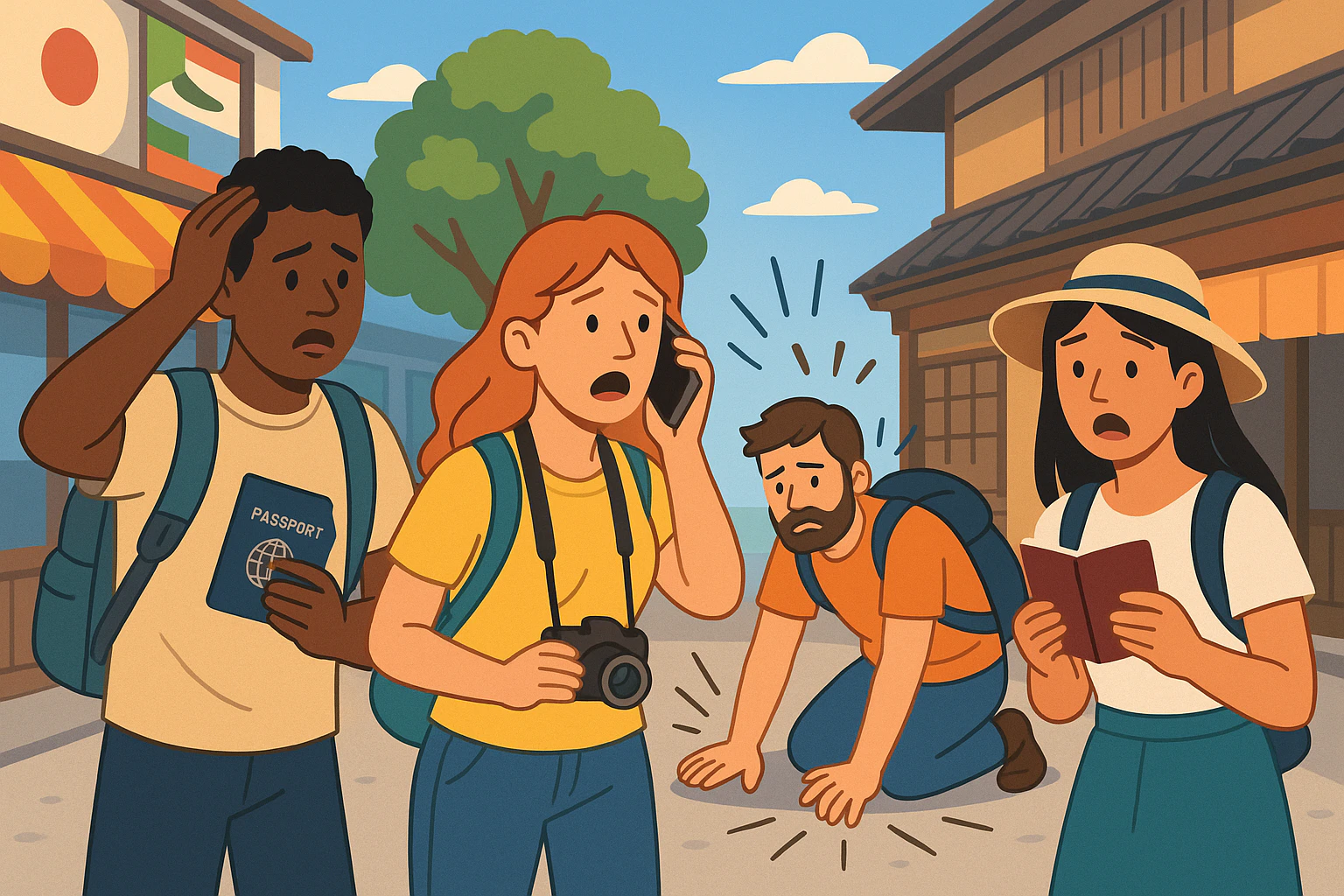
Bottom line: Japan is one of the safest countries on Earth — but "safe" doesn't mean "nothing can go wrong." Tourists lose passports during Golden Week crowds, get into fender-benders on Okinawa rental cars, have their phones stolen in Shibuya, and freeze at the first earthquake tremor because they don't know the drill. The difference between a ruined trip and a minor setback is knowing what to do in the first 30 minutes. This guide covers every common emergency foreigners face in Japan and links to the specific step-by-step guide for each one.
Information current as of April 2026 based on the National Police Agency (NPA), Japan Meteorological Agency (JMA), Japan Tourism Agency, and municipal police department publications. I'm Kanaya, founder of LO-PAL — I've spent years helping foreigners deal with exactly these situations on the ground in Japan, from accompanying theft victims to police stations to translating at accident scenes.
Japan's emergency numbers: the three you need to memorize
Before anything else, save these in your phone right now:
| Number | Service | When to call | English support |
|---|---|---|---|
| 110 | Police | Crime, accidents, threats | Yes — three-way interpreter connected on request |
| 119 | Fire & Ambulance | Medical emergencies, fires | Many areas have multilingual operators |
| 050-3816-2787 | Japan Visitor Hotline (JNTO) | Travel emergencies, general help | 24/7 in English, Chinese, Korean, Japanese |
Other useful numbers: #7119 (non-emergency medical advice, available in most major prefectures including Tokyo, Osaka, Fukuoka, Saitama, Hokkaido, and others), #9110 (non-emergency police consultation), 118 (Coast Guard for maritime emergencies).
All emergency numbers work from any phone — even one without a SIM card. When you call 110 or 119 from a mobile, your GPS location is automatically shared with dispatch.
Lost or stolen belongings
Japan's lost-and-found system is famously efficient. The NPA reports that over 30 million items are turned in to police annually, and the return rate for wallets with cash is above 63%. But that system only works if you know how to use it.
Lost passport
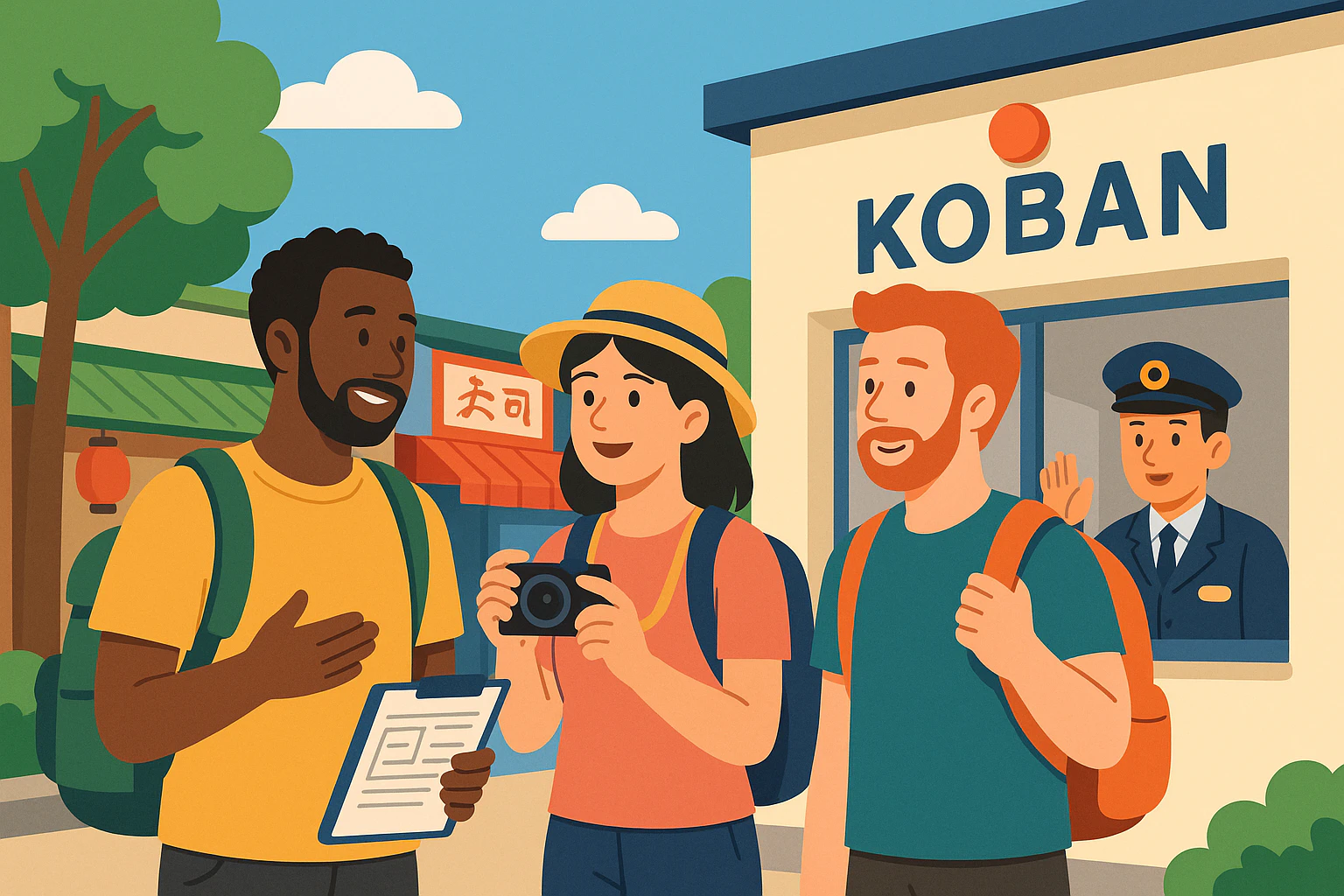
This is the emergency that causes the most panic — and it's fixable if you act fast. File a police report at the nearest koban (交番, police box), then contact your embassy for an emergency travel document. Most embassies can issue one within 1-3 business days.
Full step-by-step: Lost Your Passport in Japan? Police Report + Emergency Passport
Stolen phone
Suspend your SIM immediately, then file a police report. If you have Find My iPhone or Google Find My Device enabled, you can track and remotely wipe. Japan's police won't chase phone thieves, but the report is essential for insurance.
Full step-by-step: Stolen Phone in Tokyo? Do This First
Lost item (wallet, bag, camera)
Japan has a centralized system: items found in public go to the nearest koban, then transfer to the prefectural police lost-and-found center after a few days. Items left on trains go to the railway company's lost-and-found office. The NPA also runs an online lost-item search portal (Japanese, but usable with browser translation).
Full step-by-step: Lost Item in Japan: What to Do (Koban, Trains, Hotels)
Lost luggage on airport bus
Airport-to-city buses in Japan don't have airline-style luggage tracking. If the bus leaves with your bag, you need to contact the bus company directly — fast.
Full step-by-step: Lost Luggage on the Narita-Tokyo Airport Bus?
Traffic accidents and driving trouble
Renting a car is the best way to explore rural Japan — Okinawa, Hokkaido, the Izu Peninsula. But if something goes wrong, the process is entirely in Japanese, and the paperwork matters more than you'd expect.
Rental car accident
Rule number one: call 110 immediately. Even for a minor fender-bender in a parking lot. Japanese insurance companies require a police-issued accident certificate (交通事故証明書) to process any claim. Skip the police call and you may be personally liable for the full repair cost — plus the rental company's Non-Operation Charge (NOC).
Full step-by-step: Rental Car Accident in Okinawa? Police & Insurance Steps
Getting a traffic accident certificate
The 交通事故証明書 (kotsu jiko shomeisho) is issued by the Japan Safe Driving Center, not the police directly. You need it for any insurance claim — whether you're a tourist leaving Japan or a resident filing domestically. The process differs depending on your situation:
- Tourist leaving soon: Traffic Accident Certificate Before You Fly
- Resident filing a claim: How to Get Your Traffic Accident Certificate Fast
Bicycle fines
Since November 2024, Japan's revised Road Traffic Act introduced "blue ticket" (交通反則切符) fines for bicycle violations. Cyclists aged 16 and over can now be fined 5,000-12,000 yen for running red lights, riding on the wrong side, using a phone while cycling, or riding with headphones. Separately, cyclists who commit designated dangerous acts (危険行為) twice within 3 years must attend a mandatory 3-hour safety course (6,000 yen). Tourists are not exempt from either system.
Full step-by-step: How to Pay Japan's 2026 Bicycle Fine in 7 Days
Money and payment emergencies
Japan is increasingly cashless, but it's still more cash-dependent than most Western countries. When your card stops working at a Japanese ATM, it's usually not broken — it's a setting on your bank's side.
Full step-by-step: Card Not Working in Japan? 4 Fast Ways to Get Cash
Transport disruptions
Japan's trains and planes run with legendary punctuality — until weather hits. When it does, the system grinds to a halt, and announcements switch to rapid-fire Japanese.
Shinkansen cancellation or delay
If your bullet train is cancelled due to typhoon, earthquake, or heavy snow, JR will refund you in full at any JR ticket counter — no questions asked. The key is knowing which counter to go to and what to do with reserved vs. non-reserved tickets.
Full step-by-step: Shinkansen Cancelled in Japan? Get a Refund in 3 Steps
Airport snow closure
Hokkaido's New Chitose Airport shuts down multiple times every winter due to heavy snowfall. Thousands of passengers get stranded overnight with limited English signage and no hotel rooms available.
Full step-by-step: New Chitose Airport Snow Cancellation: Rebook & Sleep
Typhoon flight delay
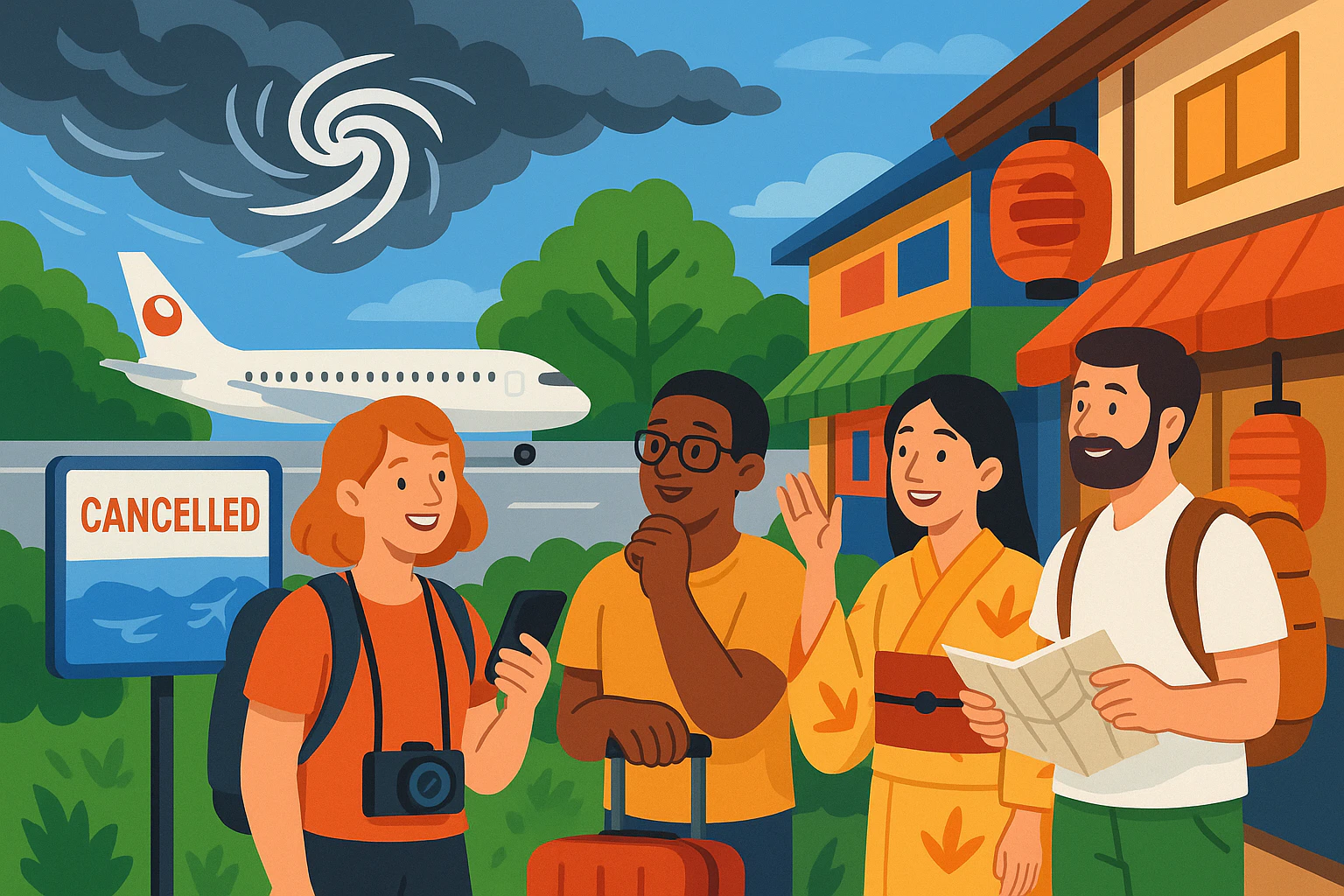
Typhoon season runs June through October, peaking in August and September. Major airports (Narita, Haneda, Kansai, Naha) regularly suspend operations during typhoons. Your airline's rebooking policy — not the airport's — determines what happens to your ticket.
Full step-by-step: Typhoon Delays Your Flight in Japan? Rebooking, Refunds & Where to Sleep
Natural disasters
Japan experiences more than 1,500 earthquakes per year that are strong enough to feel. Typhoons, volcanic eruptions, and heavy flooding are seasonal realities. The country is extremely well-prepared — but that preparation assumes you understand the system.
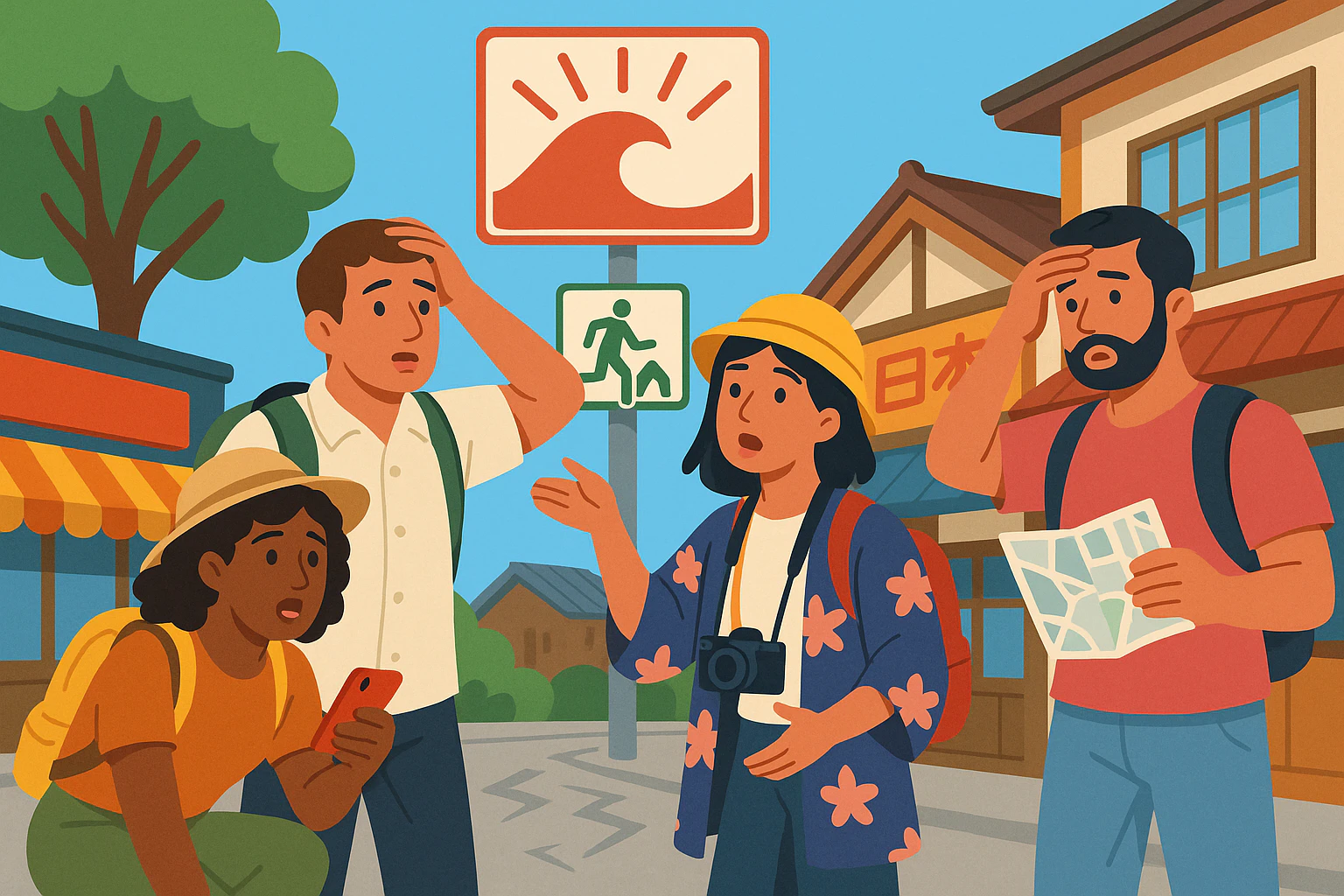
Earthquake
If you're indoors: drop, cover, hold on. Get under a table, away from windows. Do NOT run outside during shaking. If you're on a train, hold the handrails — trains automatically brake when seismic sensors trigger. After shaking stops, check for tsunami warnings via J-Alert (your phone will scream).
Full step-by-step: Earthquake in Japan? What Tourists Should Do Right Now
If you're a resident and regularly commute by train: Earthquake on a Train: What Foreign Residents Should Do
Disaster alerts and evacuation
Japan's J-Alert system triggers emergency alerts on your phone for earthquakes, tsunamis, volcanic eruptions, and missile threats. The alerts themselves arrive in Japanese, but downstream apps deliver them in multiple languages. The Safety Tips app (by Japan Tourism Agency) provides push notifications in 15 languages including English, Chinese, Korean, Vietnamese, Thai, and more. For residents, the NERV app and Yahoo! Bosai are the gold standard for real-time alerts.
Full step-by-step: Japan Disaster Alerts in English: Apps, Hazard Maps, Shelters
Food safety
Japan takes food safety extremely seriously, but menus rarely list allergens in English. If you have a food allergy, an allergy card (アレルギーカード) in Japanese is essential — it's the single most effective tool because restaurant staff can read it immediately without translation guesswork.
Full step-by-step: Food Allergy Travel Japan: Allergy Card + Safe Eats
Filing a police report: how the system works
Many of the situations above require filing a police report. Japan has two main types:
| Type | Japanese | When you need it |
|---|---|---|
| Lost property report | 遺失届 (ishitsu-todoke) | You lost something — passport, wallet, phone |
| Victim report | 被害届 (higai-todoke) | A crime was committed against you — theft, assault, fraud |
Both are filed at any koban or police station. Bring your passport or residence card. The officer fills out the form in Japanese — you describe what happened. You'll receive a report number (受理番号). For insurance claims, ask for a written certificate (届出証明書).
Major police departments (Tokyo, Osaka, Nagoya) offer telephone interpretation in 18+ languages. At smaller kobans, bring a translation app or a Japanese-speaking friend.
Full step-by-step: How to File a Police Report in Japan as a Foreigner
What LO-PAL can do in an emergency
Every situation in this guide has one thing in common: they're exponentially harder when you don't speak Japanese. Police reports, insurance calls, hospital intake forms, airline rebooking counters — all of it defaults to Japanese.
That's exactly what LO-PAL helpers do. A local Japanese speaker can meet you at the police station, call your insurance company, translate at the hospital, or help you navigate an airport rebooking counter during a typhoon. You post what you need, a verified helper responds, and you solve the problem together — in person.
Post your emergency on LO-PAL for free — describe the situation and a local helper will reach out.
Written by

Founder, LO-PAL
Former Medical Coordinator for Foreign Patients (Ministry of Health programme) and legal affairs professional. Built LO-PAL from firsthand experience navigating life abroad.
Written with partial AI assistance
Read full bio →