My Number Card for Foreigners (2026): Apply, Pickup, June 14 Update
Everything foreign residents in Japan need to know about the マイナンバーカード in 2026 — the December 2024 health-insurance change, the June 14, 2026 特定在留カード rollout, the 4 passwords, and the iPhone version that went live June 24, 2025.
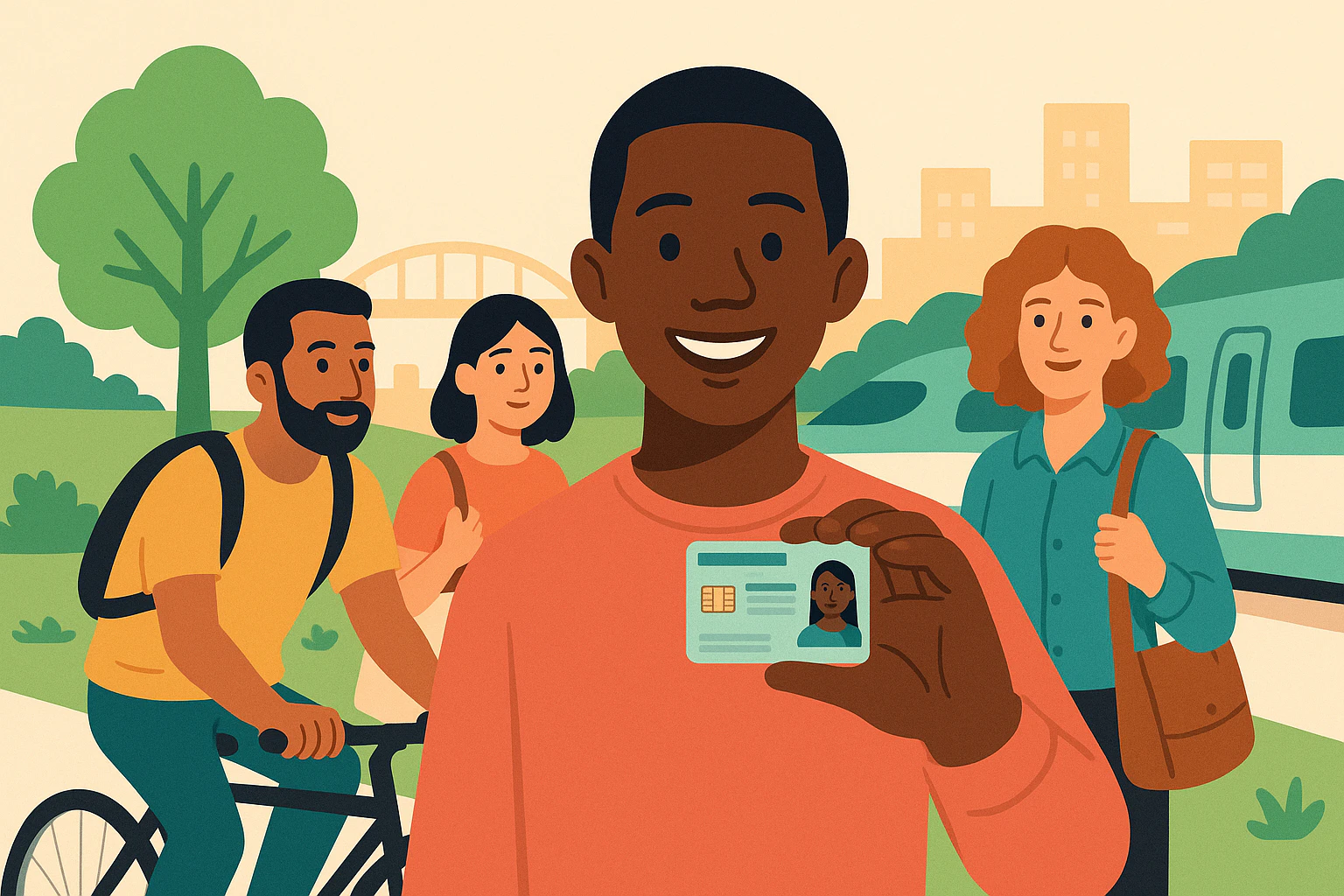
The マイナンバーカード is now the linchpin of Japanese administrative life — and for foreign residents in 2026, three deadlines have already reshaped the landscape: the 健康保険証 was abolished on December 2, 2024, マイナ免許証 went live on March 24, 2025, and the new 特定在留カード that unifies your 在留カード with your My Number takes effect on June 14, 2026. The iPhone version has been in production since June 24, 2025. The ¥20,000 マイナポイント campaign ended September 30, 2023 — that ship has sailed.
- You can apply by mail, smartphone, or in person at city hall — processing takes 1–2 months
- You will set 4 passwords on pickup: one alphanumeric (6–16 chars) and three 4-digit PINs
- Lost-card reissuance: ¥800 + ¥200 = ¥1,000; PIN reset is free
- June 14, 2026: new 特定在留カード integrates 在留カード and My Number for medium/long-term residents
Information current as of May 2026, based on Digital Agency policy pages, the J-LIS (地方公共団体情報システム機構) card portal, and Immigration Services Agency (出入国在留管理庁) notices on the 特定在留カード rollout.
What "I'll get it later" cost a Chinese resident: She had a 通知カード from 2017 but never applied for the plastic card — the campaign never felt urgent. On December 2, 2024, her paper 健康保険証 hit its expiration and she went to a clinic for a cold. The clinic asked for マイナ保険証 — she had none. The clinic accepted her old paper card under transitional rules but warned her: next visit, bring the 資格確認書 that should have arrived in the mail. It hadn't. She spent the next 4 weeks chasing the 資格確認書 through 協会けんぽ while also applying for the マイナンバーカード itself (1.5 months wait for pickup notification). Lesson: the December 2024 deadline was not a soft date.
If you do not have the マイナンバーカード and have not received your 資格確認書, contact your insurer (協会けんぽ, 国保 ward office, or company plan) — it should arrive automatically but stragglers happen.
If you're a foreign resident registered in a Japanese municipality (resident for more than 3 months on a medium- or long-term visa), you have a 個人番号 (My Number) whether or not you've applied for the physical card. This guide is about the plastic card itself — when to bother, how to apply, what passwords you'll set, and what changes are coming in June 2026.
マイナンバーカード vs 通知カード vs 個人番号 — what's actually what
個人番号 (the 12-digit number itself)
Every registered resident — Japanese or foreign — is assigned a 12-digit 個人番号 under the 番号利用法 (Digital Agency: マイナンバー制度). The number itself never changes unless it leaks (in which case you can request a replacement at your municipal office). It is required for employment, opening bank accounts, securities trading, and tax filing.
通知カード (obsolete since May 25, 2020)
The paper 通知カード that informed you of your number was abolished on May 25, 2020 per the Ministry of Internal Affairs and Communications (MIC) notice (PDF). If you still have an old one and your name/address on it match your current 住民票, it remains valid as proof of your number — but it cannot be reissued, and most institutions now require either the マイナンバーカード or a 住民票 with My Number listed.
マイナンバーカード (the IC plastic card)
This is the chip-embedded plastic card with your photo, name, address, date of birth, and 個人番号 on the back. Foreigners get the same card as Japanese nationals; the validity period for foreign cardholders is tied to the expiration of your 在留期間 (period of stay).
The 2024–2026 deadline cascade
If you've been hearing "you have to get the card now" — here is exactly why, on what dates, and what each rule actually requires.
| Date | What changed | Source |
|---|---|---|
| May 25, 2020 | 通知カード abolished — no new issuance, no reissuance | MIC PDF |
| September 30, 2023 | マイナポイント (¥20,000) campaign ended | 総務省 マイナポイント事業 |
| December 2, 2024 | Paper 健康保険証 abolished — use マイナ保険証 (card linked to insurance) or 資格確認書 | MHLW announcement |
| March 24, 2025 | マイナ免許証 (optional) — driver's licence info onto the card | NPA 改正道交法 |
| June 24, 2025 | iPhone integration — card credentials in Apple Wallet | Digital Agency iPhone page |
| June 14, 2026 | 特定在留カード — combined 在留カード + My Number card for medium/long-term foreign residents | ISA tokutei page |
About the December 2024 health-insurance change
Paper 健康保険証 were not retroactively cancelled — existing cards remained usable until their printed expiry (max one year from December 2, 2024). After that, you need either (a) マイナ保険証 (linked your card to your insurance via マイナポータル or a hospital reader) or (b) a free 資格確認書 issued automatically by your insurer if you have not linked. See the MHLW 資格確認書 FAQ for details. You will not be uninsured.
About the June 14, 2026 特定在留カード
This is the change still ahead of us. Per 出入国在留管理庁, medium/long-term residents will be able to elect a single combined card that functions as both 在留カード and マイナンバーカード. The existing 在留カード remains valid; the new card is opt-in at the point of next renewal or residency change.
How to apply
There are three paths. All produce the same card; choose by what you already have in hand.
By mail
If you received a 個人番号カード交付申請書 (the paper application slip with a pre-printed application ID) at a municipal office, fill it out, attach a photo per the specifications, and mail it in the prepaid envelope. The form is also downloadable from J-LIS 交付申請書 page.
By smartphone
Scan the QR code on your application slip, then upload a selfie that meets the spec (white background, no glasses reflection, taken within 6 months). The J-LIS smartphone application page walks through the process. This is the fastest path.
In person at city hall
Most major cities (e.g., Shinjuku, Shibuya, Setagaya, Osaka City) offer in-person assistance, including free photo taking. Bring your 在留カード and 通知カード (if you still have it).
What foreign applicants should double-check
Name script consistency
Your name on the card must match the script (Latin alphabet, katakana, or both) on your 在留カード. If you've been informally using kanji or a katakana version that isn't on your 在留カード, that won't appear on the マイナンバーカード unless your 住民票 also reflects it. Check your 住民票 first; if the script is wrong, fix that at the 市区町村窓口 before applying.
Date of birth format
Foreign cards show date of birth in 西暦 (Gregorian) format — Japanese cards traditionally use 和暦 (era). This is normal and not a defect.
Address change burden
Every time you move (転居・転入), you must visit the new municipality within 14 days to update your 在留カード, 住民票, and your マイナンバーカード. If you skip the card update, the electronic certificate (電子証明書) inside the card is automatically invalidated and you'll have to re-enroll the e-certificates at the new ward office (free but in person).
Processing time and the 交付通知書 postcard
From application receipt to the 交付通知書 (pickup notification postcard) arriving at your registered address: roughly 1–2 months. This is the J-LIS published guideline and is consistent with municipal pages. The postcard tells you which ward office to visit, the document checklist, and reservation instructions.
Pickup procedure and the 4 passwords
What to bring
| Item | Notes |
|---|---|
| 交付通知書 (pickup postcard) | Fill out the back before arrival |
| 在留カード | Current and unexpired |
| 通知カード | If you still have one — surrendered at pickup |
| 住民基本台帳カード | If you have one — also surrendered |
| 4 password memos | Decide your PINs/password before you go |
The 4 passwords you will set
Set these in advance. Writing them on the pickup-postcard memo grid speeds the appointment significantly.
| Password | Format | Used for |
|---|---|---|
| 署名用電子証明書 (signing certificate) | 6–16 chars, alphanumeric (uppercase + digit) | e-Tax 電子申告, online contract signing |
| 利用者証明用電子証明書 (login certificate) | 4-digit PIN | マイナポータル login, convenience-store document issuance |
| 住民基本台帳用 | 4-digit PIN | 住民票 移転 / transfer-in procedures |
| 券面事項入力補助用 | 4-digit PIN | Reading the card's name/address/My Number from the chip |
The three 4-digit PINs can legally be the same value, and many people set them identically for memory ease. The signing certificate password must be different (different length/format).
Lost card, expired card, forgotten PIN
| Situation | Cost | Where |
|---|---|---|
| Lost or stolen card — reissue | ¥800 (card) + ¥200 (e-cert) = ¥1,000 | Municipal office (after police report for theft) |
| Forgot 4-digit PIN (any of three) | Free | Municipal office, in person, bring 在留カード |
| Forgot 6–16 char signing password | Free | Municipal office, in person, bring 在留カード |
| Card damaged and unreadable | Often free if not user-caused; ¥1,000 if user fault | Municipal office (case-by-case) |
| Five wrong PIN attempts (locked) | Free reset | Municipal office, in person |
Source: J-LIS 再交付手数料. Always call the J-LIS lost-card 24-hour hotline (0120-95-0178) before going to the ward office if the card has actually been stolen — they will suspend the card's e-certificates while you arrange the police report and reissue.
マイナポータル — what the card actually unlocks
マイナポータル is the citizens' portal that the card logs you into. Once linked, you can:
- e-Tax 確定申告 prefill: Pull 給与所得 (salary), 公的年金 (pension), 国民年金, 国民健康保険, NISA, iDeCo, and ふるさと納税 records directly into your tax return — see the NTA マイナポータル連携 page.
- Medical/insurance: View your medication history, specific-checkup results, and link the card to your health insurance (マイナ保険証).
- Child-related applications: Submit 児童手当, 保育園 enrollment forms.
- Convenience-store issuance: Print 住民票, 印鑑証明, 戸籍 (some municipalities), 課税証明 at any 7-Eleven, FamilyMart, or Lawson multi-copy machine — ¥200–¥300 per document.
iPhone integration (live since June 24, 2025)
Apple Wallet now holds the マイナンバーカード credentials on iPhone — the Digital Agency iPhone page covers enrollment. You still need the physical card for the initial setup (the iPhone reads the chip), and for some procedures the physical card is still required, but for マイナポータル login, e-Tax filing, and convenience-store document issuance, the iPhone version works. Android equivalent has been available since May 2023 via the マイナポータル app.
If your visa is in renewal limbo
A common foreigner-specific worry: "My 在留期間 expires next month but my renewal is still 審査中. Is my マイナンバーカード still valid?" Yes — the card's validity is tied to your 在留カード's expiration date, but if you've filed a renewal before expiry, the 特例期間 (up to 2 months) extends both your residency and the card's validity. See our visa renewal × My Number guide for the renewal-pending edge cases.
Should you bother getting the card?
Honestly: yes, for two reasons that are no longer optional.
- Health insurance: Without マイナ保険証, you'll receive a 資格確認書 — which works at hospitals, but is a paper fallback that needs annual reissuance and may not get you the patient discount the マイナ保険証 unlocks at participating clinics.
- e-Tax: If you have side income, RSU/ESPP from a U.S. employer, ふるさと納税 over the limit, or any reason to file 確定申告, the prefill saves hours each February.
The card is free at first issuance (you only pay for photos if you have them done commercially — about ¥800). If you ever apply for permanent residency or naturalization, having an established マイナンバーカード track record is a small but real positive signal.
Related articles
- First-Year Japan Settling Guide (pillar)
- Visa Renewal and My Number Card: Edge Cases
- Japanese Freelance Tax for Foreigners (2026)
- Hanko vs Digital Signature (2026)
Disclaimer: This article is general information, not legal or administrative advice. Procedures, deadlines, and fees may change without industry-wide notice. Verify with the Digital Agency, the J-LIS portal, and your local 市区町村役場 before acting. Where municipality-specific procedures differ, the local office's instruction takes precedence.
Get Help With Your Card Application
The application form is in Japanese, the password setup is verbal at the ward office, and the 交付通知書 postcard arrives without translation. Post your question on LO-PAL for free — a local Japanese person can review your application form before you mail it, accompany you to pickup, and translate the password choices on the spot. You only pay if you accept hands-on task help.
Written by

Founder, LO-PAL
Former Medical Coordinator for Foreign Patients (Ministry of Health programme) and legal affairs professional. Built LO-PAL from firsthand experience navigating life abroad.
Written with partial AI assistance
Read full bio →