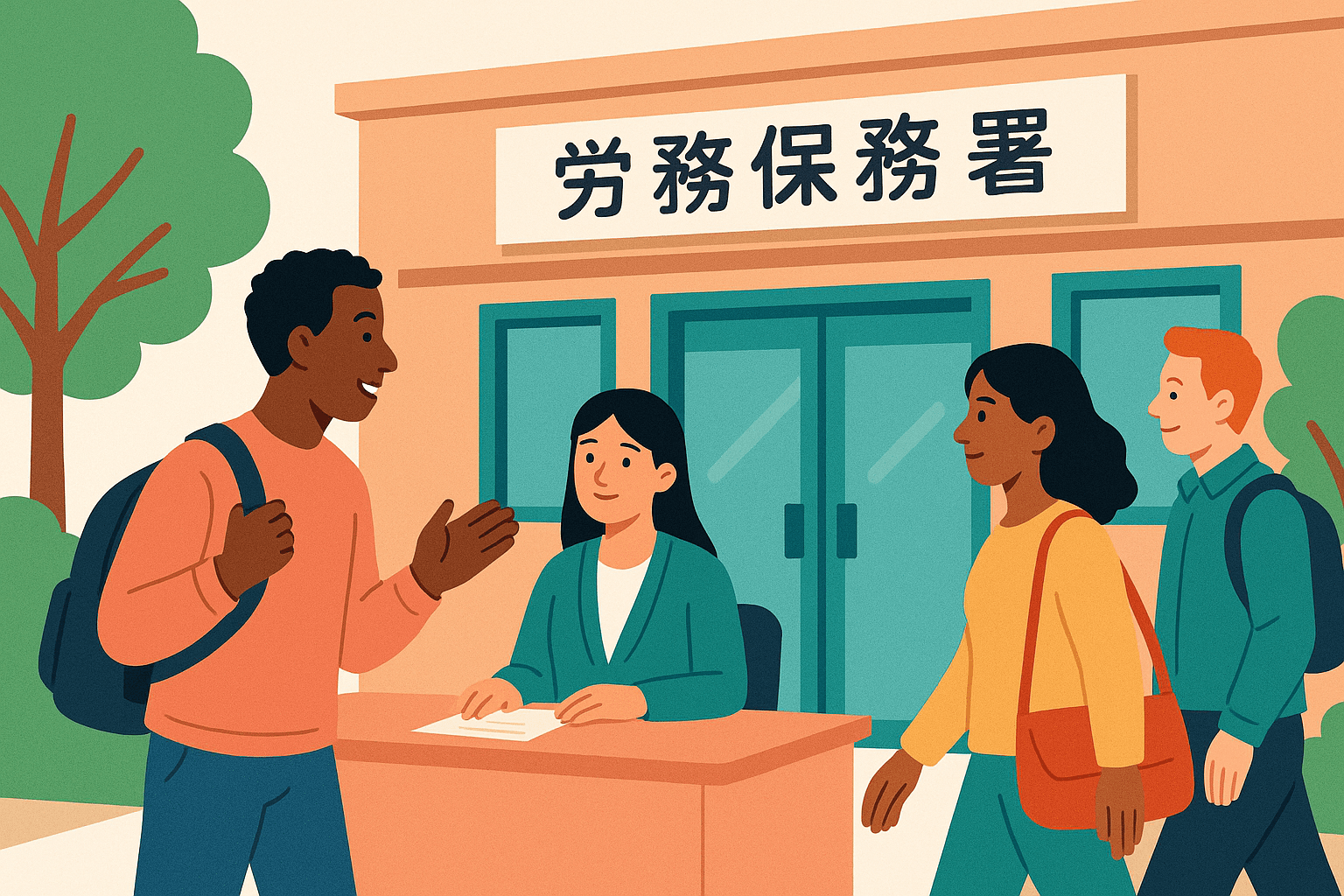

Foreign Workers' Rights in Japan: What Your Employer Won't Tell You
Japanese labor law protects you equally regardless of nationality. Overtime premiums, dismissal rules, harassment protection, and 13-language helplines.

Bottom line: Japanese labor law protects you equally regardless of nationality — but your employer probably won't explain that in English. You have the right to overtime pay (25–50% premium), 30 days' dismissal notice, paid leave, and protection from harassment. If any of these are violated, the Labor Standards Office accepts complaints from foreign workers in 13 languages. Here's what you need to know.
Information current as of March 2026 based on the Labor Standards Act, Labor Contract Act, and MHLW guidelines. As the founder of LO-PAL, I built this service after seeing foreign workers at a hospital in Osaka who didn't know their basic rights — they accepted illegal working conditions simply because no one explained the rules in their language.
Your rights at a glance
| Right | Law | Key detail |
|---|---|---|
| Equal treatment regardless of nationality | Labor Standards Act, Art. 3 | No discrimination in wages, hours, or conditions based on nationality |
| Overtime pay | Labor Standards Act, Art. 37 | 25% premium (standard), 35% (holidays), 50% (60+ hours/month) |
| Maximum working hours | Labor Standards Act, Art. 32 | 8 hours/day, 40 hours/week. Overtime requires a 36 Agreement |
| 30-day dismissal notice | Labor Standards Act, Art. 20 | Or 30 days' wages in lieu. Wrongful dismissal is void. |
| Paid annual leave (有給休暇) | Labor Standards Act, Art. 39 | 10 days after 6 months (80%+ attendance). Increases yearly. |
| Harassment-free workplace | Labor Policy Act (2022 amendment) | All companies must prevent power harassment, sexual harassment |
| Workers' compensation (労災) | Workers' Compensation Insurance Act | Covers work injuries/illness regardless of visa status |
| Minimum wage | Minimum Wage Act | Varies by prefecture. National average: ~¥1,050+/hour (2025) |
Overtime: how much you should actually be paid
Many foreign workers don't realize their employer is underpaying overtime — especially when the contract includes 固定残業代 (fixed overtime pay). Here are the legal rates:
| Type of work | Premium rate |
|---|---|
| Standard overtime (over 8h/day or 40h/week) | 125% (+25%) |
| Night work (22:00–05:00) | 125% (+25%) |
| Statutory holiday work (法定休日) | 135% (+35%) |
| Overtime exceeding 60 hours/month | 150% (+50%) — applies to ALL companies since April 2023 |
| Overtime + night work combined | 150% |
If your contract mentions 固定残業代 or みなし残業, you may be losing money without knowing it. See our detailed guide to overtime calculation and fixed overtime traps for how to check your pay slip.
If you're fired: what to do first
Japan has some of the strongest employment protections in the world. Dismissal is only valid if it has objectively reasonable grounds and is socially appropriate (Labor Contract Act, Art. 16). If either condition is missing, the dismissal is legally void.
Your immediate actions:
- Do NOT sign anything. Not a resignation letter (退職届), not a settlement agreement, nothing. Signing can waive your rights.
- Request a 解雇理由証明書 (kaiko riyuu shoumeisho — written statement of dismissal reasons). Your employer is legally required to provide this.
- Contact the Labor Standards Office or consult a lawyer.
For the full process — 30-day notice rule, dismissal notice allowance, labor tribunal, and how to fight back — see our guide to wrongful dismissal.
Harassment: your employer MUST act
Since April 2022, all companies in Japan — including SMEs — must have power harassment prevention measures in place. This includes internal consultation channels, investigation procedures, and protection against retaliation. Sexual harassment protections have existed even longer under the Equal Employment Opportunity Act.
New in 2026: customer harassment (カスタマーハラスメント) prevention measures become mandatory from October 2026.
If you're being harassed and your company does nothing, you have external options. See our guide to harassment evidence and reporting for how to document what's happening and where to get help.
Where to get help (in your language)
The biggest barrier for foreign workers isn't the law — it's the language. Here are the free, multilingual resources:
Foreign Workers Consultation Dial (外国人労働者向け相談ダイヤル)
Operated by MHLW. 13 languages, no cost:
| Language | Phone number |
|---|---|
| English | 0570-001-701 |
| Chinese | 0570-001-702 |
| Portuguese | 0570-001-703 |
| Spanish | 0570-001-704 |
| Tagalog | 0570-001-705 |
| Vietnamese | 0570-001-706 |
| Myanmar | 0570-001-707 |
| Nepali | 0570-001-708 |
| Korean | 0570-001-709 |
| Thai | 0570-001-712 |
| Indonesian | 0570-001-715 |
| Khmer | 0570-001-716 |
| Mongolian | 0570-001-718 |
Hours: Weekdays 10:00–15:00 (closed 12:00–13:00). Language availability varies by day — call to check.
Labor Conditions Hotline (労働条件相談ほっとライン)
- Phone: 0120-811-610 (toll-free)
- Hours: Weekdays 17:00–22:00, weekends/holidays 9:00–21:00
- Languages: 14 languages (Japanese + 13 above)
But here's the problem: these phone lines have limited hours and language-specific schedules. If your language isn't available today, you're stuck. That's exactly why I built LO-PAL — post your question for free, anytime, in any language. A local Japanese person can help you understand your situation, call the hotline on your behalf, or accompany you to the labor office.
For detailed step-by-step instructions on filing a complaint at the Labor Standards Office (in Tokyo and Osaka), see our guide to 労基署 complaints.
Freelancers: new protections since November 2024
The Freelance Protection Act (フリーランス保護法) took effect November 1, 2024. If you work as a freelancer in Japan, your clients must now:
- Pay within 60 days of receiving your deliverables
- Provide written contracts with clear scope, payment, and deadlines
- Give 30 days' notice before terminating contracts of 6+ months
- Not reduce payment, refuse deliverables, or change terms unreasonably
For the full guide including enforcement and how to file complaints, see our freelance protection guide.
Workers' compensation: you're covered even without legal status
If you're injured at work, 労災保険 (rousai hoken — workers' compensation insurance) covers you regardless of your visa status. Even if you're working without proper authorization, you are still entitled to workers' compensation. Your employer cannot refuse to file. If they do, see our guide to claiming rosai even if your boss says no.
Related articles
- Overtime Calculation in Japan: Fixed Overtime Traps and How to Check Your Pay
- Wrongfully Fired in Japan? Your Rights and How to Fight Back
- Workplace Harassment in Japan: Evidence, Reporting, and Legal Options
- How to File a Complaint at the Labor Standards Office (Tokyo & Osaka)
- Japan's Freelance Protection Act: Your Rights Since November 2024
- How to Recover Unpaid Wages Before 3 Years Run Out
- Hurt at Work? Claim Rosai Even If Your Boss Says No
- Where to Report Discrimination in Japan
- Rishokuhyo Delayed? How to Start Unemployment Benefits
- Student Work Permit: 28-Hour Rule & Traps
- Horenso: How to Report Problems at Work
Get a Local Helper to Fight Your Corner
Filing a complaint, sending a 内容証明 (formal notice), or attending a labor tribunal hearing all require Japanese. Post your task on LO-PAL for free — a local helper can call the labor office in your language, prepare documents, or accompany you to mediation. You only pay when you accept task help.
この記事のライター

LO-PAL 創業者
厚生労働省支援の外国人患者受入れ医療コーディネーター、法務の専門家。自らの海外生活経験と医療現場での知見をもとにLO-PALを設立。
※ 一部AIを使用して執筆しています
詳しいプロフィール →