Gensen Choshuhyo Missing? Withholding Tax Certificate Japan (Gensen Choshuhyo) Not Received—What to Do (2026)
A 3-step escalation ladder to get your missing gensen choshuhyo fast: keigo scripts, evidence checklist, and the NTA non-issuance notice.
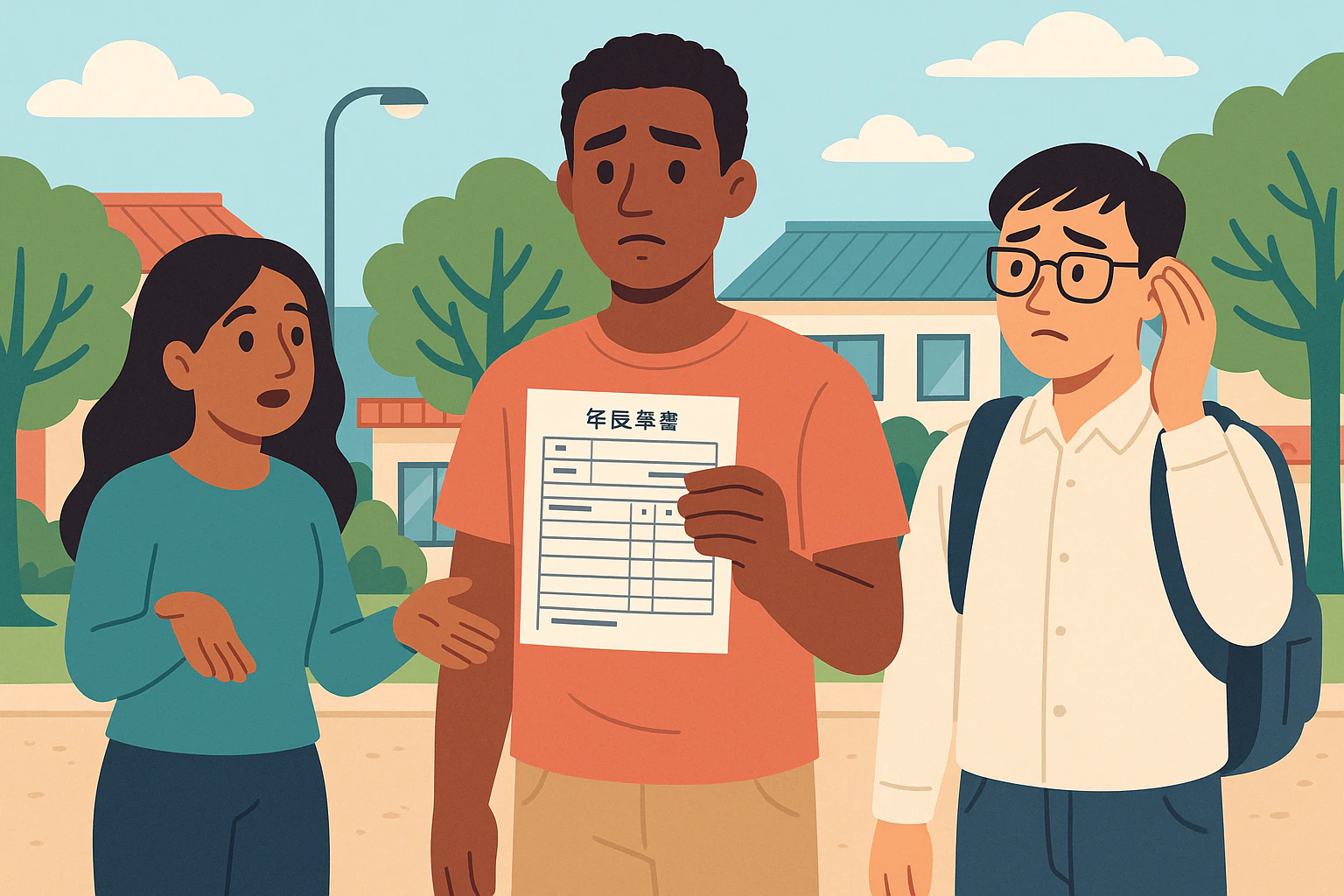
Deadlines: If you resigned mid-year, your employer should issue your gensen choshuhyo within 1 month after resignation. Otherwise, it should be issued by January 31 of the following year.
If it’s urgent: Start with a polite HR request (keigo), document follow-ups (Hōrensō style), then submit the NTA’s “non-issuance notice” to your local tax office (zeimusho).
Bottom line: You can’t “print it at city hall.” If your employer won’t cooperate, the National Tax Agency has a formal escalation path.
Information current as of March 2026, based on Japan’s National Tax Agency (NTA) procedure for non-issuance of a withholding slip, the NTA’s pre-check sheet / cautions PDF, and the NTA’s 2025-income (Reiwa 7) tax return venue notice. This article is practical guidance, not individualized tax/legal advice.
When you’re supposed to receive a gensen choshuhyo (and common delays)
A gensen choshuhyo is your Japanese salary withholding slip: 源泉徴収票 (Gensen chōshūhyō). It summarizes your annual salary, deductions, and income tax withheld, and you’ll commonly need it for kakutei shinkoku (final tax return filing) or when changing jobs (your new employer may need it for year-end adjustment).
Japan’s NTA publishes a Japan-wide “non-issuance” procedure, and it also states the typical issuance deadlines. If you resigned mid-year, the issuance deadline is within 1 month after resignation; otherwise it’s by January 31 of the following year. If it’s already past those points, you’re not being “pushy” by following up—you’re simply asking for a legally required document.
| Item | Amount/count | Source/as-of date |
|---|---|---|
| Employer issuance deadline after mid-year resignation | Within 1 month after resignation | NTA non-issuance procedure (accessed Mar 2026) |
| Employer issuance deadline (standard annual issuance) | By Jan 31 of the following year | NTA non-issuance procedure (accessed Mar 2026) |
| Income tax return consultation & acceptance period (2025 income filed in 2026) | Feb 16–Mar 16, 2026 | NTA tax return venue notice (accessed Mar 2026) |
| Tax office counter hours (general) | 8:30–17:00 (weekdays) | NTA non-issuance procedure (accessed Mar 2026) |
Common, non-malicious reasons you haven’t received it yet include: HR is still closing year-end adjustment (nenmatsu chōsei), your address changed after you left, the company posts it in an internal HR portal, or a dispatch/outsourcing arrangement means you’re not sure who the “employer” is.
Important trap #1: A gensen choshuhyo is generally for employment salary. The NTA specifically warns that if what you received wasn’t “employment salary” (for example, contractor payments under a subcontract/outsourcing agreement), you may not be issued a salary withholding slip. In that case, your next step is not “force HR,” but to clarify whether you were actually an employee or a contractor for that payment.
Important trap #2: The NTA’s “non-issuance” procedure is not for re-issuing a slip you already received and lost. If you need a re-issue, you must request it from the employer directly.
Also: don’t waste time at city hall. City/ward offices issue resident tax certificates (kazei/nozei shōmeisho), but the gensen choshuhyo itself is issued by your employer. Even foreign resident support organizations emphasize that point: the withholding slip comes from your workplace, while municipal offices handle different tax certificates.
Step 1 — Ask HR the right way (keigo email + phone scripts you can copy)
If you need your document urgently (tax filing, a job change, scholarship paperwork, etc.), your first goal is to make it easy for HR to help you. In Japan, “easy” means: short message, clear deadline, and polite language (keigo), even if you’re frustrated.
As someone who works in legal affairs in Japan, I’ve seen how often delays happen simply because the request is vague. The fastest path is to request (1) the year you need, (2) the delivery method (PDF, mail, portal), and (3) where to send it.
Quick keigo phrasebook (use these in email or on the phone)
- お世話になっております。 (Osewa ni natte orimasu) — “Thank you for your continued support / I appreciate your help.”
- 源泉徴収票(2025年分)をいただけますでしょうか。 (Gensen chōshūhyō (Nisen nijūgo-nen bun) o itadakemasu deshou ka) — “Could I receive my withholding slip (for 2025)?”
- お忙しいところ恐れ入りますが、いつ頃ご対応いただけますでしょうか。 (Oisogashii tokoro osoreirimasu ga, itsu goro go-taiō itadakemasu deshou ka) — “Sorry to bother you when you’re busy, but around when can you handle it?”
- 何卒よろしくお願い申し上げます。 (Nanitozo yoroshiku onegai mōshiagemasu) — “Thank you in advance (very formal).”
Copy/paste: HR-friendly email template (Japanese)
Subject (pick one):
・源泉徴収票(2025年分)ご送付のお願い
・源泉徴収票(2025年分)交付のお願い
Email body (edit the brackets):
お世話になっております。[Department]の[Your Name]です。
お忙しいところ恐れ入りますが、確定申告/各種手続きのため、2025年分の源泉徴収票の交付(PDFまたは郵送)をお願いできますでしょうか。
送付先: [your address](郵送の場合)/送付先メール: [your email](PDFの場合)
可能でしたら[desired date]までにご対応いただけますと幸いです。
何卒よろしくお願い申し上げます。
[Your Name] / [Phone]
What this means (English): You’re politely asking HR to issue your 2025 withholding slip, giving them delivery details, and offering a clear deadline.
Copy/paste: phone script (Japanese + romaji + meaning)
- お忙しいところ恐れ入ります。人事ご担当の方はいらっしゃいますでしょうか。
(Oisogashii tokoro osoreirimasu. Jinji go-tantō no kata wa irasshaimasu deshou ka.)
— “Sorry to bother you. Is the person in charge of HR available?” - 源泉徴収票(2025年分)の件で、発行状況を確認したくお電話しました。
(Gensen chōshūhyō (Nisen nijūgo-nen bun) no ken de, hakkō jōkyō o kakunin shitaku o denwa shimashita.)
— “I’m calling to confirm the issuance status of my withholding slip (for 2025).” - 恐れ入りますが、いつ頃いただけますでしょうか。
(Osoreirimasu ga, itsu goro itadakemasu deshou ka.)
— “Sorry, but around when can I receive it?”
Business etiquette Japan email tips (small things that speed things up)
- Put the year in the subject line (e.g., “2025”). HR handles multiple years at once in January–March.
- Give one concrete deadline (“by March 16, 2026” if it’s for filing). Avoid “ASAP” only.
- Offer two delivery options (PDF or postal). Let them choose what their process allows.
Foreigner reality check: you’re not alone (real experiences)
The “withholding tax certificate Japan (gensen choshuhyo) not received” situation shows up repeatedly in foreign resident communities, often right when someone changes jobs or hits a paperwork deadline.
One foreign resident shared on Reddit: “My current job asked for 源泉徴収票 and I realised I don’t have it. My previous company didn’t give or send me anything after I left.”
Source: r/japanlife thread about a missing gensen choshuhyo
Another wrote: “I also did not receive my withholding tax certificate (gensen chōshūhyō) during those two years.”
Source: r/japanlife post mentioning non-receipt
Individual experiences may vary. Use official procedures (below) for decisions and deadlines.
Step 2 — If they stall: what to record (dates/names) and what evidence to keep
If HR says “we’re processing it” but nothing arrives, switch into documentation mode. This isn’t about being confrontational—it’s about protecting yourself and making the next escalation (Step 3) smoother.
Japan has a workplace communication concept called Hōrensō (often written 報連相), which stands for “Report, Contact, Consult.” Many Japanese workplaces expect you to keep stakeholders updated and to share facts (not emotions) when there’s a problem.
What the NTA expects you to keep (do this even if you feel awkward)
The NTA’s pre-check sheet for the non-issuance notice says that your “proof” can be formal (emails) or informal (a memo), but you should keep details of your request. Specifically, it tells you to record:
- When you requested issuance (date/time)
- Where you requested it (phone, in person, email)
- Who you spoke with (name/department)
- How you requested it (call, letter, meeting)
- What was said (their response, promises, refusal, “please wait,” etc.)
Evidence checklist (print or screenshot this)
- Copies/screenshots of emails and chat messages requesting issuance
- Call log + a short memo of the conversation (5 points above)
- Payslips (給与支払明細書) — the NTA explicitly lists copies of payslips as a typical attachment if you have them
- Anything that proves employment/resignation dates (offer letter, resignation email, etc.)
- Postal proof if you send a letter (optional, but useful)
A practical follow-up rhythm (Hōrensō-style)
Keep follow-ups short and factual. A simple pattern is: (1) what you requested, (2) when, (3) what you need now, (4) by when.
Not sure about your case? Ask on LO-PAL.
Step 3 — Escalate to your tax office: the NTA “non-issuance” notice + LO-PAL help
If the issuance deadline has passed and your employer still won’t provide your slip, the NTA provides a formal path: submit a non-issuance notice to your local tax office. On the NTA site this is described as the procedure for when a withholding slip is not issued by the payer.
The key idea is: after you submit, the tax office may give administrative guidance to your employer to issue it. The NTA also clearly notes a limitation: this guidance is not legally binding, and you should keep requesting issuance yourself in parallel.
Before you submit: confirm you’re using the right process
- Is it already past the issuance deadline? (1 month after resignation, or Jan 31 of the following year)
- Was it employment salary? If it was contractor-type compensation, you may not be issued a salary withholding slip.
- Are you asking for a re-issue? If you already received it once, the NTA says this process is not for re-issuance—you must ask the employer again.
What to submit (official NTA forms)
- The form: 源泉徴収票不交付の届出書 (Source: NTA PDF)
- Read this first (pre-check sheet / cautions): “Before submitting” checklist (Source: NTA PDF)
Attachments the NTA typically expects
- Copies of payslips (if you have them)
- Proof you requested issuance (email screenshots are ideal), or at minimum a memo with the “when/where/who/how/what was said” details
How to submit (and where)
According to the NTA’s procedure page, you can submit the non-issuance notice using e-Tax (the NTA mentions downloading e-Tax software), and it also notes you can prepare it on paper and submit in person or by mail. It’s submitted to the tax office (zeimusho) that has jurisdiction over your tax address (納税地等を所轄する税務署).
To find the correct tax office, use the NTA’s organization page that lets you search by postal code/address or map: “Find your tax office” (Source: NTA).
What to say at the tax office counter (Japanese + romaji + meaning)
- 源泉徴収票を会社から受け取れません。「源泉徴収票不交付の届出書」について相談したいです。 (Gensen chōshūhyō o kaisha kara uketoremasen. "Gensen chōshūhyō fukōfu no todokedesho" ni tsuite sōdan shitai desu.) — I can’t receive my withholding slip from my company. I’d like to consult about the “non-issuance notice.”
- 給与明細と連絡の記録を持ってきました。 (Kyūyo meisai to renraku no kiroku o motte kimashita.) — I brought my payslips and records of communication.
If you just need to file (and HR is unresponsive): one more official option to know
Separately from “getting the physical slip,” the NTA has expanded systems where withholding slip information can be acquired for e-Tax via MyNaPortal linkage, if your employer submitted the data online to the tax office. The NTA explains that the timing depends on when your employer submits the withholding slip information to the tax office, and it’s part of the MyNaPortal/e-Tax linkage feature.
This won’t fix an employer who refuses to cooperate, but it can be a helpful backup for tax filing when data is available. Start here: “Getting information from e-Tax (MyNaPortal linkage)” (Source: NTA) and MyNaPortal linkage special page (Source: NTA).
If you want to confirm by phone (NTA consultation line)
The NTA provides a national consultation phone line. For general questions, you can call 0570-00-5901 and follow the guidance; the NTA’s page lists menu options and shows that “withholding tax / year-end adjustment” is one of the categories. Details: NTA consultation desk page.
FAQ
These are the most common “gotchas” I see among foreigners handling Japanese tax paperwork under time pressure.
Can I get a gensen choshuhyo from city hall?
No. Your employer issues the gensen choshuhyo. City/ward offices issue different certificates (resident tax-related documents), not your salary withholding slip.
Is the NTA non-issuance notice a way to get a re-issued slip if I lost mine?
No. The NTA explicitly says the non-issuance procedure is not for re-issuing a slip you already received. Re-issues must be requested from the employer.
What if I was paid as a contractor?
The NTA warns that if the payment wasn’t employment salary (for example, compensation under a contract arrangement), you may not be issued a salary withholding slip. In that case, confirm your work classification and what tax documents apply to your situation.
What happens after I submit the non-issuance notice?
The tax office may provide administrative guidance to the employer to issue it, but the NTA notes this guidance is not legally binding. You should continue requesting issuance yourself as well.
Related Articles
- How to file Kakutei Shinkoku in English (2026): e-Tax guide for foreigners in Japan
- Rishokuhyo delayed? How to start Hello Work unemployment benefits in Japan (2026)
- Best translation apps for foreign residents in Japan (2026)
Need More Help? Ask on LO-PAL
I built LO-PAL so foreigners in Japan can quickly connect with local Japanese helpers when the system is “clear” on paper but hard in real life. Don’t risk taking time off work only to be sent home because of a missing document or a language barrier—post your situation and book a helper to accompany you, translate at the counter, and help you submit the right NTA paperwork the first time.
Written by

Founder, LO-PAL
Former Medical Coordinator for Foreign Patients (Ministry of Health programme) and legal affairs professional. Built LO-PAL from firsthand experience navigating life abroad.
Written with partial AI assistance
Read full bio →